- Strategic Leadership: In 2026, the shift is moving from passive participation to senior-led mentorship, where older adults act as “Garden Stewards” to manage logistics and knowledge transfer.
- Universal Design Standards: New community gardening grants now prioritize “Accessibility-First” infrastructure, such as waist-high raised beds and sensory-friendly paths, making gardening viable for those with varying mobility levels.
- Social-Health Integration: Modern gardening programs are increasingly recognized as “Social Prescribing” outlets, meaning they are becoming formally linked to public health services to combat isolation and improve physical activity.
As we move through 2026, the landscape of community gardening has undergone a fundamental transformation. It is no longer merely a hobby; it has become a structured, intergenerational public service that serves as a vital pillar for social cohesion and physical wellbeing. For adults aged 60 to 80, this shift represents a new opportunity to step into leadership roles, leveraging decades of life experience to mentor younger generations while maintaining active, healthy lifestyles.
The 2026 Shift: From Passive Hobbies to Structured Mentorship
Historically, community gardens were often fragmented, volunteer-run patches. By 2026, global trends in “Age-Friendly Cities” have pushed local governments and non-profits to integrate these spaces into formal public health networks. The core change is the adoption of the “Mentorship Model,” where older adults are not just participants, but the institutional memory of the garden.
Why does this matter? For many, the transition into retirement creates a gap in daily social structure. By formalizing the role of the “Garden Steward,” municipalities are providing a clear, respected, and productive pathway for seniors to engage with their communities. This isn’t just about planting tomatoes; it is about managing resource allocation, teaching sustainable practices, and mediating between diverse age groups.
How the Mentorship Model Works in Practice
In a typical 2026 community garden project, the structure is divided into roles based on physical capacity and expertise:
- The Garden Steward (Senior Lead): Responsible for seasonal planning, crop rotation advice, and coordinating with local government for water and waste management.
- The Technical Assistant (Youth/Adult Volunteer): Handles tasks requiring high physical stamina, such as moving soil, building infrastructure, and heavy lifting.
- The Community Liaison: Manages the “harvest-share” program, ensuring that surplus produce is donated to local food banks or distributed to homebound neighbors.
What the reader can do: If you are interested in joining or leading a project, do not start by digging a hole. Start by checking your local municipal website for “Community Green Space Coordination” departments. Look for opportunities to apply for a “Stewardship Grant,” which often covers the cost of ergonomic tools and raised bed construction.
Prioritizing Physical Safety and Ergonomics
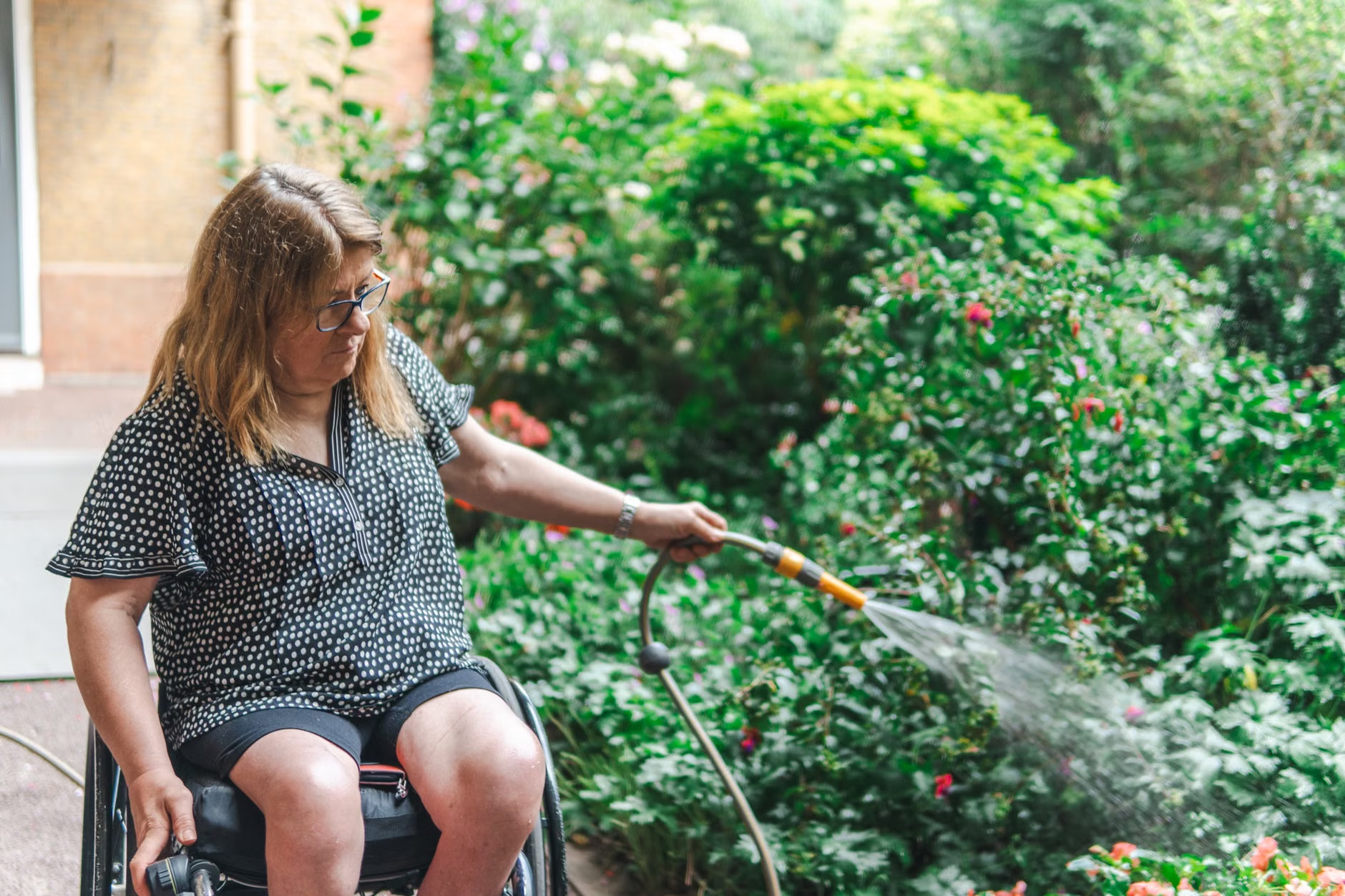
A major advancement in 2026 is the widespread adoption of universal design in gardening infrastructure. We have moved past the era of ground-level plots that require constant bending and kneeling. Modern community gardens are now designed with the assumption that participants may have varying levels of mobility, stamina, or balance issues.
The Ergonomic Checklist for 2026 Gardens
When evaluating a community garden, use the following criteria to ensure it fits your physical needs:
| Feature | Standard Requirement | Why it Matters |
|---|---|---|
| Raised Beds | Height: 60cm–90cm | Allows for gardening from a seated position or standing without bending. |
| Pathways | Width: 1.5m (min) | Ensures enough space for walkers, canes, or wheelchairs to pass safely. |
| Surface Material | Paved or packed fine gravel | Prevents tripping hazards common with uneven grass or loose dirt. |
| Seating | Bench every 10–15 meters | Crucial for managing stamina and providing recovery time. |
Common Mistake: Many older adults attempt to garden in “traditional” community plots that have not been retrofitted. This often leads to unnecessary strain on the lumbar spine and knees. If your local garden lacks these features, your first step as a “Steward” should be to submit a request for “Accessibility Retrofitting” to your local council. Many regions have specific funds allocated for this under aging-in-place initiatives.
The “Social Prescribing” Trend: A New Public Health Reality
In 2026, “Social Prescribing” has moved from a theoretical concept to a standard practice in many healthcare systems, particularly in the UK, Canada, and parts of the EU. This involves healthcare professionals referring patients to non-clinical community activities—like gardening—to improve their mental and physical health.
Connecting with Local Health Services
If you are managing a chronic condition or recovering from an illness, ask your primary care physician about “Community Referral Programs.” These programs often provide:
- Insurance Subsidies: In some jurisdictions, the cost of joining a garden club or purchasing gardening equipment can be partially offset if it is part of a prescribed activity program.
- Supervised Sessions: Some gardens now host sessions with physiotherapists or occupational therapists present to ensure that physical activity is performed safely.
- Structured Socialization: Unlike casual social gatherings, these programs are designed to facilitate interaction, reducing the risk of social isolation which is a known factor in cognitive decline.
Insight: The hidden benefit of these programs is the “Purpose Factor.” Engaging in a project with clear, tangible outcomes—like successfully growing a winter squash—provides a sense of achievement that is often missing in purely social settings. This, combined with the physical movement required, creates a powerful, non-pharmacological health intervention.
Managing Costs and Legal Responsibilities
Community gardening is generally low-cost, but in 2026, the legal and financial landscape has become more structured. When joining a formal garden, you will likely encounter a “Garden Charter” or participation agreement. It is vital to read these before signing.
Key Considerations for Participation Agreements
- Liability Waivers: Understand who is responsible if an injury occurs. Most municipal gardens are covered by city liability insurance, but private community plots may require you to carry your own personal liability coverage (often included in home insurance).
- Resource Allocation: Clarify water usage and waste disposal rules. In 2026, many regions have strict water rationing laws; ensure the garden has a sustainable water management plan (e.g., rainwater harvesting).
- Harvest Rights: Does the produce belong to the individual or the collective? Most successful 2026 models use a “Shared Harvest” system where 20% of the produce is donated, and 80% remains with the gardener.
Practical Decision Rule: If you are looking for a low-commitment option, search for “Public allotment gardens” managed by the city. These are generally the most affordable and have the highest level of regulatory protection. If you are looking for a high-social, high-commitment option, private “Community Co-ops” offer more control but may require monthly membership fees.
Strategic Planning for Long-Term Engagement
To sustain your participation in intergenerational gardening through 2026 and beyond, you must treat your own physical energy as a non-renewable resource. This means pacing yourself and utilizing technology.
Step-by-Step Strategy for Sustainable Gardening
- The 30-Minute Rule: Never plan for more than 30 minutes of continuous physical labor. Follow this with a 10-minute break in a shaded, seated area.
- Tool Selection: Invest in “long-reach” tools. These allow you to cultivate the soil without reaching down to the ground, significantly reducing the pressure on your shoulders and back.
- Communication Hubs: Use digital tools (like WhatsApp groups or community apps) to coordinate tasks. This allows you to delegate heavy lifting to younger members before you even arrive at the garden.
- Hydration and Climate: In 2026, extreme weather events are more frequent. Always check the “Garden Heat-Index” (if available via your local weather service) before heading out. Avoid gardening during peak UV hours (11:00 AM to 3:00 PM).
Warning: Avoid “weekend warrior” syndrome. Attempting to clear an entire plot in one day after a week of inactivity is the most common cause of injury in gardeners over 60. Consistency is far more effective than intensity.
Deepening Intergenerational Bonds
The true value of the 2026 gardening movement lies in the exchange of knowledge. You possess “Tacit Knowledge”—the kind of intuitive understanding of plant health, weather patterns, and soil quality that cannot be learned from a YouTube video. Younger generations, meanwhile, are often more adept at using digital tools for garden management, such as automated irrigation sensors or mapping software.
When working with younger volunteers, position yourself as a mentor rather than a supervisor. Share stories of how you handled pests or climate challenges in the past. This creates a reciprocal relationship where both parties feel valued. The younger generation gains essential life skills and perspective, while you remain an active, contributing member of society.
Conclusion: Taking the First Step
The 2026 shift toward intergenerational gardening is a positive evolution for adults aged 60 to 80. By focusing on accessible infrastructure, mentorship roles, and social health integration, you can transform your gardening experience from a solitary task into a vibrant, community-centered activity. Your next step is to locate your nearest accessible garden, review their participation agreement, and reach out to the coordinator to offer your expertise as a mentor. The garden is ready; the question is simply how you choose to grow within it.
Frequently Asked Questions
1. How can I find an accessible community garden near me?
Start by visiting your municipal government’s website and searching for “Community Gardens” or “Public Allotments.” Look for sites that explicitly mention “Universal Design” or “Accessible Plots.” You can also contact your local Area Agency on Aging, as they often have lists of age-friendly community initiatives.
2. What if I have physical limitations that prevent me from doing heavy work?
Modern community gardens are designed for inclusivity. If you cannot perform heavy lifting, focus on the “Garden Steward” role, which involves planning, teaching, and coordinating. Furthermore, look for gardens that use waist-high raised beds, which allow for gardening while seated, eliminating the need for kneeling or heavy bending.
3. Are there any insurance requirements to participate in these programs?
Most public community gardens are covered by municipal liability insurance. However, private cooperatives may require you to have your own personal liability coverage. Always check the “Garden Charter” or participation agreement provided by the organization. If you are unsure, ask the garden coordinator to clarify the insurance coverage for participants.
Official resources for further research: