Key Takeaways: 3-Line Summary
- Loss of muscle elasticity in the intestines is a natural part of aging, but it can be managed through consistent lifestyle adjustments.
- Correcting your posture (the 35-degree angle) and drinking lukewarm water immediately upon waking are scientifically effective immediate fixes.
- Incorporating prunes, seaweed, and fermented foods into your daily diet is the foundation for long-term gut health.
Once you pass the age of 40, you start to realize that your digestion isn’t quite what it used to be. In the past, no matter what I ate, I felt light and comfortable the next day. These days, if I’m even slightly off my routine, I find myself struggling with constipation for days at a time. I’m sure I’m not the only one experiencing this. When I talk to friends and colleagues, it turns out many of them are quietly dealing with the same discomfort.
Missing a regular bathroom visit does more than just make your stomach feel bloated; it drags down your overall condition for the entire day. It’s harder to concentrate, and your body feels unnecessarily heavy. This led me to dig through health articles and look for methods that experts consistently recommend. I’ve personally tried these out and summarized the most realistic information that actually produced results.
The Root Causes: Why Constipation Hits Harder as We Age
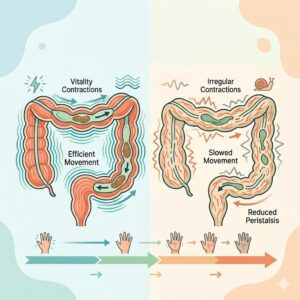
To fix the problem, we first need to understand why it happens. The primary culprit is the decline in intestinal peristalsis. The intestines are made of muscle, and as we age, these muscles lose elasticity, meaning they lack the strength to push stool out effectively. The longer waste stays in the colon, the more water is absorbed back into the body, making the stool harder and even more difficult to pass. It becomes a frustrating cycle.
Medications are another common cause. Certain ingredients in blood pressure medications, painkillers, or antacids have side effects that slow down gut movement. Additionally, a decrease in overall physical activity plays a major role. Our intestines are stimulated to move when we walk and move our bodies. When we become more sedentary, our digestive tract tends to stall along with us.
Short-Term Relief: Practical Methods for Immediate Effect
If you are currently feeling significant discomfort and need immediate relief, I recommend two methods that you can apply right away. These are the techniques that provided the quickest response when I tested them myself.
The first is changing your bathroom posture. Sitting on a standard toilet causes the rectum to kink, making it physically difficult for waste to pass. By placing a small stool (about 15-20cm high) under your feet, you can bring the angle between your torso and thighs to about 35 degrees. This position relaxes the puborectalis muscle and creates a straight path. It might seem like a small change, but it is physically the most efficient way to clear your system.
The second is abdominal pressure massage. In the morning, while still lying in bed, use your hands to gently press and rotate around your navel in a clockwise direction. By applying pressure in the direction of natural intestinal flow, you provide external stimulation to the gut. Doing this consistently for just 5 minutes can help trigger the urge to go. The key is to be gentle and assist the natural movement rather than forcing it.
Checklist for Constipation Management Habits
| Category | Habits to Avoid | Recommended Habits |
|---|---|---|
| Hydration | Replacing water with coffee or tea | Drinking pure lukewarm water |
| Bathroom Visits | Waiting indefinitely for a signal | Sitting at a set time every day |
| Dietary Choices | Processed foods and refined flour | Whole foods rich in dietary fiber |
Long-Term Strategies for Sustainable Gut Health
Relying on temporary fixes isn’t enough; the goal is to create an environment where the gut works on its own. Relying on laxatives can cause the intestines to lose their natural ability to function. Here is the routine that brought about the most significant changes for me over several months.
The absolute basic is drinking a glass of lukewarm water on an empty stomach right after waking up. Cold water can shock the intestines and cause temporary spasms, so choose water that is close to your body temperature. This glass of water stimulates the stomach, which sends a signal to the colon to initiate movement—a process known as the ‘gastrocolic reflex.’
In addition, you should make regular light walks a part of your life. It doesn’t have to be a strenuous workout. Even a 20-minute walk after a meal helps gravity and the movement of your abdominal muscles stimulate the intestines and move waste downward. It is vital to remember that the longer you sit, the more your digestive system stalls.

Recommended Foods: Scientifically Proven for Gut Health
They say that changing your diet can solve 70% of constipation issues. These are three foods that I personally found very helpful for digestion and regularity.
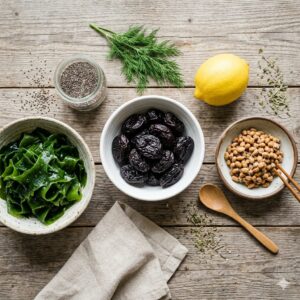
First is prunes (dried plums). Prunes contain not only fiber but also a natural ingredient called ‘sorbitol,’ which draws water into the intestines to soften the stool. They have been used as a natural remedy for a long time. About 2 to 3 prunes a day is usually sufficient; eating too many can cause abdominal pain, so moderation is key.
Second are seaweeds like kelp and wakame. The sticky substance in seaweed, called ‘alginic acid,’ increases the volume of the stool without irritating the intestinal walls, helping it pass naturally. It is also excellent for absorbing and expelling toxins from the gut.
Third are fermented foods like natto or cheonggukjang. Live beneficial bacteria reach the gut and fundamentally improve the internal environment. I found it much more effective to eat unsweetened fermented foods rather than yogurt filled with sugar. When the beneficial bacteria flourish, intestinal motility becomes active without much extra effort.
Consistency is the Ultimate Solution
Just as constipation doesn’t happen overnight, the solution won’t happen in a single day either. In the beginning, I found myself looking for medication out of impatience, but I eventually realized that restoring my body’s natural rhythm is the only sure way.
I believe that listening to the small discomforts your body signals and choosing to eat better and move more is the most practical way to care for yourself. Instead of making grand plans, I encourage you to start today with just two things: drinking one more glass of water and walking for 10 minutes.
I hope the information I’ve organized here provides small but practical help to those struggling with digestive issues. Nothing is more important for your health than clearing your system properly.