Hello there, I’m Cooldy, your health blogger!
Have you ever looked in the mirror and muttered, “This weight just seems to appear automatically now that I’m older!”? 😞 Lately, I’ve certainly noticed my waistline becoming a little more stubborn. I feel like I eat and move the same amount as before, so why does the weight seem determined to settle around my midsection? What we commonly call ‘age-related weight gain’—or ‘middle-age spread’—is a common frustration. But please don’t mistake it for just laziness! Today, we’re going to explore the truth behind this change and uncover practical, simple ways to manage it effectively and healthily.

🔍 Understanding the Shift: It’s Not Just You!
While ‘age-related weight gain’ isn’t a formal medical term, it accurately describes the noticeable physical changes many people experience around their 40s. This weight gain is often due to a combination of factors. Here are three core reasons you need to know:
- A Dip in Basal Metabolic Rate (BMR): Our bodies naturally experience a gradual decline in BMR starting around age 30, typically slowing by about 1\% \sim 2\% per year. (Quick Note! BMR is the minimum energy your body needs just to perform essential functions like breathing, maintaining body temperature, and heart function—think of it as your body’s ‘baseline power consumption’ even when you’re resting.) A lower BMR means your body uses less energy for the same tasks. Any unused energy from your diet gets efficiently stored as fat.
- Hormonal Changes: Hormones are major players. In men, Testosterone levels gradually decrease. In women, Estrogen levels fall, especially leading up to and during menopause. These hormones are crucial for maintaining muscle mass and preventing fat accumulation. As they decline, we lose muscle, and our bodies are predisposed to storing fat, often centrally around the abdomen (visceral fat).
- Muscle Mass Loss (Sarcopenia): Losing muscle as we age is a natural process. However, muscle is our body’s primary ‘energy-burning factory.’ When muscle mass decreases, the BMR drops even further, creating a vicious cycle that encourages fat storage.
🍽️ The Diet Strategy: Not ‘Less,’ But ‘Smarter’ Nutrition
So, how should we adjust our eating habits? Simply starving yourself will only cause further muscle loss, accelerating the problem. The key is to fuel your body ‘smarter’.
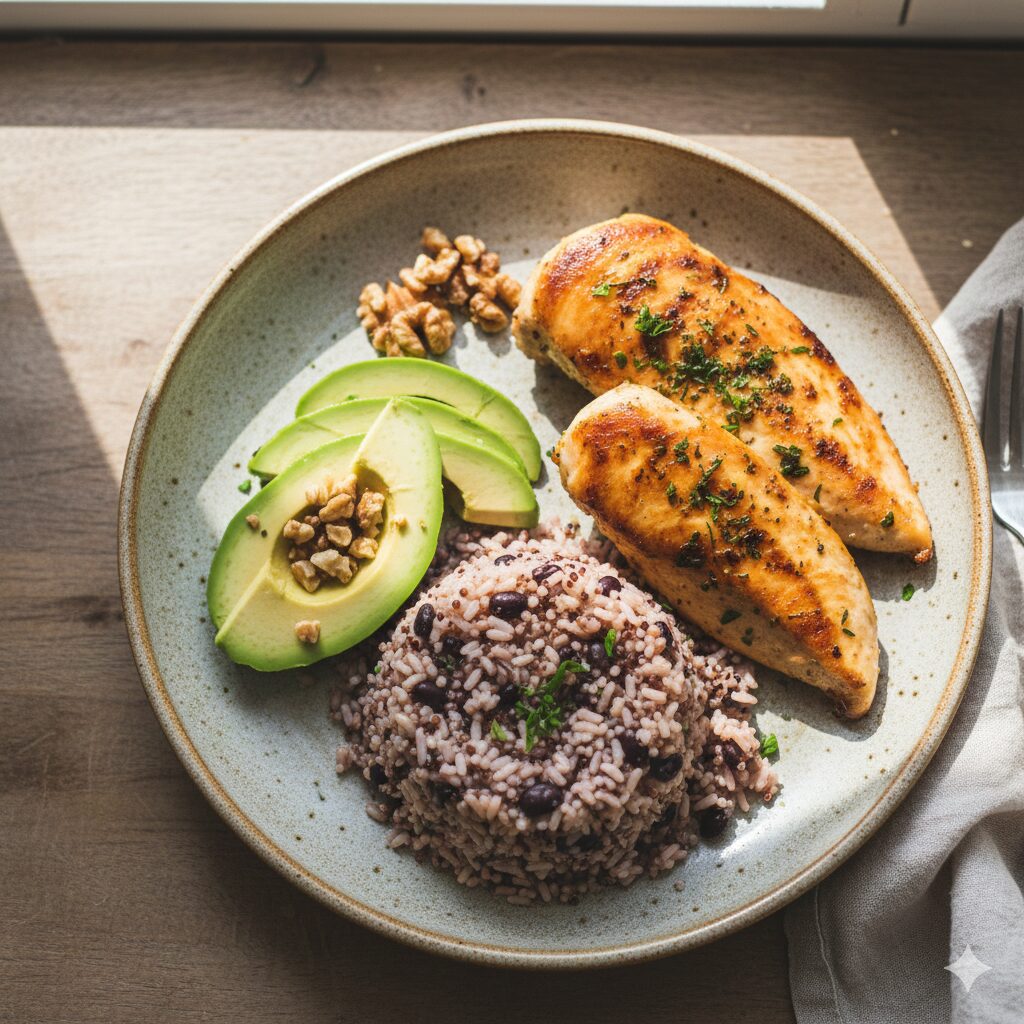
- Protein is Non-Negotiable: To combat muscle loss, ensure you consume enough protein at every meal—aim for a portion roughly the size of your palm. Include sources like lean chicken, fish, eggs, tofu, beans, and lean meat.
- Choose Complex Carbs: Ditch refined carbohydrates like white rice and white bread. Switch to complex carbohydrates such as brown rice, whole-grain bread, sweet potatoes, and oats. These are rich in fiber, which keeps you feeling full longer and prevents rapid spikes in blood sugar.
- Incorporate Healthy Fats: Consume moderate amounts of unsaturated fats, such as those found in nuts, seeds, avocados, and olive oil, particularly those rich in Omega-3 fatty acids, to help reduce inflammation.
- Mind Your Meal Timing: Try to eat your meals at consistent times, and ideally, finish your dinner about three hours before you go to bed. Eating late can trigger insulin release during sleep, promoting easier fat storage.
🏃♂️ Strength Training: Essential, Not Optional
Since we know the biggest factor in age-related weight gain is muscle loss, the solution is clear: build and maintain muscle. Relying only on walking or light cardio won’t be enough to significantly boost muscle mass.
- Strength Train 3 Times a Week: Commit to at least three 30-minute sessions of strength training weekly. You don’t need a gym membership; bodyweight exercises are incredibly effective.
- Cody’s Recommended Routine: Start by aiming for 3 sets of 15 Squats, 3 sets of 10 Lunges (per side), and 3 sets of 30-second Planks. The most important thing is consistency, even if you start small and gradually increase the intensity.
- Increase Non-Exercise Activity Thermogenesis (NEAT): Look for opportunities to move more in your daily life. Take the stairs instead of the elevator, or walk an extra block or two when using public transport. These small, consistent habits contribute to a higher overall daily energy expenditure.

💡 A Final Note: Focus Beyond the Scale
Age-related weight gain didn’t happen overnight, and it won’t disappear overnight either—patience and consistency are key. The most important thing to monitor is not the number on the scale, but your measurements and how your clothes fit. Your weight might temporarily stall or even increase slightly as you gain muscle, but if you’re losing fat, your waistline will shrink, and your body shape will improve. Don’t be discouraged by the numbers!
Age-related weight gain is not inevitable; it’s a signal from your body that it needs intelligent management. I encourage you to adopt the smart eating habits and consistent strength training Cody has shared today to reclaim your energy and vitality. Beat the spread and enjoy your best middle-age years! Keep up the great work!