- Standardization: Starting in 2026, international bodies are implementing unified tactile paving standards to reduce tripping hazards and improve navigation for those with vision or mobility challenges.
- Enhanced Safety: New designs prioritize high-friction materials and clearer visual-tactile contrast, specifically targeting the reduction of falls, which are a leading cause of injury for adults over 65.
- Advocacy: Readers can check their local municipality’s “Pedestrian Master Plan” to see if these 2026 standards are being integrated into local infrastructure projects.
2026 Global Sidewalk Standards: What You Need to Know About New Age-Inclusive Textures
For many adults aged 60 to 80, the sidewalk is not just a path—it is a critical link to the community, local shops, and public transit. However, uneven surfaces, slippery materials, and confusing intersections can turn a routine walk into a significant physical challenge. As of 2026, a series of updated international standards for sidewalk textures and pedestrian infrastructure is being rolled out globally. These updates aim to create a more consistent, predictable, and safer walking environment for everyone, regardless of physical ability.
Understanding the Need for Updated Sidewalk Standards
The primary driver behind the 2026 updates is the global aging population. As urban areas become more densely populated, the reliance on walking as a primary mode of transport increases. Historically, sidewalk design was often left to local discretion, leading to a patchwork of surfaces—some smooth, some cracked, and others featuring inconsistent tactile warnings. This lack of uniformity is more than an inconvenience; it is a primary factor in pedestrian falls.
When a surface changes unexpectedly, or when a ramp does not provide enough grip, the risk of losing balance increases. The new 2026 standards focus on tactile paving, which is the specialized surface pattern used to warn pedestrians of hazards, such as the edge of a curb or a change in grade. The goal is to ensure that a person walking in London, Tokyo, or New York encounters a surface that provides the same level of information and safety, regardless of the city.
What the 2026 Standards Change in Real Life
The 2026 updates shift from merely “providing a path” to “engineering an inclusive experience.” The changes are categorized into three main areas: surface friction, visual-tactile contrast, and pattern consistency.
1. High-Friction Materials
One of the most common causes of slips is the use of polished stone or smooth concrete on ramps and inclines. The new standards mandate a minimum coefficient of friction for all public walking surfaces. In practical terms, this means that even when wet, the sidewalk must provide enough grip to prevent slipping. For an older adult, this means walking with increased confidence, even during rainy or icy weather.
2. Standardized Tactile Warning Surfaces
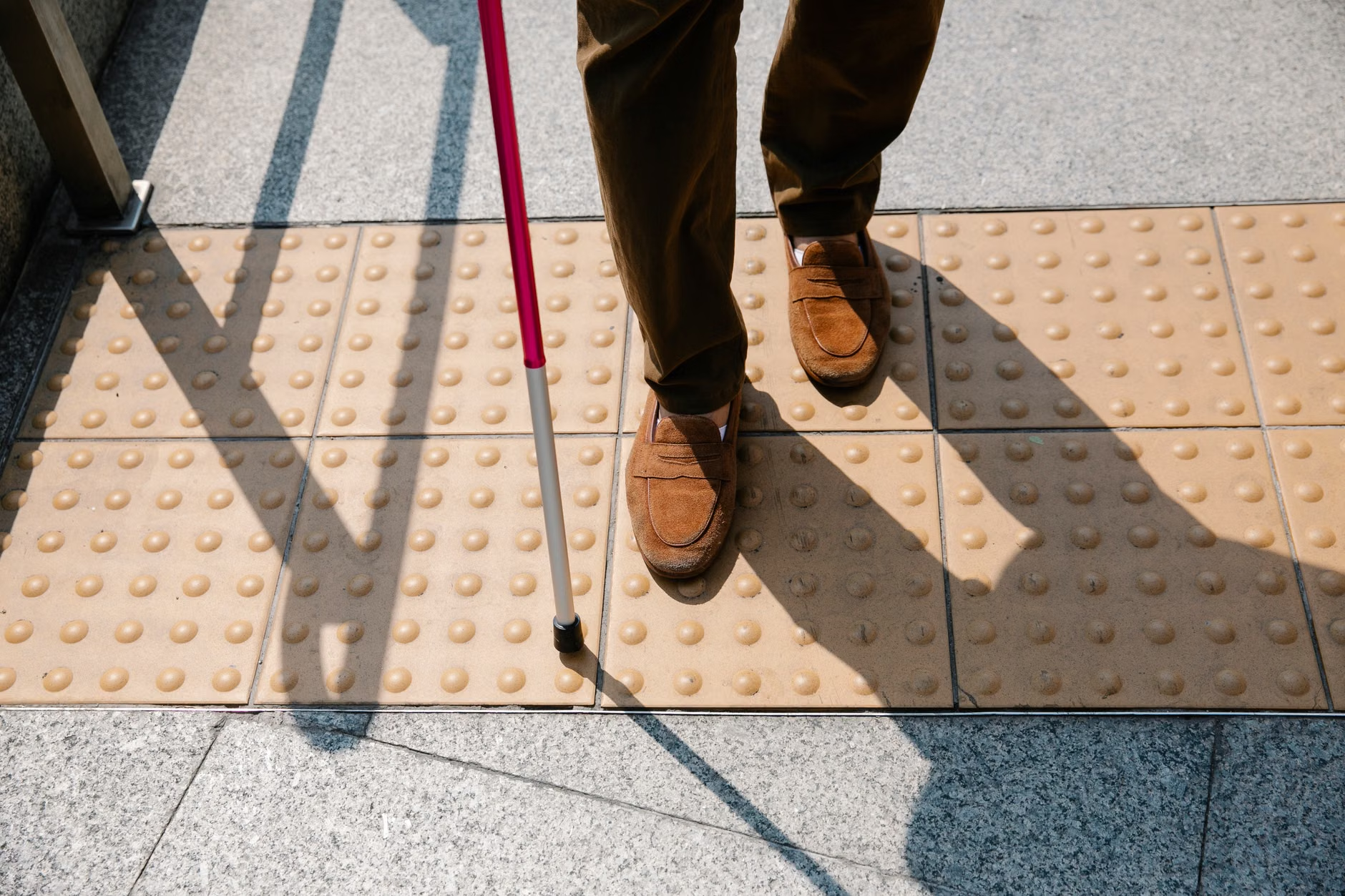
Previously, different countries used different shapes for “danger” or “stop” zones. The new international guidelines promote a universal “truncated dome” pattern for intersections. This pattern is designed to be felt clearly through the soles of shoes or through a mobility aid like a cane. If you feel a repetitive, rhythmic texture under your feet, it is a standardized signal that you are approaching a street crossing or a transition to a roadway.
3. Visual-Tactile Contrast
The standards also address how the sidewalk looks. High-contrast colors—such as yellow or deep grey against lighter concrete—are now recommended for all tactile transition zones. This helps individuals with age-related vision changes identify a change in the ground surface before they actually step onto it. This is a critical preventive measure against stumbles caused by misjudging a curb height.
How to Assess Your Local Neighborhood’s Progress
While international standards provide the blueprint, the actual implementation happens at the local municipal level. Not every street will be upgraded simultaneously. To determine if your area is adopting these improvements, you can look for specific indicators.
| Feature | Old Standard (Often Seen) | 2026 Standard (New Implementation) |
|---|---|---|
| Ramp Surface | Smooth concrete or polished stone | High-friction, textured composite or grooved concrete |
| Curb Transitions | Variable, sometimes hidden | Standardized, high-contrast tactile domes |
| Edge Detection | Minimal or no color contrast | Clear, high-visibility color coding |
If you find that your neighborhood is still using older, smoother, or non-contrasting materials, it is often due to the slow pace of infrastructure renewal. Most cities follow a “replacement cycle,” where sidewalks are only updated when they require routine maintenance. You can contact your local Department of Transportation or Public Works office to ask if their current maintenance schedule aligns with these new 2026 accessibility guidelines.

Practical Tips for Safer Walking in Transition Areas
While cities work to update their infrastructure, you can take personal steps to ensure your safety when navigating both new and old sidewalk environments. Prevention is the best approach to maintaining mobility.
- Check Your Footwear: Ensure your walking shoes have a rubberized, non-slip sole. Avoid leather soles or worn-out tread patterns, as these significantly decrease your stability on new tactile surfaces.
- Anticipate the Transition: When approaching an intersection, look for the color change in the concrete. If you see the high-contrast yellow or grey tiles, prepare for a slight change in the slope or texture.
- Use Mobility Aids Properly: If you use a cane or a walker, ensure the tips are in good condition. Rubber tips provide the best grip on the new tactile domes, which can sometimes be slightly slippery if the material is low-quality plastic.
- Maintain Awareness: Even with the new standards, construction debris or seasonal factors like fallen leaves can hide the textures. Always scan the ground about 1.5 to 2 meters ahead of you.
The Role of Advocacy and Digital Public Services
Many cities are now integrating their sidewalk data into digital maps. If you are planning a trip, you can use these digital tools to identify areas that are “accessibility-verified.” In many regions, the 2026 standards require local governments to publish digital maps showing which sidewalks are fully compliant with the new tactile and slope regulations.
If you frequently encounter a sidewalk that is hazardous, do not assume it will be fixed on its own. Most municipalities have a “311” system or a digital portal for reporting non-compliant infrastructure. When reporting, be specific: note the exact location, the nature of the hazard (e.g., “broken curb, lack of tactile warning”), and why it poses a risk. Mentioning the 2026 International Accessibility Standards can help highlight that the issue is a matter of modern safety compliance rather than just a cosmetic concern.

Long-Term Benefits of Standardized Infrastructure
The adoption of these standards represents a shift in how we view urban health. By prioritizing the safety of the most vulnerable pedestrians, cities are creating environments that are safer for everyone—including parents with strollers, people with temporary injuries, and those carrying heavy loads. The long-term goal is to reduce the “environmental burden” on older adults, allowing you to focus on your destination rather than the ground beneath your feet.
Furthermore, these standards contribute to better physical health. When you feel confident about the safety of your walk, you are more likely to remain physically active. Regular walking is linked to improved cardiovascular health, better bone density, and enhanced mental well-being. By advocating for and utilizing these improved sidewalk textures, you are taking a proactive step in preserving your independence and your ability to engage with your community.
Addressing Common Misconceptions
One common misunderstanding is that all tactile paving is inherently difficult to walk on. Some people worry that the “bumps” will cause tripping. In reality, the 2026 standards specify that the domes must be spaced and sized specifically so that they are easy to navigate for those with walkers or canes, while still being noticeable enough to provide a warning. They are not meant to be “obstacles” but “signposts.”
Another misconception is that these upgrades are only for those with visual impairments. While they are a vital tool for the visually impaired, the 2026 standards are explicitly designed to benefit all pedestrians. The extra grip and the visual cues help anyone who may have reduced depth perception or balance issues, which are common aspects of the aging process.
Conclusion: Taking Charge of Your Walking Environment
The 2026 updates to international sidewalk standards are a positive step toward more age-inclusive urban design. By understanding what these changes look like—high-friction materials, clear visual-tactile contrast, and standardized warning patterns—you can better navigate your surroundings. While the rollout will take time, your awareness of these standards allows you to identify safer routes, advocate for necessary repairs, and continue to enjoy your independence.
Remember that your safety is a combination of infrastructure quality and personal preparation. Continue to wear appropriate footwear, use your mobility aids if needed, and stay informed about your local city’s commitment to these new standards. The goal is a world where every sidewalk is a safe, reliable path for everyone.
Frequently Asked Questions
1. Will these new 2026 standards be applied to every sidewalk immediately?
No. These standards are typically applied during new construction or significant sidewalk renovations. Most municipalities have a long-term maintenance plan, meaning older areas will be upgraded gradually over several years as they reach their natural end-of-life or require repair.
2. How can I report a dangerous sidewalk in my area?
Most local governments have a dedicated reporting system, often called “311” in North America or a “Report a Problem” feature on the local council’s website in the UK and Australia. You should provide the exact address or intersection and describe the specific hazard, such as “missing tactile paving at a high-traffic crossing.”
3. Are these standards the same in every country?
The 2026 standards are part of an international effort to harmonize accessibility, but local enforcement varies. While the “truncated dome” and “high-contrast” principles are becoming a global benchmark, each country adopts them into their own national building codes. You can search for your country’s specific “Pedestrian Infrastructure Accessibility Guidelines” to see how they have implemented these international recommendations.
For further reading on global accessibility trends, you may consult the International Organization for Standardization (ISO), which provides comprehensive documentation on the technical aspects of these global updates.