Stamp collecting, or philately, is far more than a simple hobby; it is a sophisticated cognitive exercise that engages memory, research skills, and fine motor coordination. For adults aged 60 to 80, this pursuit offers a unique intersection of historical exploration and structured mental stimulation that can be tailored to any budget or physical ability.
- Cognitive Engagement: Philately promotes sustained attention and pattern recognition, which are vital for maintaining mental sharpness.
- Accessible Entry: You can start a meaningful collection with minimal financial investment by focusing on thematic interests rather than high-value rarities.
- Structured Organization: The process of sorting, identifying, and cataloging provides a sense of accomplishment and daily routine that supports overall wellbeing.
The Cognitive Benefits of Philately
At its core, stamp collecting is a form of “active leisure.” Unlike passive entertainment, philately requires the collector to constantly make decisions. When you encounter a new stamp, you are engaging in a micro-research project: Where is this from? What does the imagery represent? When was it issued? This process stimulates neural pathways associated with curiosity and information synthesis.
Research into cognitive aging suggests that hobbies requiring “focused engagement”—where the individual is absorbed in a task that requires concentration—can help maintain cognitive reserve. For a collector, the act of identifying a stamp’s watermark or distinguishing between two similar perforations is a high-focus activity that keeps the brain agile.
Fine Motor Skills and Precision
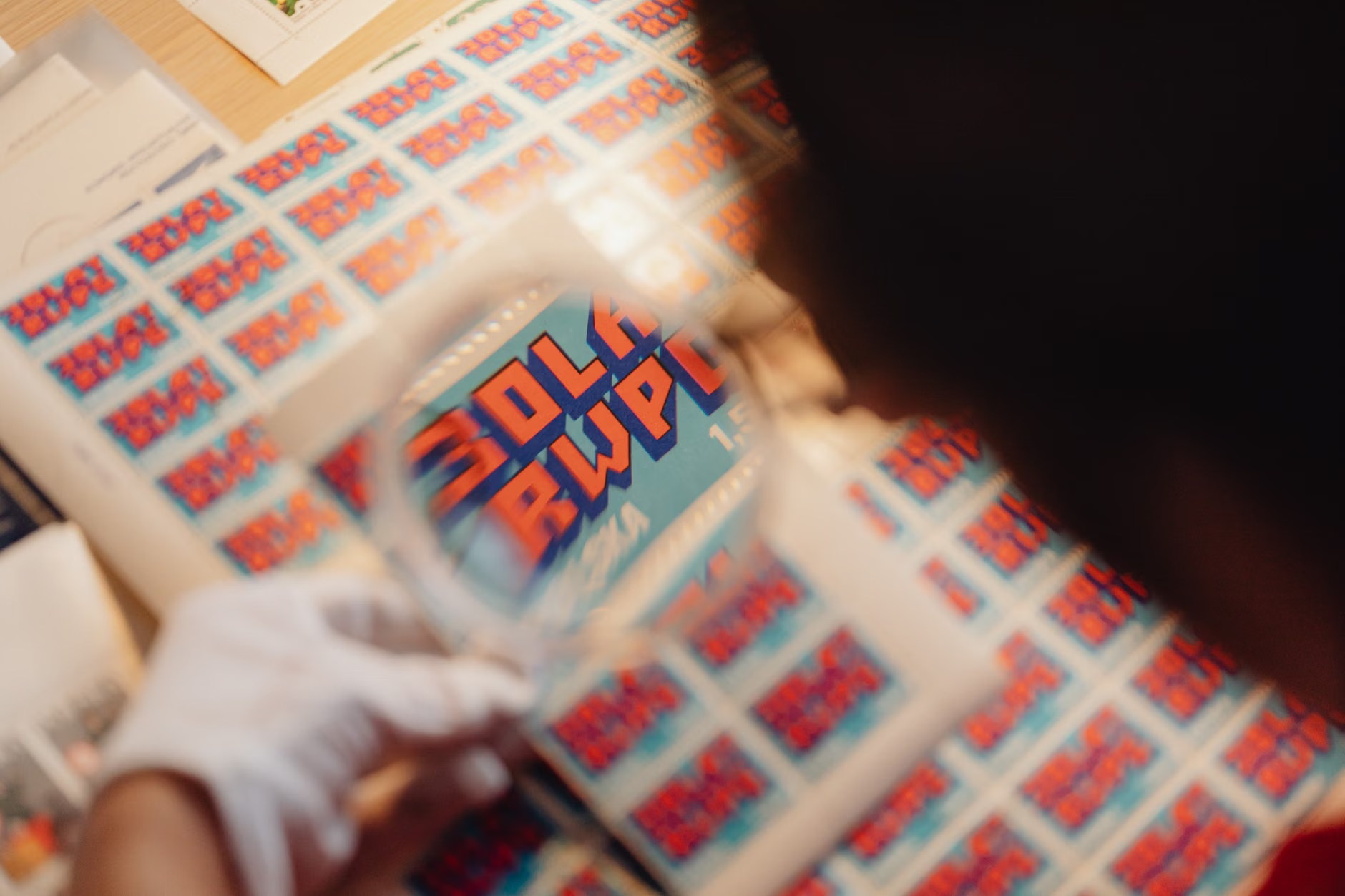
The physical handling of stamps requires the use of stamp tongs (tweezers). This is not merely for the protection of the stamps; it is an exercise in fine motor control. For those who may experience minor stiffness in the hands, the repetitive, gentle movements required to manipulate a stamp into a mount or onto a page serve as a form of non-strenuous dexterity training.
Getting Started: A Practical Framework
Many newcomers feel overwhelmed by the sheer scale of the philatelic world. The secret to enjoying the hobby is to narrow your focus immediately. Do not attempt to collect “everything.” Instead, choose a theme that resonates with your personal history or interests.
| Approach | Focus Area | Cost Level |
|---|---|---|
| Thematic | Birds, trains, space, art, or historical figures. | Low to Moderate |
| Geographical | Stamps from a specific country or region you have visited. | Low |
| Chronological | Stamps issued during your birth year or a specific decade. | Moderate |
If you prefer low-cost engagement, start with “kiloware.” This refers to bulk mixtures of stamps, often clipped from envelopes. Sorting through these provides hours of entertainment and discovery without the high cost of premium, pre-sorted specimens.
Essential Tools for the Modern Collector
You do not need an expensive setup to be a successful philatelist. However, using the right tools protects your collection and enhances your experience. The following items are considered standard for any serious beginner:
- Stamp Tongs: Choose a pair with smooth, rounded tips. Never handle stamps with your fingers, as natural skin oils can degrade the paper over time.
- Magnifying Glass: A 5x or 10x jeweler’s loupe is ideal for examining print quality and identifying subtle variations in design.
- Stockbook: Unlike albums with pre-printed spaces, a stockbook allows you to arrange your stamps however you like. This is highly recommended for beginners.
- Perforation Gauge: A simple plastic card used to measure the tiny holes (perforations) along the edges of a stamp. This is often the key to identifying different printings of the same design.
The hobby is supported by a robust global community. If you are looking to expand your knowledge, consider the following reputable resources:
- The Royal Philatelic Society London: https://www.rpsl.org.uk/ – Provides excellent historical context and research standards.
- American Philatelic Society (APS): https://stamps.org/ – Offers extensive guides for beginners and access to specialized literature.
Common Mistake: Many beginners make the error of using adhesive mounts or hinges that are of poor quality. Always purchase “archival-safe” or “acid-free” supplies. Using standard stationery tape or glues will destroy the value and integrity of your collection within a few years.
The Psychological Value of Ritual
In retirement, the structure provided by a hobby can be as important as the hobby itself. Setting aside one hour on a Tuesday morning, for instance, to organize your new acquisitions, creates a “leisure anchor” in your week. This predictability reduces anxiety and provides a consistent sense of purpose.
Furthermore, stamp collecting is a social bridge. Whether you join a local club or interact with online forums, the shared language of philately allows you to connect with others across generations. It moves the focus from “age-related concerns” to “shared intellectual inquiry,” fostering intergenerational connections that are both rewarding and refreshing.
Addressing Potential Challenges
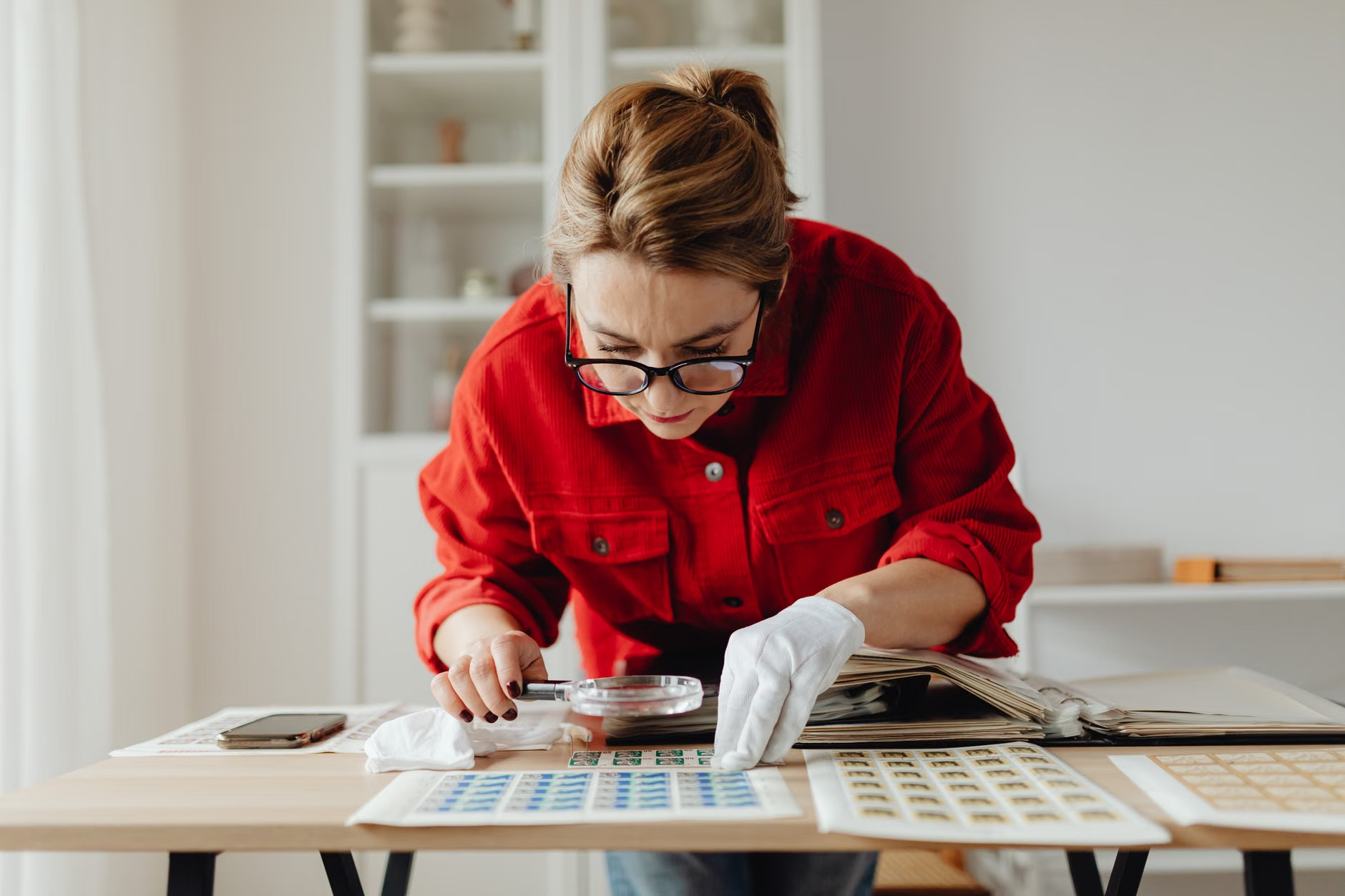
Some collectors may find that vision changes make examining small stamps difficult. If you find standard tools insufficient, consider a digital USB microscope. These devices plug into a computer or tablet, allowing you to view the stamp on a large screen with high magnification. This is an excellent way to maintain your hobby while accommodating changes in eyesight.
Another challenge is the physical space required. Philately is remarkably compact. A collection of several thousand stamps can comfortably fit into a small bookshelf. It is an ideal hobby for those who have downsized their living arrangements and require activities that do not demand extensive storage or heavy equipment.
Deepening Your Knowledge: Beyond the Basics
Once you have established your collection, you may want to delve into the history of the postal systems themselves. Every stamp tells a story of a nation’s history, its political shifts, and its cultural milestones. For instance, a stamp issued during a period of hyperinflation in a country will often show an overprint—a new value printed over the old one. Studying these gives you a window into global economic history that is far more tangible than reading a textbook.
To deepen your expertise, consider specializing. A specialist might focus on “postal history,” which involves collecting envelopes (covers) that show the postmarks, transit markings, and routing details. This adds a layer of geographical and logistical research to your hobby, essentially turning you into a detective of the mail system.
Maintaining Your Collection for the Long Term
Preservation is an essential skill. Stamps are organic materials; they are sensitive to humidity, light, and temperature. To ensure your collection lasts, keep your albums in a climate-controlled environment, away from direct sunlight, which can fade the vibrant inks. Avoiding basements or attics is a critical rule; these areas are prone to moisture, which can lead to mold or “foxing” (brown spotting) on the paper.
If you intend to pass your collection on to family members, keep a simple log of your inventory. Include a brief note on why you chose certain stamps. This transforms a collection of paper into a personal archive that carries sentimental value, making it a legacy project rather than just a hobby.
Integrating Philately into Daily Wellbeing
Integrating the hobby into your life is about balance. Use it as a form of “mental rest.” When you feel the weight of daily responsibilities or the fatigue of modern digital life, turning to your stamp album offers a tactile, analog experience that grounds you. It is a slow-paced activity by design, which makes it a perfect antidote to the fast-paced nature of modern communication.
Remember that the value of your collection is not defined by its market price. The true value is found in the joy of the hunt, the satisfaction of the find, and the cognitive clarity that comes from engaging your mind in a meaningful, structured, and lifelong pursuit.
Frequently Asked Questions
- Is stamp collecting an expensive hobby to start? No. While rare stamps can cost thousands, the vast majority of stamps are very affordable. You can easily start a collection for the price of a few cups of coffee by purchasing “mixture” packets or visiting local charity sales.
- What should I do if I inherit a collection I know nothing about? Do not rush to sell it. Start by purchasing a basic stamp catalog (such as Scott or Stanley Gibbons) to get an idea of what you have. Reach out to a local philatelic society for guidance on how to evaluate the collection safely without damaging it.
- How do I know if a stamp is rare? Rarity is determined by the number of stamps printed, the condition of the stamp, and historical demand. Most stamps found in common mail are not rare. Use a catalog to check for “varieties”—small differences in color, design, or paper—which are where true rarity is often found.
Disclaimer: This article is for informational purposes only and does not provide financial or investment advice. Stamp collecting should be treated as a leisure activity for cognitive and personal enrichment.