- Quadriceps function is critical: Your quadriceps muscles are the primary drivers for standing, walking, and stair climbing; maintaining their tone is essential for preventing falls and preserving independence.
- Safety first: Seated knee-extensions offer a low-impact, high-reward way to strengthen these muscles without placing excessive stress on your knee joints or requiring complex equipment.
- Consistency over intensity: Small, daily, controlled movements are significantly more effective for long-term muscle health than sporadic, high-intensity workouts that risk injury.
For adults aged 60 to 80, the ability to move freely and independently is the cornerstone of quality of life. The quadriceps—the large group of muscles located on the front of your thighs—are arguably the most important muscles in your body for maintaining this independence. They are the primary engine for every time you stand up from a chair, climb a flight of stairs, or walk across uneven pavement. When these muscles lose tone, the impact is not just aesthetic; it directly affects your balance, your joint health, and your risk of falls.
Seated knee-extensions are one of the most accessible, safe, and effective exercises for maintaining quadriceps health. They allow you to isolate and strengthen the target muscle group while remaining in a stable, seated position, removing the risks associated with balance-heavy exercises for those just beginning a fitness routine or managing existing joint sensitivities.
Understanding the Role of the Quadriceps in Daily Life
The quadriceps femoris is a group of four muscles that meet at the kneecap. Their primary function is knee extension—straightening the leg. In a functional, real-world context, this action is what allows you to overcome gravity to lift your body weight. Think about the mechanics of rising from a dining chair: you shift your weight forward, engage your core, and your quadriceps fire to push your body upward into a standing position. If your quadriceps are weak, your body often compensates by putting extra stress on your lower back or your knee joints, leading to pain and fatigue.
As we age, a process called sarcopenia, or the natural loss of muscle mass, begins to accelerate. Without intentional movement, this loss of muscle can lead to a “cycle of inactivity.” You find it slightly harder to stand up, so you sit more. Because you sit more, your muscles weaken further, making the next attempt to stand even harder. Breaking this cycle is not about training for a marathon; it is about keeping the “muscular engine” of your legs tuned up for daily tasks.
The Mechanics of the Seated Knee-Extension
The beauty of the seated knee-extension lies in its simplicity. You do not need a gym membership or expensive machinery. A sturdy, armless chair is all that is required. The goal is to isolate the quadriceps without putting unnecessary shear force on the knee joint.
Step-by-Step Execution
- Select the right chair: Use a chair with a firm seat that allows your feet to rest flat on the floor with your knees bent at a 90-degree angle. Avoid deep, soft sofas or chairs that lack back support.
- Maintain posture: Sit toward the front edge of the chair, keeping your back straight and your shoulders relaxed. Engage your core gently to stabilize your torso.
- The movement: Slowly straighten one leg in front of you until it is parallel to the floor. Do not “lock” or snap your knee at the top of the movement; keep a micro-bend in the joint.
- The hold: Pause for 2 to 3 seconds at the top of the movement. This “isometric hold” is where the muscle fibers are most engaged.
- The descent: Lower your foot back to the floor with the same control you used to lift it. Do not let your leg drop by gravity.
Common Mistakes to Avoid: A frequent error is using momentum to swing the leg up. If you find yourself swinging, you are using physics rather than muscle. Slowing the movement down—taking 3 seconds to lift and 3 seconds to lower—ensures that the muscle is doing the work, not gravity.
Progressing Your Routine: From Bodyweight to Resistance
Once you are comfortable with the basic movement, your muscles will adapt. To continue seeing benefits, you must apply the principle of “progressive overload.” However, for older adults, this does not mean adding heavy weight. It means increasing the challenge in a controlled, safe manner.
Methods of Increasing Challenge
| Method | How to Do It | Best For |
|---|---|---|
| Increased Repetitions | Increase from 8 reps per leg to 12 or 15. | Building muscle endurance. |
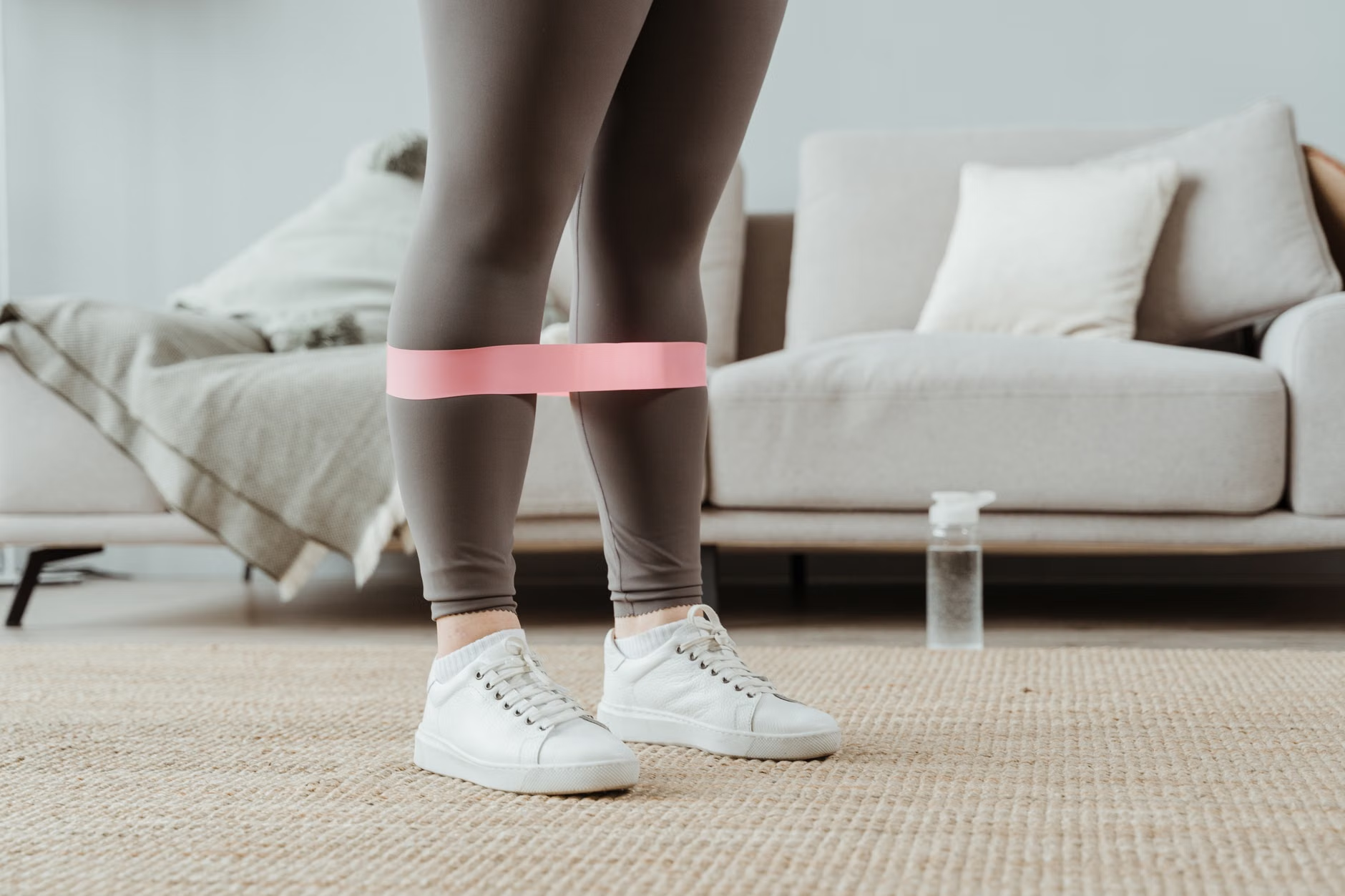
| Resistance Bands | Loop a light-tension band around the ankle and secure it to the chair leg. | Building muscle strength. |
| Ankle Weights | Use 0.5kg or 1kg soft ankle weights. | Adding consistent, measurable load. |
| Slower Tempo | Use a 5-second lift and 5-second lower count. | Improving motor control and stability. |
If you choose to use resistance bands, ensure the band is high-quality and free of cracks or tears. A snapped band is a common cause of minor injury. Always test the tension before you begin your set. If you are using ankle weights, start with the lightest available option. The goal is to feel the muscle “working,” not to feel sharp pain in the joint.
Recognizing When to Adjust or Seek Professional Advice
While seated knee-extensions are a safe preventive measure, they are not a substitute for medical treatment if you have chronic knee pain or a history of injury. If you experience sharp, stabbing, or radiating pain during the movement, stop immediately. Discomfort that feels like “muscle burn” is normal, but joint pain is a signal to pause.
When to talk to a professional: If you have recently had knee surgery, if you have advanced osteoarthritis that causes morning stiffness lasting more than 30 minutes, or if you experience swelling after exercise, consult with a physical therapist. A professional can provide a tailored exercise plan that accounts for your specific biomechanics. When visiting a specialist, come prepared with a log of your exercises, a list of any medications you are taking, and a clear description of when and where you feel pain.
Preparation for your appointment:
- Symptom Log: Note the time of day, intensity (1-10 scale), and type of activity that triggers discomfort.
- Medication List: Bring a list of current prescriptions and over-the-counter supplements.
- Goal Setting: Be specific about what you want to achieve—e.g., “I want to be able to walk up the stairs to my bedroom without stopping.”
The Overlooked Variable: The Connection Between Core and Knees
An often-overlooked factor in leg health is the role of the core. If your core is weak, your pelvis may tilt, which changes the angle at which your quadriceps pull on your kneecap. This is why it is vital to keep your back straight and your core engaged during seated knee-extensions. Think of your body as a kinetic chain: if one link (the core) is weak, the next link (the knee) has to do extra work to compensate. By simply sitting upright, you are already performing a “hidden” core exercise that makes your leg extension significantly more effective.
Integrating Exercise into a Daily Schedule
Consistency is more important than duration. A 10-minute session performed every day is vastly superior to a 60-minute session performed once a week. Many people find success by “habit stacking”—performing their knee extensions while waiting for the kettle to boil, or during the commercial breaks of a favorite program. This turns a “chore” into a seamless part of your daily rhythm.
Remember that physical activity is cumulative. Your legs do not know the difference between a “workout” and “movement.” Every time you extend your leg, you are sending a signal to your body to maintain muscle tissue. By keeping these muscles active, you are investing in your future mobility, ensuring that you can continue to travel, enjoy hobbies, and engage with your community with confidence.
Conclusion: The Long-Term Perspective
Maintaining quadriceps tone is a lifelong project, but it is one that pays dividends in the form of continued independence. Seated knee-extensions provide a low-risk, high-accessibility path to this goal. By focusing on controlled, mindful movement and listening to your body’s signals, you can build the strength necessary to navigate the world safely. Start small, stay consistent, and remember that every repetition is a step toward a more active and stable future.
For more information on senior fitness and fall prevention, you can consult resources from global health organizations such as the World Health Organization’s guidelines on physical activity or local national health services, which often provide free, evidence-based exercise guides for older adults.
Frequently Asked Questions (FAQ)
1. Can I do these exercises if I have a knee replacement?
Generally, yes, and they are often part of standard rehabilitation. However, you must follow the specific protocols provided by your surgeon or physical therapist. Never start an exercise program after surgery without explicit clearance from your medical team.
2. Should I feel pain while doing these exercises?
You should feel “muscle fatigue” or a slight “burn” in the front of your thigh. You should never feel sharp, shooting, or grinding pain in the joint itself. If you feel joint pain, stop, adjust your position, or reduce the intensity.
3. How many repetitions should I do to see results?
A good starting point is 2 sets of 8 to 10 repetitions per leg, performed 3 to 4 times a week. As you gain strength, you can gradually increase to 3 sets of 12 to 15 repetitions. Consistency is more important than high volume.