4-2) English Body Content
Hello everyone, this is Cooldy! 🙋♂️
Have you ever noticed that climbing stairs or carrying groceries feels a bit harder than it used to? If you find yourself feeling constantly low on energy and easily fatigued, it might be time to look beyond simply blaming ‘getting older’ and check on your muscle health.
Muscles are far more than just structures for strength; they are our body’s energy reserve, vital for immunity, and directly linked to our overall quality of life. Unfortunately, as we age, we naturally begin to lose muscle mass. Medically, this condition is known as Sarcopenia, and it’s a critical health issue that requires as much attention as bone or cardiovascular health.
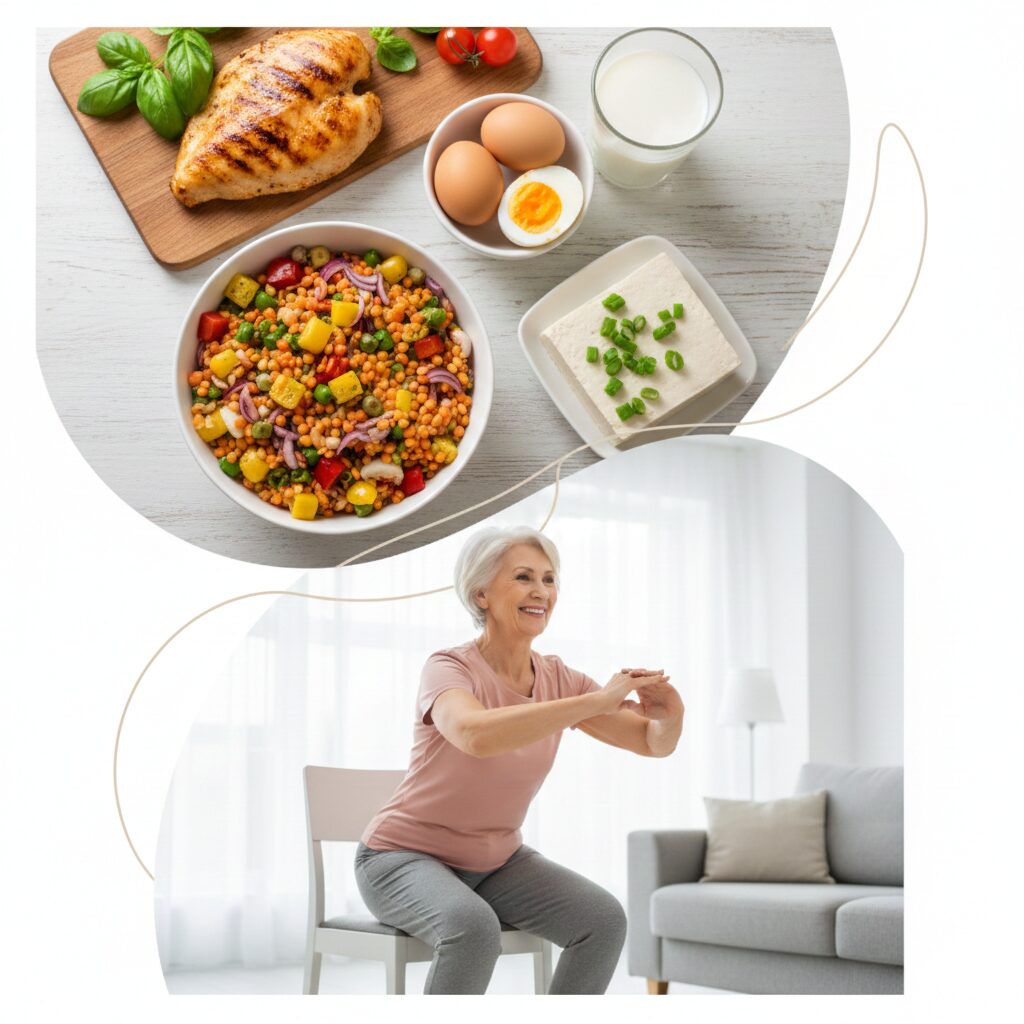
💪 Why Do Our Muscles Vanish with Age? (Causes and Risks)
Sarcopenia typically starts around the 40s, with a gradual decrease in muscle mass each year, accelerating significantly at later stages. The main causes can be categorized into three areas:
Firstly, it’s due to natural changes associated with aging. The function of muscle cell regeneration weakens, and the secretion of hormones like growth hormone and sex hormones, which aid muscle synthesis, decreases.
Secondly, insufficient nutrition plays a role. If we don’t consume enough protein, the fundamental building block of muscle, or if its absorption rate declines, the body struggles to build and maintain muscle tissue effectively.
Thirdly, lack of physical activity is a major factor. Muscles atrophy quickly if they are not used. A sedentary lifestyle deprives muscles of the stimulation they need to thrive.
Why is losing muscle so risky? Beyond just feeling weaker, it significantly increases the risk of falls and raises the incidence of chronic diseases such as diabetes and heart disease. Furthermore, a decrease in muscle mass lowers the body’s metabolic rate, making it easier to gain weight. It is fundamentally a quality-of-life issue!

🍎 Muscle-Saving Diet: Protein is Key, Timing is Crucial!
The two most important pillars for preventing and managing sarcopenia are diet and exercise. Let’s start with diet. Consuming sufficient protein, the raw material for muscle, is absolutely essential.
1. Adequate Protein Intake
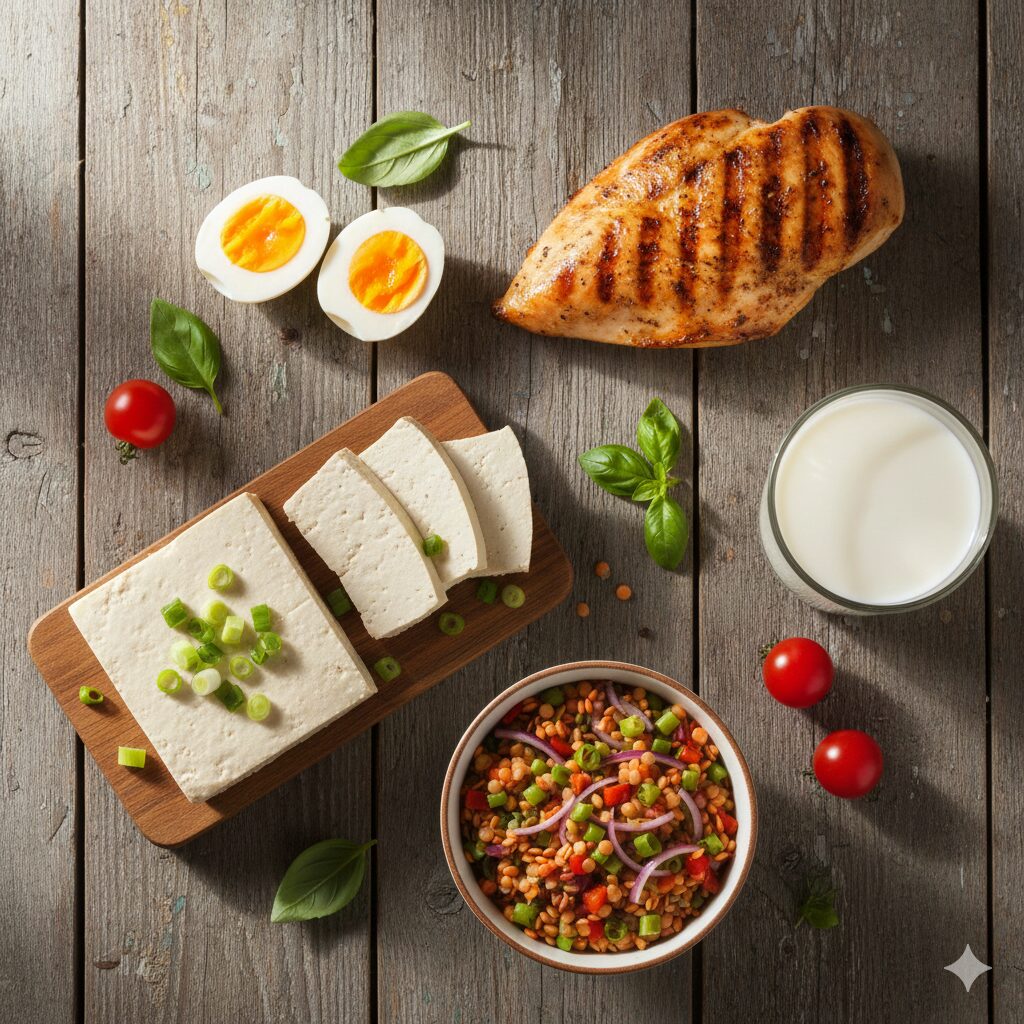
While healthy adults generally need 0.8g of protein per kilogram of body weight, those concerned about muscle loss should aim for 1.0g to 1.2g per kg. For example, if you weigh 60kg (approx. 132 lbs), you should aim for at least 60g of protein daily. Since 100g of chicken breast contains about 20-30g of protein, you need a conscious effort to include meat, fish, tofu, and eggs in every meal.
2. The Essential Amino Acid: Leucine
Among proteins, an amino acid called Leucine plays a vital role in muscle synthesis. It’s abundant in meat, dairy, and legumes. Consuming enough Leucine with your protein can be more effective in ‘switching on’ muscle building. (Note: Leucine is an essential amino acid and a key nutrient that promotes muscle protein synthesis.)
3. Meal Timing Matters
It’s better to spread your protein intake evenly across three meals than to consume a large amount at once. Eating sufficient protein at breakfast, in particular, can boost muscle synthesis efficiency throughout the day. Don’t skip breakfast; make sure to include something like two boiled eggs or a glass of soy milk.
🤸♂️ The Muscle-Awakening Routine: You Can Do It at Home!
No matter how good the protein intake is, muscle synthesis won’t happen effectively without stimulation. Muscles need the ‘movement’ signal to start building up. Don’t worry about hitting the gym! Here’s a simple routine you can easily do at home.
1. Strength Training (3 times a week or more)
The core of sarcopenia prevention is resistance training, which puts a load on the muscles. Focus on exercises that use large muscle groups.
- Chair Squats: Repeat sitting down and standing up from a sturdy chair. This is excellent for strengthening the thigh and gluteal muscles with minimal strain on the knees. Aim for 3 sets of 10–15 repetitions.
- Wall Push-ups: If traditional push-ups are too challenging, use a wall. This is a safe way to strengthen your chest and arm muscles. Aim for 3 sets of 10–15 repetitions.
- Calf Raises (Tip-toe Exercise): Hold onto a wall or chair and slowly raise and lower your heels. The calf muscles are vital for circulation, often called the ‘second heart.’ Aim for 3 sets of 15–20 repetitions.