- Pelvic stability is the foundation of balance: Strengthening the hip abductors helps prevent falls and reduces lower back strain during daily activities.
- The seated position is a safe entry point: Seated hip abduction allows you to isolate the gluteus medius without the balance risks associated with standing exercises.
- Consistency over intensity: Small, daily movements with controlled resistance provide better long-term stability than sporadic, high-intensity workouts.
Pelvic stability is not merely a fitness buzzword; it is the cornerstone of independent living for adults aged 60 to 80. As we age, the muscles responsible for stabilizing the pelvis—primarily the gluteus medius and minimus—can weaken due to sedentary habits or natural physiological changes. This weakness often manifests as a “waddle” in one’s gait, lower back pain, or a general feeling of instability when standing or walking.
The seated hip abduction exercise is one of the most effective, low-risk methods to maintain and regain this vital stability. By performing this movement from a seated position, you remove the fear of falling while effectively targeting the hip stabilizers required for walking, climbing stairs, and standing up from a chair.
Understanding the Mechanics: Why the Hip Abductors Matter
To understand why seated hip abduction is essential, we must look at what these muscles actually do. The hip abductors are a group of muscles located on the side of the hip. Their primary job is to move the leg away from the midline of the body and, more importantly, to keep the pelvis level when you are standing on one leg.
Every time you take a step, you are momentarily balancing on a single leg. During that fraction of a second, your hip abductors must contract to prevent your pelvis from dropping on the unsupported side. If these muscles are weak, your body compensates by leaning to the side, which places undue stress on your spine and hips. Over time, this leads to chronic discomfort and an increased risk of trips and falls.
The Anatomy of Stability
The gluteus medius is the “star” of pelvic stability. Unlike the gluteus maximus, which is responsible for large movements like jumping or running, the medius is a postural muscle. It is designed to work constantly to maintain your center of gravity. When you sit for long periods, this muscle can become inhibited—essentially “forgetting” how to fire correctly. The seated hip abduction exercise serves as a “wake-up call” for these muscles.
Preparing for Your Session: Safety and Equipment
Before beginning any new movement routine, it is essential to ensure your environment is safe. You do not need a gym membership to perform seated hip abduction, but you do need the right setup.
- The Chair: Use a sturdy, armless chair. It should be stable enough that it does not slide or tip when you apply pressure. Avoid rolling office chairs or chairs with wheels.
- Footwear: Wear supportive shoes with non-slip soles. Exercising in socks on a hardwood or tile floor increases the risk of slipping.
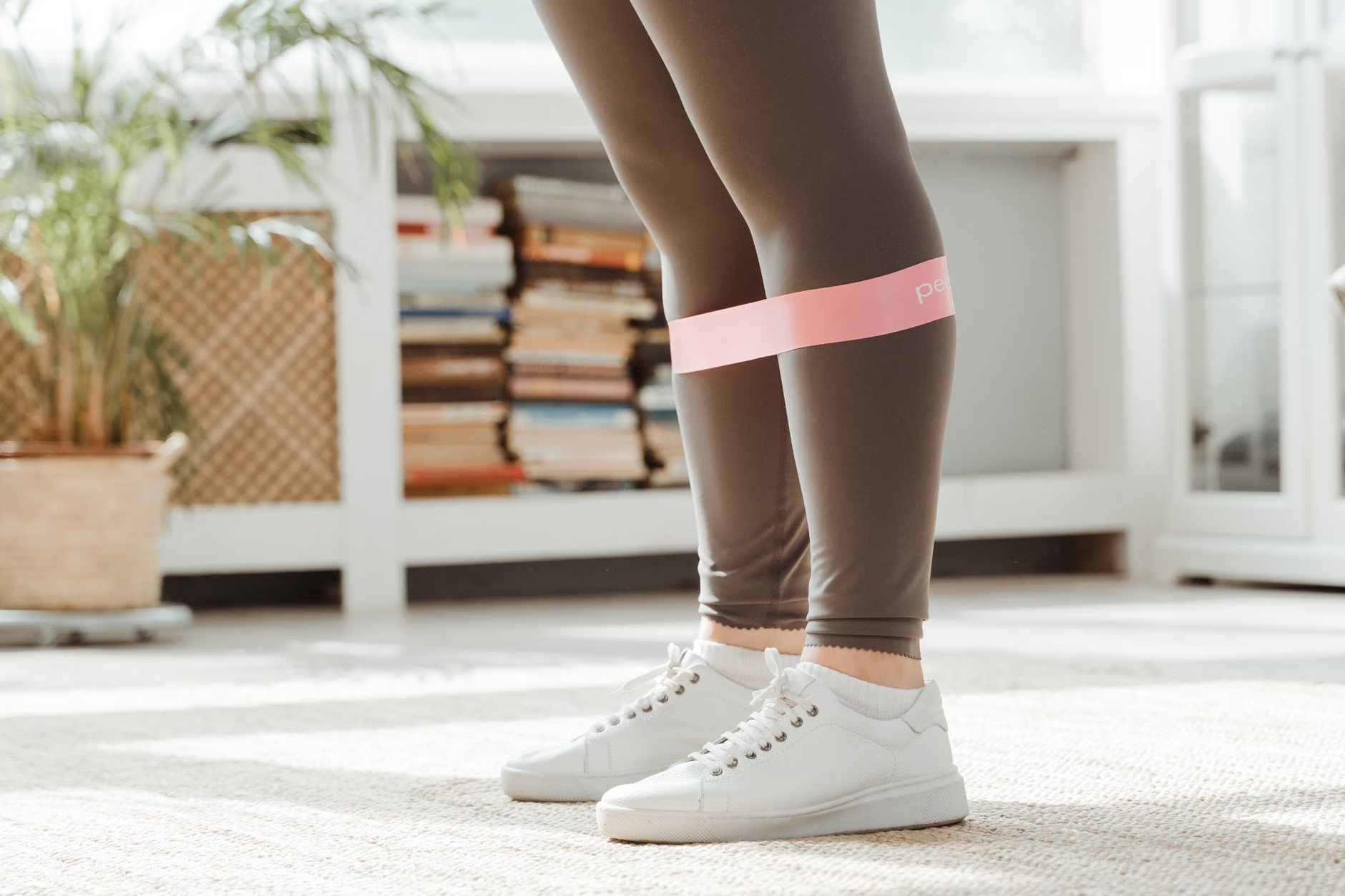
- Resistance: You can start with just your own body weight. As you progress, a light resistance band (often called a loop band or mini-band) is an excellent, inexpensive tool to increase the challenge.
Warning Sign: If you experience sharp, shooting pain in your hip or lower back while attempting these movements, stop immediately. Mild muscle fatigue or a “burning” sensation in the side of the hip is normal; sharp or radiating pain is a signal to consult with a physical therapist or healthcare professional before continuing.
Step-by-Step Execution: The Seated Hip Abduction Routine
The beauty of this exercise is its simplicity. However, form is everything. If your posture is poor, you will not target the correct muscles.
| Step | Instruction | Focus Point |
|---|---|---|
| 1. Positioning | Sit tall on the edge of your chair, feet hip-width apart. | Keep your spine neutral; do not slouch. |
| 2. Engagement | Place a loop band around your knees (optional). | Ensure the band is flat and not twisted. |
| 3. Movement | Slowly push your knees outward against the resistance. | Keep your feet flat on the floor at all times. |
| 4. Return | Slowly return your knees to the starting position. | Control the movement; do not let the band snap your knees back. |
Repeat this movement for 10 to 12 repetitions. Perform three sets, with a one-minute rest in between. If you are doing this without a band, focus on “squeezing” the muscles on the outside of your hips as you push your knees out. The mental connection to the muscle is just as important as the physical movement.
Integrating Stability into Daily Life
Stability is not a “one-and-done” task. It requires consistent integration into your daily routine. Because this exercise is performed while seated, it is incredibly versatile.
The “Commercial Break” Strategy
If you enjoy watching television, use the commercial breaks as a trigger for your stability routine. Two minutes of seated hip abduction during a break is enough to stimulate the hip muscles without requiring a dedicated “workout hour” that might feel daunting or time-consuming.
Office or Desk Integration
For those who spend time at a desk, whether for work or hobbies, perform a set of hip abductions every time you finish a task or before you stand up to get a glass of water. This helps “prime” your hips, making it easier to stand up with good balance.
Addressing Common Mistakes
Even simple exercises can be performed incorrectly, which reduces their effectiveness and can lead to frustration. Here are the most common pitfalls to avoid:
- Using Momentum: Do not “bounce” your knees out. The movement should be slow and deliberate. If you are using a band that is too heavy, you will be forced to use momentum. Switch to a lighter band.
- Lifting the Feet: Your feet must remain firmly planted. If your feet lift off the floor, you are engaging your ankles rather than your hips.
- Arching the Back: Keep your core braced. Imagine a string pulling the crown of your head toward the ceiling. If you find your lower back arching, you are likely overcompensating because your hip muscles are tiring.
When to Seek Professional Guidance
While seated hip abduction is a safe, low-impact exercise, there are scenarios where you should speak with a healthcare professional or a physical therapist before starting:
- Recent Surgery: If you have recently undergone hip replacement or back surgery, obtain clearance from your surgeon.
- Chronic Conditions: If you have severe osteoarthritis or rheumatoid arthritis in the hip joint, a professional can help you modify the range of motion to avoid joint irritation.
- Persistent Imbalance: If you have experienced frequent falls, do not treat this as a DIY project. A professional evaluation can determine if your instability is caused by muscle weakness, vision issues, or medication side effects.
When visiting a professional, bring a list of your current medications and be prepared to describe exactly when you feel unstable. For example, “I feel unsteady when I transition from sitting to standing” is much more helpful than “I just feel weak.”

The Long-Term View: Why This Matters for Longevity
Preventive health is about maintaining your “functional reserve.” This is the extra capacity your body has to handle the stresses of daily life. By keeping your hip abductors strong, you are essentially “banking” stability. As you enter your 70s and 80s, this reserve becomes the difference between needing assistance to walk and being able to navigate your environment independently.
Consider the cumulative effect: 30 repetitions a day, five days a week, equals 150 repetitions of muscle-strengthening work every week. Over a year, that is nearly 8,000 repetitions. Small, consistent actions are the most reliable path to maintaining mobility.
FAQs
1. Can I do this exercise every day?
Yes, because it is a low-intensity, isolated movement, it is generally safe to perform daily. However, if you feel significant muscle soreness, give yourself a rest day to allow the muscle fibers to recover.
2. What if I don’t have a resistance band?
You can still perform the exercise effectively by focusing on the “mind-muscle connection.” Use your hands to provide manual resistance by placing them on the outside of your knees and pushing inward while you push your knees outward. This creates the same stabilizing tension.
3. Will this exercise help with my lower back pain?
Often, yes. Many cases of lower back pain in older adults are caused by the pelvis tilting or rotating because the hip stabilizers are weak. By strengthening the hips, you provide a more stable base for your spine, which can alleviate secondary strain on the lower back. However, always consult a doctor to rule out structural issues like disc herniation or spinal stenosis.
Disclaimer: This article is for informational purposes only and does not constitute medical advice. Always consult with a healthcare professional before starting any new exercise program, especially if you have pre-existing health conditions.
Official Resources for Further Reading: