Have you ever woken up in the middle of the night or first thing in the morning because your hands felt like they were vibrating or completely dead? It’s a terrifying feeling, isn’t it? Just last week, I was chatting with a close friend of mine who’s usually the picture of health. He told me he’s been struggling to even hold a coffee mug in the morning because his fingers feel like they’re made of wood. He was worried it was just “old age” setting in, but as a dedicated health info seeker, I couldn’t let him settle for that answer. I dove deep into medical journals and expert guides to find out what’s really going on.
The truth is, that “pins and needles” sensation is a loud shout from your nervous system. While many people think it’s just poor circulation, it’s often much more closely related to how your nerves are being squeezed while you sleep. I’ve gathered all the best research and some practical tips that actually work, so you can stop waking up in a panic. Let’s get into the nitty-gritty of why your hands are acting up and how to fix it.
| Key Takeaways from This Article |
| 1. Morning hand numbness is usually caused by nerve compression (like Carpal Tunnel or Neck issues) rather than just “blood flow.” |
| 2. Adjusting your sleeping posture and wrist position can reduce symptoms by over 50% almost overnight. |
| 3. Specific nutrients like Vitamin B12 and daily “Nerve Gliding” exercises are often more effective than standard painkillers. |
Why does the tingling wait until the morning to strike?
It’s frustrating, isn’t it? You feel fine all day, but the moment you open your eyes, your hands are tingling. I found out there’s a very specific physiological reason for this. During the night, our body’s activity drops, and fluid tends to redistribute.

This fluid often settles in the tissues around our wrists and ankles. Because the “tunnels” that our nerves pass through—like the carpal tunnel in your wrist—are already very narrow, even a tiny bit of swelling from this fluid puts immense pressure on the nerves. It’s like a garden hose being stepped on; the signal just can’t get through.
And let’s talk about how we sleep. I used to be a “wrist curler.” I would tuck my hands under my chin or sleep with my wrists bent sharply inward. I didn’t realize I was basically putting my nerves in a vice grip for eight hours! When I started paying attention to my hand position, my morning “dead hand” episodes almost vanished. Your nerves are actually far more sensitive to pressure than your blood vessels are, which is why that “asleep” feeling happens so easily.
Is it your wrist, your elbow, or your neck? Let’s find out.
Not all numbness is created equal. Depending on which fingers are tingling, your body is giving you a map of where the problem lies. Based on data from the Mayo Clinic and leading orthopedic guides, here is how you can play detective with your own symptoms.
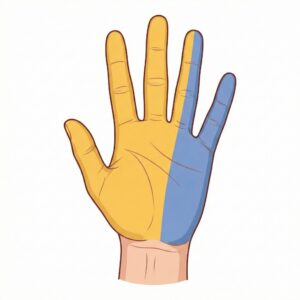
1. If it’s your thumb, index, and middle finger: Carpal Tunnel Syndrome
This is the most common culprit. The “Median Nerve” gets squeezed at the wrist. A classic sign is if you feel the urge to “shake out” your hands to get the feeling back. Interestingly, your pinky finger will usually feel perfectly normal in this case.
2. If it’s your pinky and ring finger: Cubital Tunnel Syndrome
This involves the “Ulnar Nerve,” which runs through your elbow (the “funny bone” area). If you sleep with your elbows bent tightly—like you’re holding a phone—you’re stretching this nerve to its limit. If only your pinky is tingling, look at your elbows, not just your wrists.
3. If your whole arm feels heavy and tingly: The “Neck” Factor
Sometimes the problem isn’t in your hand at all. If the discs in your neck (the cervical spine) are slightly out of alignment or compressed, it can cause “referred pain” or numbness all the way down to your fingertips. My friend Mike found that switching to a specialized neck support pillow did more for his hands than any hand massage ever did!
Can a pill really fix it? The truth about supplements
When my hands first started tingling, I ran to the pharmacy and grabbed the first “blood circulation” supplement I saw. It didn’t do much. Why? Because my problem wasn’t my blood—it was my nerves.
According to researchers at the Foundation for Peripheral Neuropathy, Vitamin B12 is absolutely essential for nerve health. It’s used to build the “Myelin sheath,” which is like the plastic insulation on an electric wire. If that insulation wears thin, the signals short-circuit, leading to that tingling sensation. If you’re over 50 or on a plant-based diet, a B12 deficiency might be the hidden reason behind your numb hands.
However, if there is actual inflammation, a doctor might suggest non-steroidal anti-inflammatory drugs (NSAIDs). But I always say: why treat the symptom when you can fix the cause? Before relying on medication, I highly recommend trying the lifestyle shifts I’ve listed below.
Practical habits to reclaim your mornings
You don’t need expensive equipment to start feeling better. Here are the three things I personally tried that made the biggest difference.
- The “Night Splint” Trick: You can buy a basic, soft wrist brace at most drugstores. Wear it only at night. It keeps your wrist in a “neutral” position, preventing you from curling your hands in your sleep. It felt a bit weird at first, but it was a total game-changer for me.
- The Pillow Check: If you’re a side sleeper, make sure your pillow is high enough to keep your neck straight but not so high that it tilts your head up. A neutral spine keeps the nerve pathways from your brain to your hands wide open.
- Warm Water Therapy: Before you start your day, soak your hands in warm (not hot!) water for 5 minutes. This helps move that morning fluid out of the joints and relaxes the tendons that might be pressing on your nerves.
Comparison Table: Why are my hands tingling?
| Condition | Primary Numbness Zone | Key Trigger | Unique Sign |
| Carpal Tunnel | Thumb, Index, Middle | Wrist bending | Shaking hands helps |
| Cubital Tunnel | Pinky, Ring finger | Elbow bending | Claw-like feeling in fingers |
| Cervical (Neck) | Entire arm/hand | Head movement | Weakness in the shoulder |
| Neuropathy | Symmetrical (both hands) | High blood sugar/Deficiency | Burning or “stocking-glove” feel |
My “Nerve Gliding” routine (5 minutes a day)
I learned this technique from a physical therapy guide, and it’s much more effective than standard stretching. Think of it as “flossing” for your nerves. It helps the nerve slide smoothly through the tunnels in your arm.
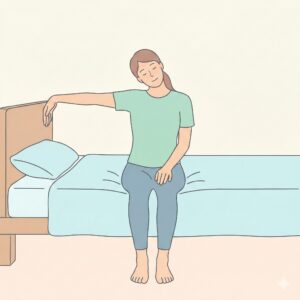
- Stand up and stretch one arm out to the side, palm facing the ceiling.
- Slowly tilt your head away from that arm (ear to opposite shoulder).
- Now, gently bend your wrist so your fingers point toward the floor.
- You should feel a “zing” or a stretch along the arm. Hold for 5 seconds, then relax.
- Repeat 10 times on each side every morning.
A lesson I learned the hard way (My failure story)
When I first felt the numbness, I thought, “I just need to squeeze a stress ball and build muscle!” I spent a whole afternoon squeezing a hard rubber ball. By the next morning, I couldn’t even move my thumb. I had accidentally increased the pressure in my carpal tunnel and made the inflammation twice as bad. The lesson? Nerves hate force. They love space and gentle movement. If your hands are numb, don’t try to “work through the pain” with heavy grip exercises. Softness is key!
Frequently Asked Questions (Q&A)
Q1: Is it dangerous if both my hands and feet are tingling?
A: If it’s happening in both your hands and feet at the same time, it’s less likely to be a “pinched nerve” and more likely to be a systemic issue like Vitamin B12 deficiency or a side effect of blood sugar issues. You should definitely mention this to a healthcare professional for a blood test.
Q2: Can stress cause hand numbness?
A: Absolutely. When we are stressed, we tend to tense our neck and shoulder muscles, which can compress the nerves leading to the arms. Plus, high stress can lead to hyperventilation, which changes the calcium levels in your blood and causes tingling in the extremities.
Q3: When should I actually see a doctor?
A: If the numbness is accompanied by a loss of muscle in the base of your thumb, if you find yourself dropping things constantly, or if the numbness doesn’t go away within an hour of waking up, it’s time to get a professional evaluation.
I know how scary it is to wake up feeling like your body is failing you. But remember, your body is just sending you a message that it needs a little more space and the right nutrients. Since I started using a night brace and doing my 5-minute nerve glides, I haven’t had a “dead hand” morning in months. My friend Mike is also doing much better after changing his pillow!
Don’t ignore the signs. Start with one small change tonight—maybe a better sleeping position or a warm soak tomorrow morning. You deserve to wake up feeling refreshed and ready to go. How about you? Have you noticed a specific position that makes your hands go numb? Let’s talk about it in the comments!
Reliable Sources for Further Reading:
- Mayo Clinic: Numbness in hands causes and symptoms (https://www.mayoclinic.org/symptoms/numbness-in-hands/basics/causes/sym-20050842)
- Cleveland Clinic: Understanding Carpal Tunnel Syndrome (https://my.clevelandclinic.org/health/diseases/4005-carpal-tunnel-syndrome)
- American Academy of Orthopaedic Surgeons: Therapeutic Exercise Program for Carpal Tunnel (https://orthoinfo.aaos.org/en/recovery/therapeutic-exercise-program-for-carpal-tunnel-syndrome/)
- The Foundation for Peripheral Neuropathy: Nutritional and Vitamin Deficiency (https://www.foundationforpn.org/causes/nutritional-and-vitamin-deficiency-neuropathy/)
👉 Related Posts
Night Leg Cramps and Swelling? Boost Your Blood Circulation by Activating Your “Second Heart”