3 Key Takeaways from This Article
- Pneumonia can occur without a cough or fever; unexplained fatigue or loss of appetite is a critical ‘Stealth’ warning sign.
- 2026 research highlights microplastics and oral bacteria as major hidden triggers for lung inflammation.
- Don’t wait for “classic” symptoms. Use the 3-step self-check guide below to protect your health today.
What if I told you that you could have a severe lung infection without coughing even once? It sounds impossible, right? But the truth is, when our immune system isn’t firing on all cylinders, it might not even have the strength to trigger a cough or a fever. This is what medical circles are increasingly calling ‘Stealth Pneumonia’ or ‘Atypical Pneumonia,’ and it is far more dangerous than the common cold.
Just a few months ago, a close friend of mine—let’s call him Uncle Joe—felt a bit “off.” He wasn’t coughing, and he didn’t have a temperature. He just felt unusually tired and didn’t want to finish his favorite meal. We thought he was just overworked. But when he started acting a bit confused, we rushed him to the ER. My heart skipped a beat when the doctor showed us the X-ray. His lungs were almost entirely clouded. I felt a wave of guilt washing over me, thinking, “How did I miss this?” That’s why I, Cooldy, have dedicated myself to gathering this information. I don’t want anyone else to experience that “heart-dropping” moment. Let’s dive into what’s really happening inside our bodies. 🧐
## Pneumonia Without a Cough? The ‘Silent Invader’ Explained
We’ve been conditioned to think that pneumonia equals chest-racking coughs and soaking sweats. In reality, those symptoms are signs of a healthy immune system putting up a fight. But as we get older or deal with chronic stress, our “internal army” gets a bit sluggish. The bacteria or viruses move in, but the alarm bells (coughing) never go off.
According to the latest 2026 health data, nearly 30% of patients visiting hospitals for pneumonia show these non-traditional symptoms. Instead of a cough, look for these “whispering” signals:
- Sudden Apathy: Not just “I’m tired,” but a total lack of energy to even hold a spoon.
- Loss of Appetite: Your favorite food looks like cardboard, and even a sip of water feels like a full meal.
- Cognitive Shifting: Sudden confusion, forgetting familiar names, or acting out of character (often mistaken for early dementia).
These signs are so subtle that it’s easy to say, “Oh, I’m just getting older” or “I didn’t sleep well.” But this is your lungs’ final SOS.
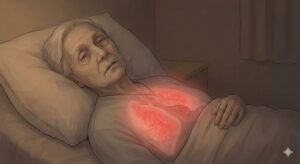
## Is Your Toothbrush Attacking Your Lungs? The Oral Connection
Have you brushed your teeth thoroughly today? It’s not just about your smile; it’s about saving your lungs. One of the most overlooked causes of pneumonia in 2026 is ‘Aspiration Pneumonia.’
Our mouths are home to billions of bacteria. Usually, we swallow them, and stomach acid dissolves the problem. But if our swallowing reflex (deglutition) weakens, those bacteria sneak into the windpipe instead of the esophagus. If these bacteria reach the lungs while you sleep, they set up camp and cause a massive infection.
In my research, I found a startling study showing that people with gum disease are nearly four times more likely to die from pneumonia. > 💡 Cooldy’s Simple Guide: What is ‘Aspiration Pneumonia’?
It’s when food, liquid, or saliva “goes down the wrong pipe” and ends up in the lungs. If you find yourself choking on water or “clearing your throat” often, you need to be on high alert!
I used to be lazy with my nighttime routine when I was tired, but after learning this, I’ve become a tongue-scraping fanatic! 🪥 Your lungs will thank you for those extra two minutes at the sink.
## 2026 Alert: The Microplastic-Pneumonia Link
This is a bit scary, but it’s the reality of 2026. Recent environmental health reports have identified inhaled microplastics as a major catalyst for lung infections. We breathe in tiny plastic fibers from synthetic clothes, laundry dryers, and even those plastic coffee lids. These particles get trapped deep in the lung tissue. Our “cleaner cells” (macrophages) try to get rid of them, but they can’t. This creates a state of chronic inflammation. When a stray pneumonia bacterium enters a lung already weakened by plastic irritation, it’s like throwing a match onto a puddle of gasoline.
Improving indoor air quality and switching to glass or ceramic containers isn’t just a “green” trend anymore—it’s a vital respiratory defense strategy.
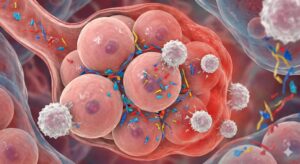
## Cold vs. Flu vs. Stealth Pneumonia: Know the Difference
I’ve put together this table so you can stop guessing and start acting. Save this to your phone!
| Category | Common Cold | Flu (Influenza) | Stealth Pneumonia |
| Fever | Mild or None | High (Over 101°F) | None or Low Body Temp |
| Cough | Frequent (with phlegm) | Dry & Severe | Rare or Completely Absent |
| Pain | Sore Throat | Muscle Aches, Headache | Chest Tightness, Abdominal Pain |
| Unique Signs | Runny Nose, Sneezing | Chills, Extreme Fatigue | Loss of Appetite, Confusion |
| Recovery | Within 1 week | 1–2 weeks | Rapid Decline if Ignored |
The takeaway? If you feel “sick” but don’t have a “cold,” it might be something much deeper. “I don’t have a fever, so I’m fine” is the most dangerous sentence you can say.
## 3-Step Home Self-Check (Do This Now!)
You don’t need a medical degree to do a basic “safety check” at home. I use these steps for myself and my family.
Step 1: The Breath Count (The Most Reliable)
Lie down comfortably and count how many breaths you take in one minute.
- Normal: 12–20 breaths per minute.
- Warning: Over 25 breaths per minute means your lungs are struggling to get enough oxygen.
Step 2: Deep Breath Test
Take the deepest breath you can. Do you feel a sharp poke or a dull “heavy” feeling in one side of your chest? Do you hear a faint “wheeze” when you exhale? That’s a sign that fluid or inflammation is blocking the air.
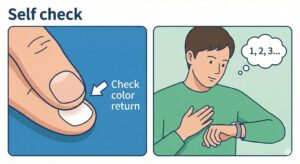
Step 3: The Fingernail & Lip Check
Check your oxygen levels visually. Look in the mirror—are your lips slightly bluish? Press down hard on your fingernail until it turns white, then let go. If it doesn’t turn pink again within 2 seconds, your blood might be oxygen-starved.
## “I Thought Vitamins Would Save Me”: My Personal Fail
I’ll be honest with you—I’m a bit of a “health nut.” A while back, when I felt that heavy, sinking exhaustion, I thought, “I’ll just double up on Vitamin C and sleep it off.” I spent three days drinking expensive juices and taking supplements, waiting for the “flu” to break.
But it never broke. I just got weaker. By the time I went to the doctor, the infection had spread to both lungs. Vitamins are great for prevention, but they are not a cure for an active lung infection. My stubbornness almost cost me dearly. Don’t be like “Old Cooldy.” If your body feels “heavy” in a way you can’t explain, go see a pro.
## 3 Miraculous Habits to Protect Your Lungs Today
Here are three science-backed habits that cost zero dollars but could save your life.
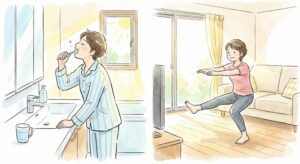
1. The ‘Reverse’ Morning Routine
Most people reach for a glass of water the moment they wake up. Stop! Brush your teeth or gargle first. During the night, your mouth becomes a playground for bacteria. Drinking water first thing “washes” those bacteria straight toward your throat and potentially your lungs. Clean the mouth, then hydrate.
2. Build Your Thighs (Yes, Really!)
What does your leg have to do with your lungs? Everything. Muscle mass is the reservoir for your immune system. If you have strong quadriceps (thigh muscles), your body has more resources to fight off a sudden infection. Even 10 minutes of walking or a few chair-squats daily can make you “Pneumonia-proof.”
3. The Vaccine ‘Homework’
Check your records. There are different types of pneumonia vaccines (PCV13, PPSV23). In 2026, many regions have updated their recommendations and coverage. It’s not a one-and-done deal for everyone. Make it your homework to ask your pharmacist this week.
## ❓ Frequently Asked Questions (Q&A)
Q1. Can I really have pneumonia with ZERO symptoms?
It’s rare to have zero symptoms, but very common to have non-respiratory symptoms. You might just feel “confused” or “weak.” If you aren’t acting like yourself, it’s worth a check-up.
Q2. What are the best “lung foods”?
I’ve found that broccoli is a superstar. It contains sulforaphane, which helps the lungs clear out toxins and plastics. Also, pears and ginger are fantastic for soothing the bronchial tubes. 🥦
Q3. Do masks actually help against microplastics?
Yes! A high-quality mask (like a KF94 or N95) is incredibly effective at filtering out the synthetic fibers and plastic dust that contribute to lung inflammation. Wear one in crowded or dusty areas!
Your lungs are incredibly resilient, but they are also delicate. By listening to the “silent” whispers of your body and keeping your mouth clean, you can stay ahead of the curve.
How would you rate your lung health today? Do you have a secret tip for keeping your breathing easy? Share your thoughts in the comments below! Cooldy is always here to cheer you on toward a healthier, more vibrant life! 💪✨
Reliable References:
- CDC – Pneumonia Symptoms and Diagnosis
- Mayo Clinic – Aspiration Pneumonia Overview
- WHO – Respiratory Tract Infections and Prevention
👉 Related Posts
Essential Pneumococcal Vaccination Guide: Types and Timing for Better Health