- Origami provides a structured, low-impact way to maintain fine motor skills and hand-eye coordination through repetitive, precise movements.
- The practice fosters “active mindfulness,” which helps reduce stress and improves cognitive endurance by requiring sequential focus and spatial visualization.
- Success in origami for older adults relies on choosing the right paper size and weight to accommodate grip strength and visual clarity, rather than attempting complex models immediately.
The Intersection of Craft and Cognitive Health
For many adults between the ages of 60 and 80, the search for a hobby often balances the need for mental stimulation with the reality of physical limitations. Origami—the Japanese art of paper folding—is uniquely suited to this demographic. It requires no specialized machinery, minimal space, and can be adjusted to any level of physical capability. Beyond the aesthetic result of a folded paper animal or geometric shape, origami serves as a practical, evidence-based exercise for the hands and the brain.
When we discuss dexterity in later life, we are referring to the fine motor skills required for daily tasks like buttoning a shirt, opening a jar, or using a touchscreen device. Origami acts as a form of “functional training” for the fingers. Each fold requires a specific degree of pressure, alignment, and tactile feedback. By engaging in this craft, you are reinforcing the neural pathways that control these fine movements, effectively slowing the natural decline in hand dexterity that can occur with age.
Why Origami Works for Fine Motor Maintenance
Fine motor skills are governed by the coordination of small muscles in the hands and wrists. As we age, conditions such as arthritis or general stiffening of the joints can make these movements less fluid. Origami is a low-impact, repetitive activity that encourages range-of-motion without the strain associated with heavy lifting or high-intensity exercise.
The Biomechanics of the Fold
Every fold in origami involves three distinct stages: the alignment, the crease, and the stabilization.
- Alignment: This requires visual-spatial processing to match corners and edges. It challenges the eyes to gauge distance and precision.
- The Crease: This requires the use of the thumb and index finger, often applying firm pressure. This strengthens the pincer grasp, which is vital for daily independence.
- Stabilization: Holding the paper in place while making subsequent folds develops static strength, preventing tremors and improving control.
Getting Started: Choosing the Right Materials
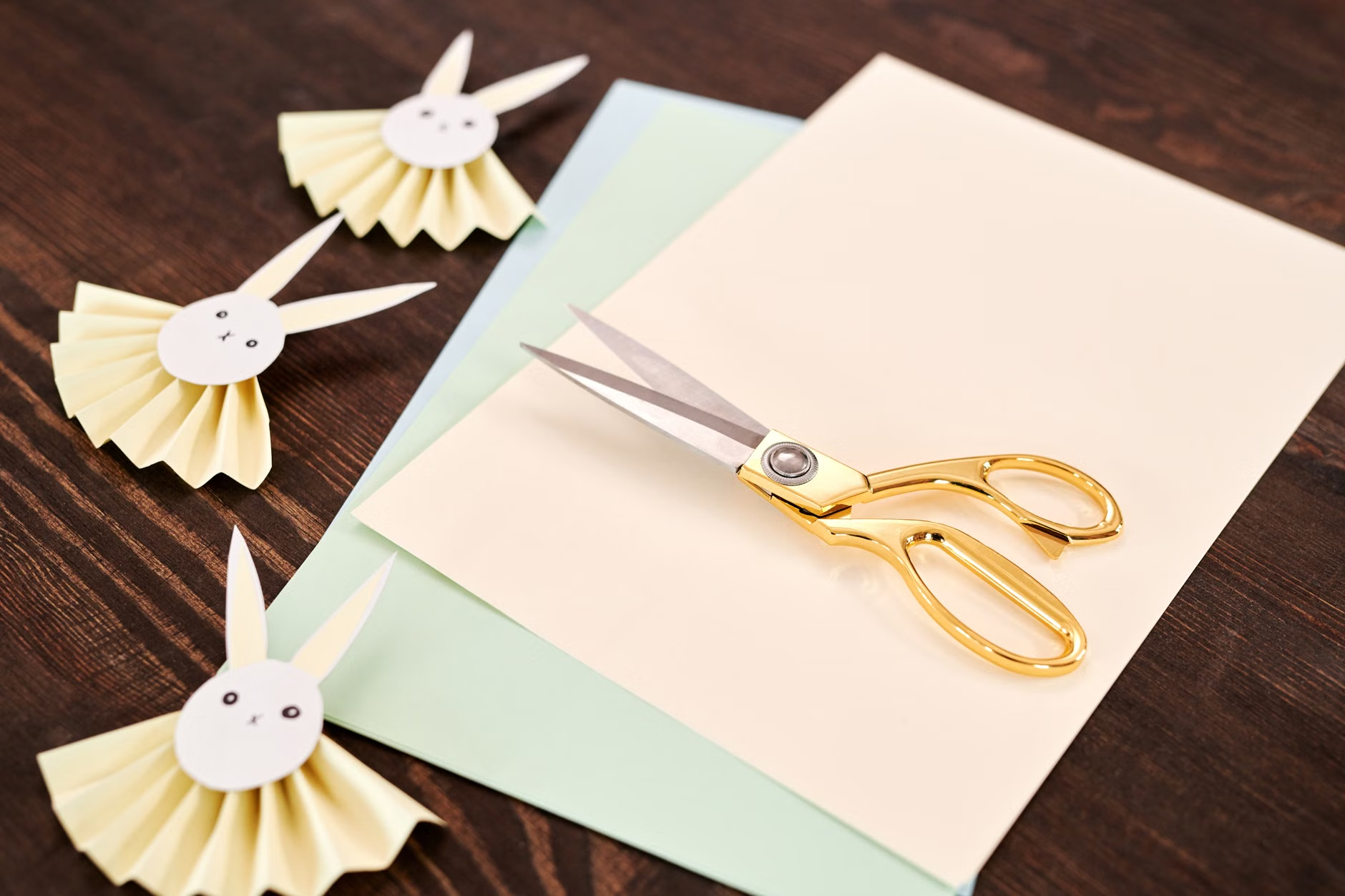
One of the most common mistakes beginners make is purchasing paper that is too thin or too small. For an adult beginning their origami journey, the choice of paper is a critical decision factor for comfort and success.
| Paper Type | Suitability for Seniors | Practical Tip |
|---|---|---|
| Standard Origami Paper (6 inch) | Moderate | Good for those with steady hands and good vision. |
| Large Origami Paper (8-10 inch) | High | Recommended for beginners to reduce strain on the fingers. |
| Kami/Washi Paper | High | Easier to fold and hold a crease, reducing required force. |
If you have any degree of stiffness in your fingers, start with larger sheets of paper. Larger paper allows for larger, more forgiving movements. As your confidence and dexterity improve, you can transition to smaller sizes. Avoid “printer paper” for your initial attempts, as it is often too thick to crease cleanly, which may lead to frustration and unnecessary pressure on the finger joints.
Building a Mindful Practice
Mindfulness is often associated with meditation, but “active mindfulness”—engaging in a task that requires total focus—is equally effective. Origami is a sequence-based activity. You cannot skip a step, and you cannot rush the result. This forced pacing is a powerful antidote to the rapid-fire distractions of modern digital life.
The “Step-by-Step” Cognitive Framework
To maximize the cognitive benefits, treat each project as a sequence of logical problems to be solved.
- Preparation: Clear your workspace. Good lighting is essential to reduce eye strain. Ensure your chair provides adequate back support.
- Observation: Before folding, look at the diagram or video. Visualize the final position of the paper. This activates the prefrontal cortex, which is responsible for planning and executive function.
- Execution: Perform one fold at a time. Do not look ahead to the next step until the current one is crisp and accurate.
- Verification: Compare your fold to the instruction. If it is misaligned, take the time to undo and redo it. This process of error-correction is where the true cognitive workout happens.

Addressing Physical Comfort and Accessibility
While origami is accessible, it is important to manage your physical stamina. Engaging in this hobby for long periods can lead to fatigue, not just in the hands, but in the neck and shoulders.
Safety and Ergonomics:
- Posture: Ensure your table is at elbow height. If you are hunching over to see your work, move the paper closer to your eyes rather than lowering your head.
- Rest Intervals: Follow the 20-20-20 rule. Every 20 minutes, take a 20-second break to stretch your fingers, wrists, and neck, and look at something 20 feet away to relax your eyes.
- Pain Signaling: If you feel sharp pain in your joints, stop immediately. Stiffness is normal, but pain is a sign to adjust your technique or rest. If you have chronic conditions like rheumatoid arthritis, consult your healthcare provider or an occupational therapist about specific hand-stretching exercises that can complement your origami practice.
Advanced Techniques and Long-Term Engagement
Once you have mastered basic shapes like the crane or the boat, you can move toward more complex models. This is not just about complexity for its own sake; it is about “progressive overload” for the brain. Just as muscles require more resistance over time to grow stronger, your brain requires more complex spatial puzzles to maintain peak cognitive function.
Consider joining an online community or a local group. Social engagement adds a layer of emotional satisfaction to the hobby. Sharing your work with family members or friends can also serve as a way to connect across generations, providing a shared language of creation.

Conclusion: A Path Forward
The art of origami for those between 60 and 80 is not about achieving perfection in the final product. It is about the process of folding, the discipline of the sequence, and the daily commitment to maintaining your fine motor dexterity. By dedicating just 15 to 30 minutes a day to this practice, you are actively investing in your physical and mental wellbeing.
Your next step is simple: Purchase a pack of 8-inch origami paper and find a clear, well-lit surface. Start with a single, simple model—a paper boat or a classic crane. Focus on the feeling of the paper, the precision of the fold, and the quiet satisfaction of completing a sequence. Over time, you will find that the movements become more fluid, your focus more sharp, and your hands more capable.
Frequently Asked Questions
1. Is origami suitable for someone with arthritis?
Origami can be very beneficial for those with arthritis by keeping joints mobile, but it must be practiced with caution. Use larger, thinner paper to minimize the force required for folding, and never push through sharp pain. If you experience inflammation, take a break and consult your occupational therapist for guidance on safe range-of-motion limits.
2. Where can I find reliable, beginner-friendly instructions?
Many public libraries offer books on origami for seniors that feature large diagrams and clear, step-by-step instructions. Additionally, reputable YouTube channels such as “Jo Nakashima” or “Origami Tutorials” provide high-quality, visual guidance that you can follow at your own pace. Ensure you choose videos labeled “Easy” or “Beginner” to start.
3. How often should I practice to see improvements in dexterity?
Consistency is more important than duration. Practicing for 15 minutes every day is significantly more effective than practicing for two hours once a week. Frequent, short sessions allow your muscles and brain to adapt to the fine motor demands without causing fatigue or strain.
For further information on maintaining fine motor skills, you may visit the American Occupational Therapy Association (AOTA) or your local equivalent for resources on hand health and aging.