- Seated side-reaches improve lateral spinal flexibility, which is essential for daily movements like reaching for items or turning to look behind you.
- Safety starts with your chair; ensure it is stable, armless, and on a non-slip surface to prevent falls or loss of balance.
- Consistency is more important than intensity; performing this movement in a slow, controlled manner 3-4 times a week yields the best long-term results.
Spinal flexibility is often the first thing to decline as we age, leading to the “stiff” feeling that can make simple tasks like reaching for a seatbelt or grabbing a grocery item off a shelf feel like a chore. The seated side-reach is a highly effective, low-impact exercise designed to gently mobilize the thoracic and lumbar spine while maintaining the safety of a seated position. This movement focuses on lateral flexion—the ability of the spine to bend side-to-side—which is frequently neglected in standard walking or forward-bending routines.
Why Lateral Spinal Mobility Matters for Daily Independence
As we navigate our 60s, 70s, and beyond, the intervertebral discs and the surrounding musculature of the spine undergo natural changes. These changes can reduce range of motion and increase the likelihood of discomfort during rotational or side-bending movements. Lateral mobility is not just about flexibility; it is about functional independence.
Consider the daily scenarios where lateral spinal movement is required: reaching over to pick up a phone on a bedside table, turning to check blind spots while driving, or simply adjusting your position in a chair after a long period of reading. When the spine loses its lateral suppleness, the body compensates by using the hips or shoulders, which can lead to unnecessary strain on those joints. By incorporating seated side-reaches into your routine, you are essentially “lubricating” the joints of the spine and keeping the surrounding muscles elastic.
Furthermore, maintaining this range of motion helps in breathing efficiency. The rib cage is attached to the thoracic spine; when the spine is stiff, the ribs cannot expand fully, which can subtly impact your lung capacity. By stretching the intercostal muscles—the muscles between your ribs—through side-reaching, you facilitate better chest expansion and, consequently, deeper, more comfortable breathing.
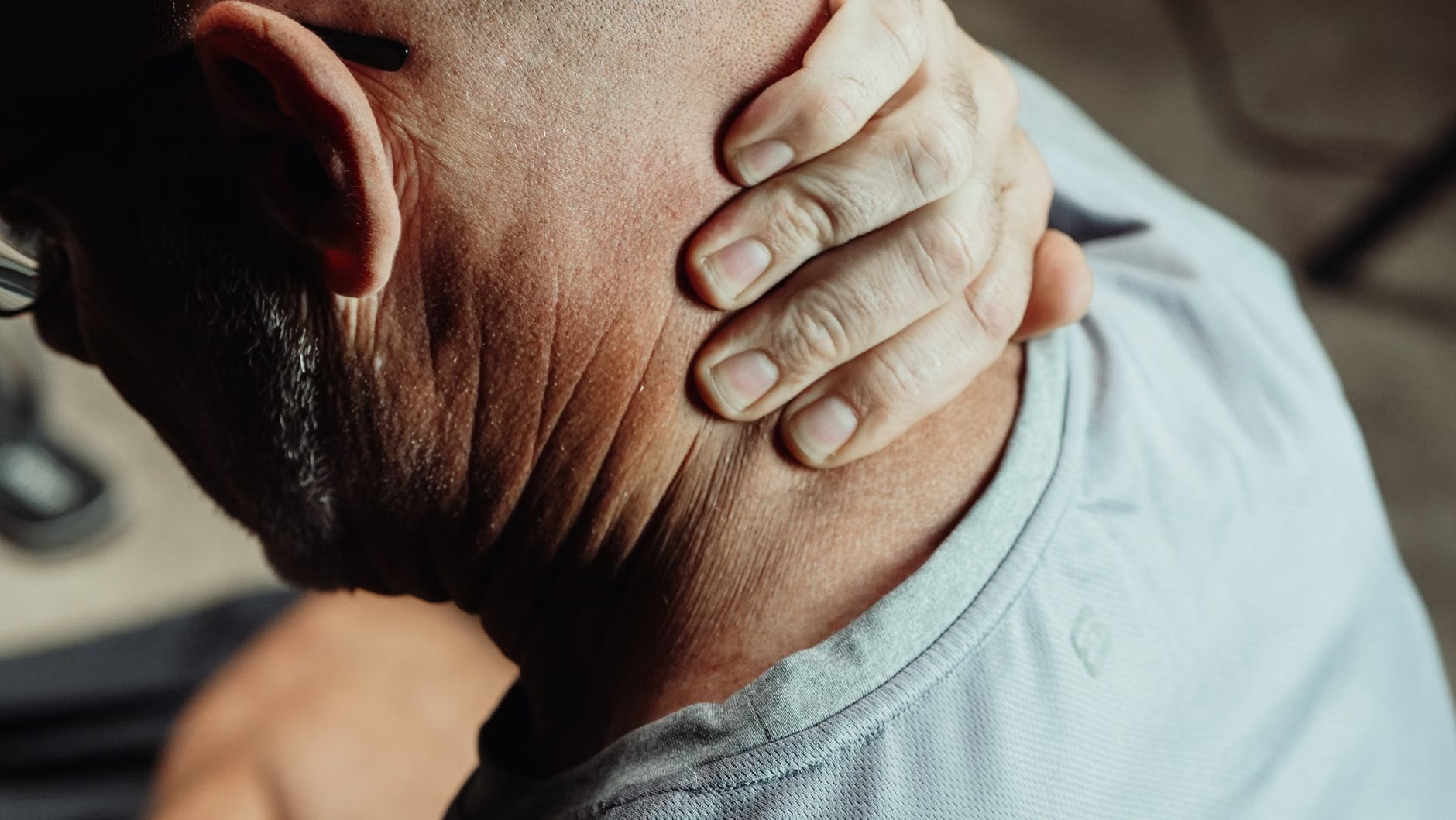
The Anatomy of a Safe Seated Side-Reach
The beauty of this exercise lies in its simplicity, but even simple movements require attention to form to be effective and safe. Before attempting the movement, you must establish a “neutral spine.”
Step-by-Step Execution
- The Setup: Sit on a sturdy, armless chair. Your feet should be flat on the floor, hip-width apart. If your feet do not touch the floor comfortably, place a firm book or a small step stool under them.
- Finding Neutral: Imagine a string pulling the crown of your head toward the ceiling. Your shoulders should be relaxed, not hunched toward your ears.
- The Reach: Place your left hand on the side of the chair or let it hang naturally. Slowly reach your right arm up toward the ceiling. Keep your right shoulder down.
- The Bend: Gently lean your torso to the left, feeling a stretch along the right side of your rib cage. Do not collapse forward or backward; imagine you are moving between two narrow panes of glass.
- The Return: Hold the stretch for 3 to 5 seconds, breathing deeply, then slowly return to the center. Switch sides.
A common mistake is “over-reaching,” where the torso twists to compensate for a lack of flexibility. If you find yourself leaning forward, reduce the depth of your reach. The goal is to feel a gentle, lengthening sensation, not a sharp pull or pain.
Environmental Safety and Equipment Selection
The environment in which you perform your exercises is just as important as the movement itself. For adults in the 60–80 age range, balance and stability are paramount. Using the wrong chair can lead to tipping, which is a significant safety risk.
| Feature | Recommended Type | Avoid |
|---|---|---|
| Chair Stability | Solid wood or metal dining chair with four legs. | Swivel chairs, chairs with wheels, or folding chairs. |
| Armrests | Armless (to allow full range of motion). | Chairs with wide, bulky arms that restrict movement. |
| Surface | Flat, non-slip floor (e.g., hardwood or thin rug). | Deep-pile carpets or uneven surfaces. |
If you are unsure if your chair is stable, place it against a wall. This provides a psychological and physical safety net. Additionally, ensure the floor area is clear of trip hazards like power cords, loose rugs, or pet toys. If you have a history of vertigo or balance issues, perform this exercise near a sturdy piece of furniture that you can hold onto with your non-reaching hand.
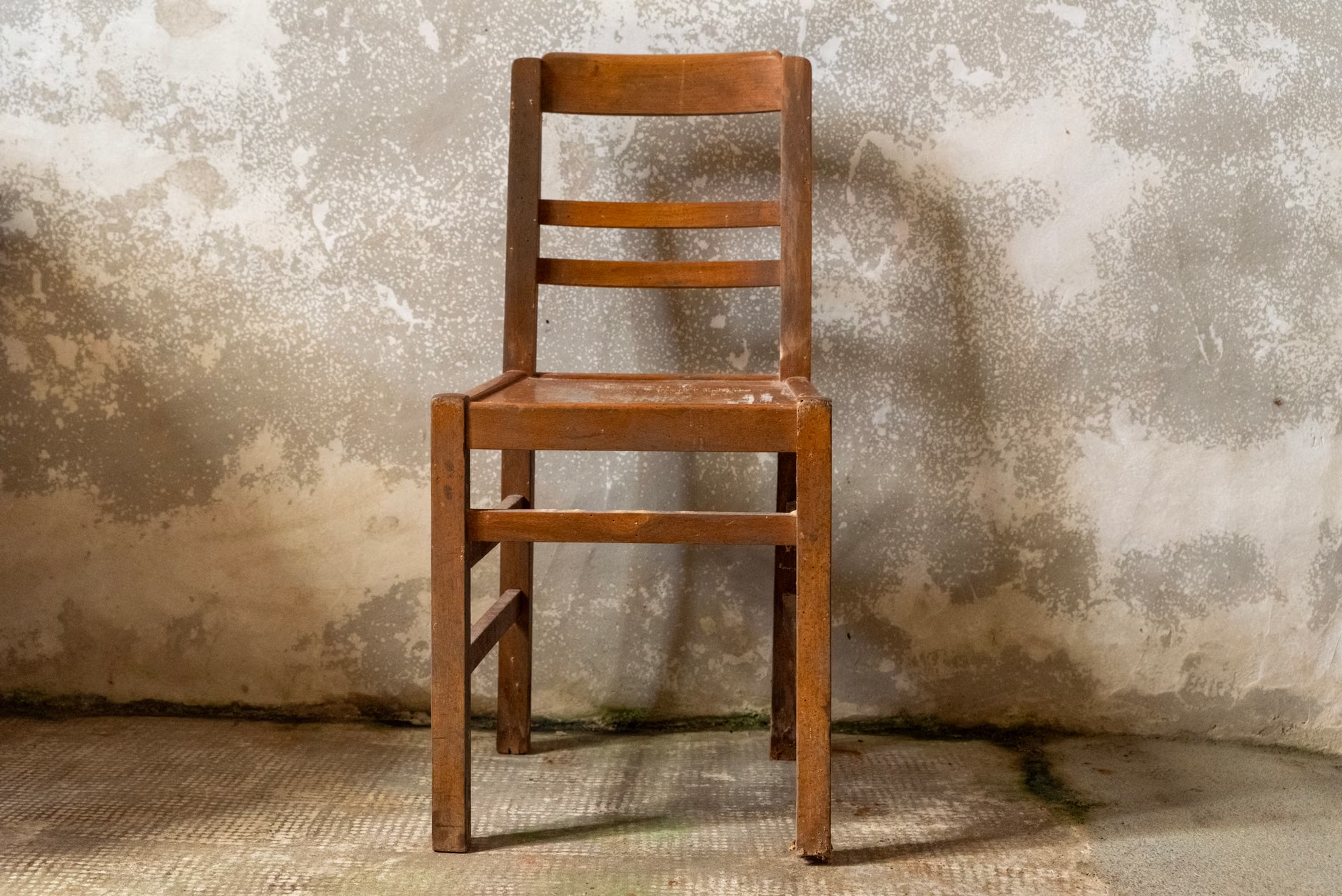
Integrating Mobility into Your Daily Routine
The most effective health habits are those that integrate seamlessly into existing routines. You do not need to set aside a “gym hour” to benefit from spinal mobilization. In fact, short, frequent bouts of movement are often better for the spine than a single, intense session.
Three Ideal Times for Seated Side-Reaches
- The Morning Wake-up: After sleeping, your spine can feel stiff due to the static position of the night. Doing 3–5 repetitions on each side while waiting for the kettle to boil or sitting at the breakfast table can help you start the day with improved mobility.
- The Mid-Day Desk Break: If you spend time reading, using a computer, or working on hobbies, set a timer for every 60 minutes. A quick 30-second stretch breaks the cycle of “tech-neck” and slumping shoulders.
- The Evening Wind-down: Before watching television or reading your evening book, perform a few slow reaches to release the tension accumulated during the day.
It is important to remember that “more” is not always “better.” If you feel muscle soreness, it is likely due to the unaccustomed use of these muscles. However, if you feel sharp, stabbing pain, stop immediately. Sharp pain is a signal from the body that you have exceeded your current range of motion or that there may be an underlying issue that requires a consultation with a physical therapist or a general practitioner.
Advanced Considerations: When to Consult a Professional
While the seated side-reach is a gentle, low-risk movement, there are conditions where you should approach it with caution or seek guidance from a medical professional. If you have been diagnosed with osteoporosis, severe arthritis, or have recently undergone spinal surgery, your movement patterns may need specific modifications.
For individuals with osteoporosis, the primary concern is the integrity of the vertebrae. While lateral bending is generally safer than forward flexion (rounding the back), you should avoid any “forceful” stretching. Always move with slow, controlled intent. If you have scoliosis or other spinal structural variations, you may find that one side is significantly tighter than the other. This is common; simply focus on the quality of movement on the tighter side without forcing it to match the more flexible side.
Warning Signs to Stop:
- Numbness or tingling in the arms or hands during the stretch.
- Dizziness or lightheadedness when reaching overhead.
- Pain that radiates down the back or into the legs.
If you experience these, it is time to stop and speak with your doctor. When you go to your appointment, be prepared to describe exactly what movement triggers the sensation. Keep a simple log: “On Tuesday, I felt a tingling in my left hand during the side-reach.” This specific information helps healthcare providers differentiate between muscular tightness and nerve-related issues.
Beyond Flexibility: The Role of Core Engagement
Many people mistakenly think that spinal flexibility exercises are solely about the back muscles. In reality, your core—the muscles of your abdomen and lower back—acts as the stabilizer for your spine. When you perform a side-reach, your core muscles should be gently engaged. This means pulling your belly button slightly toward your spine. This “bracing” protects your lower back from taking on too much of the bend.
Think of your spine as a tall, flexible tree. If the trunk is not supported by strong roots (your core), it is more likely to wobble or lean dangerously. By engaging your core during the side-reach, you are training your body to maintain a stable, upright posture even while it is in motion. This is a critical skill for preventing falls when you are walking and need to turn suddenly or reach for something off-balance.
Practical Decision Criteria for Long-term Success
How do you know if you are making progress? Improvement in flexibility is often subtle and happens over weeks, not days. Do not rely on a “stretching goal” (e.g., “I must touch the floor”). Instead, rely on “functional goals.”
Ask yourself these three questions every week:
- Does my back feel less stiff when I wake up in the morning?
- Can I reach the top shelf of my pantry with less effort than a month ago?
- Do I feel more stable when I am reaching for objects while sitting?
If the answer is yes, you are succeeding. If the answer is no, evaluate your consistency. Are you doing the movements at least three times a week? Are you holding the stretch for a few seconds rather than just “bouncing” in and out of it? Bouncing, or ballistic stretching, is generally discouraged as it can trigger a protective reflex in the muscles, causing them to tighten further rather than lengthen.
Conclusion: The Value of Consistent, Gentle Movement
Maintaining spinal flexibility is a lifelong project, and the seated side-reach is one of the most accessible, high-reward tools in your preventive health arsenal. By dedicating just a few minutes a day to this simple movement, you are investing in your future mobility, reducing the risk of strain, and ensuring that you can continue to engage with the world around you with ease and confidence.
Remember that your body is adaptable at any age. The key is to start where you are, move with respect for your current limitations, and prioritize consistency over intensity. As you become more comfortable, you may find that your range of motion increases naturally, allowing you to move through your day with greater freedom.
For more information on senior health and mobility, you can visit the National Institute on Aging, which provides evidence-based resources on exercise and physical activity for older adults.
Frequently Asked Questions
1. Can I do these stretches if I have lower back pain?
If you have chronic or acute lower back pain, it is essential to consult with your doctor or a physical therapist before starting any new exercise routine. While gentle side-stretching can sometimes alleviate stiffness, it can exacerbate certain conditions like herniated discs. A professional can help you determine if this specific movement is appropriate for your unique spinal health profile.
2. How long should I hold each stretch for maximum benefit?
For most adults, holding a static stretch for 15 to 30 seconds is the standard recommendation for improving flexibility. However, if you are just starting, 5 to 10 seconds is perfectly sufficient. The most important factor is that you are breathing deeply throughout the hold; holding your breath can cause muscle tension, which defeats the purpose of the stretch.
3. Does this exercise help with posture?
Yes. By stretching the muscles that tend to tighten and pull the spine into a hunched position, you create more “space” for your body to return to a natural, upright alignment. When combined with core strengthening, these stretches are a key component of maintaining a healthy, upright posture as you age.