- Stamp collecting acts as a form of “cognitive exercise” that improves focus, fine motor skills, and spatial pattern recognition.
- The hobby is highly scalable, allowing you to start with minimal financial investment while providing a lifetime of intellectual discovery.
- Philately connects you to global history and geography, turning a quiet pastime into a gateway for social interaction and lifelong learning.
Stamp collecting, or philately, is often misunderstood as a dusty relic of the past. In reality, it is a sophisticated, intellectually stimulating hobby that offers profound benefits for cognitive health and personal satisfaction. For adults aged 60 to 80, it provides a unique intersection of history, art, research, and technical precision. Unlike many passive forms of entertainment, stamp collecting requires active engagement, helping to maintain mental acuity while offering a calming, meditative escape from the stresses of daily life.
The Cognitive Benefits of Philately
Engaging in a hobby like stamp collecting is more than just a way to pass the time; it is a structured mental workout. When you examine a stamp, you are not merely looking at a piece of paper; you are processing visual information, identifying minute differences in print, and analyzing historical context.
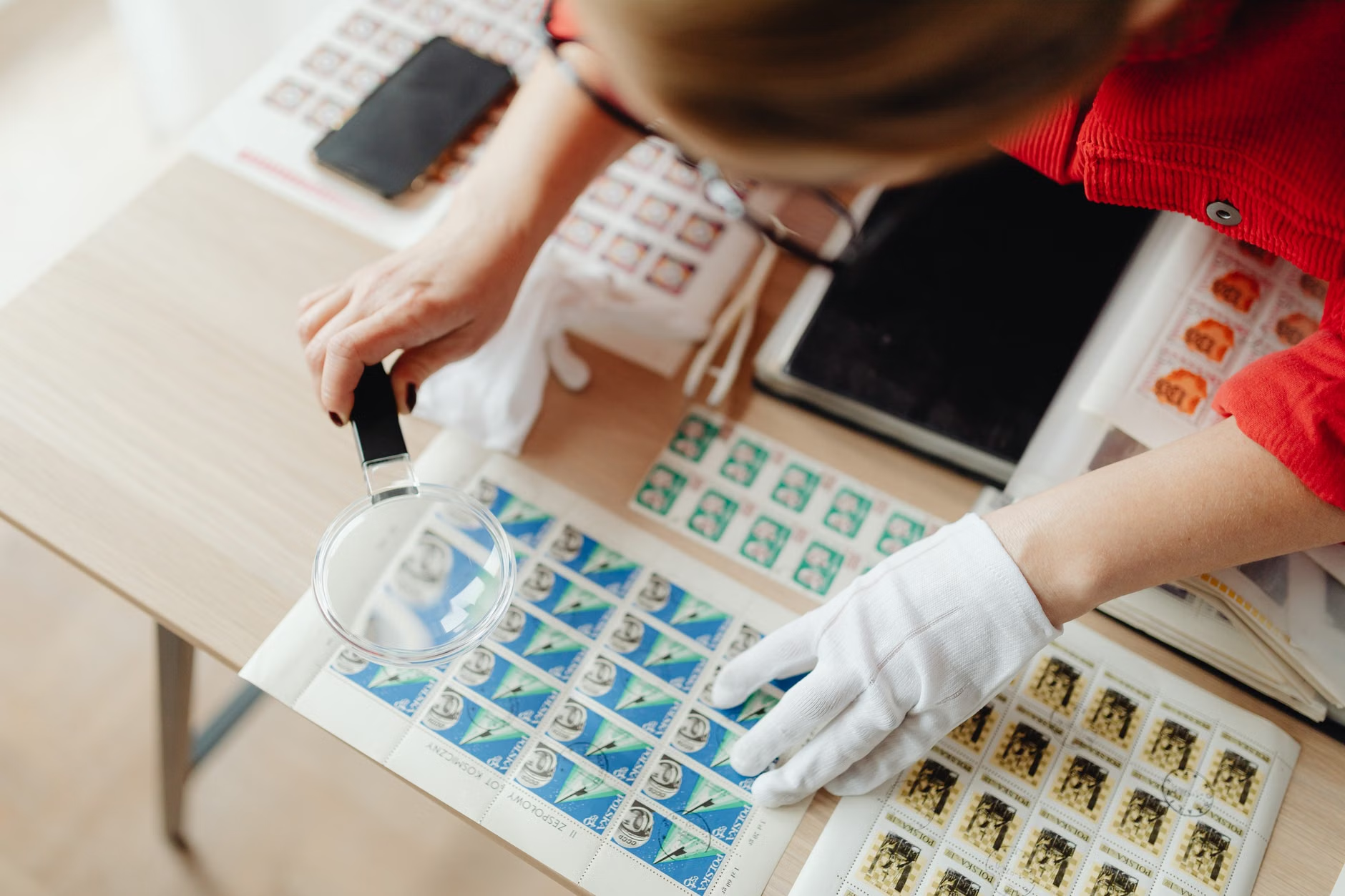
1. Enhancing Fine Motor Skills: Handling stamps requires the use of specialized tools, such as tongs (tweezers) and magnifying glasses. This requires steady hands and precise movements, which helps maintain dexterity and fine motor control—essential skills for long-term health in older age.
2. Sustaining Cognitive Focus: Sorting and classifying stamps demands sustained attention. You must compare colors, perforations, and watermarks. This “deep work” helps improve concentration and provides a sense of flow, a psychological state where time seems to disappear as you become fully immersed in your task.
3. Expanding Knowledge Retention: Every stamp tells a story. Whether it features a historical figure, a botanical specimen, or a map of a forgotten region, you are constantly learning. This process of continuous discovery is a powerful tool for maintaining cognitive plasticity.
Getting Started: A Low-Pressure Approach
One of the greatest advantages of stamp collecting is its accessibility. You do not need a fortune to begin. In fact, many collectors start with stamps found on mail received at home or by purchasing “kiloware”—large bags of unsorted stamps sold by weight.
Essential Tools for the Beginner
Before you dive in, you need a few basic items to ensure your collection is preserved properly. Avoid using your bare fingers, as oils from your skin can damage the paper over time.
| Tool | Purpose | Key Consideration |
|---|---|---|
| Stamp Tongs | Handling delicate paper | Choose rounded tips to prevent tearing. |
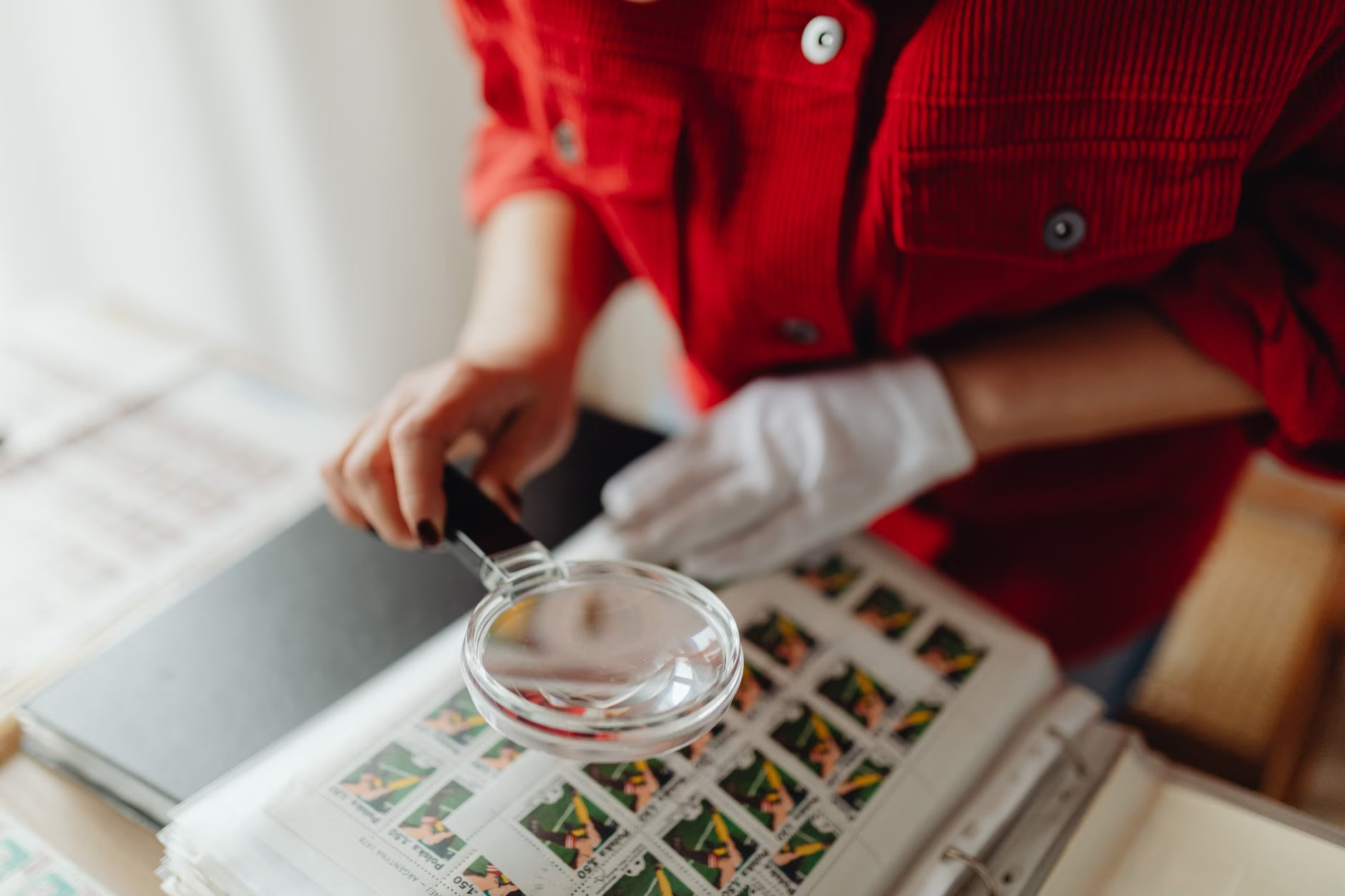
| Magnifying Glass | Identifying details | A 5x to 10x magnification is usually sufficient. |
| Stockbook/Album | Storage | Ensure acid-free pages to prevent yellowing. |
| Perforation Gauge | Measuring edges | Essential for identifying specific stamp issues. |
Decision Criteria: If you have limited space, opt for a stockbook (a book with pre-made pockets) rather than an album that requires separate mounts. This allows for easier rearranging as your collection grows.
The Social Dimension: Building Connections
While stamp collecting can be a solitary, peaceful activity, it is also a gateway to a vibrant global community. Many local libraries, community centers, and specialized philatelic societies host weekly or monthly meetings. These gatherings are not just for experts; they are welcoming environments where people share stories behind their collections.
Overcoming Isolation: For those who may feel the effects of retirement or reduced social circles, joining a philatelic group provides a shared purpose. It allows you to interact with people across generations who share a common interest. The social exchange—discussing the history of a particular stamp or helping a fellow collector identify a mystery item—builds a sense of belonging.
Practical Steps to Find a Group:
- Search Local Directories: Contact your local library or community center and ask if there is a “stamp club” or “philatelic society.”
- Online Forums: Websites like the American Philatelic Society (APS) or the Royal Philatelic Society London offer resources for finding local chapters, even for international residents.
- Attend Exhibitions: Local stamp shows are excellent places to meet vendors and fellow collectors. They often have “beginner tables” where you can ask questions without pressure.
Historical and Geographical Exploration
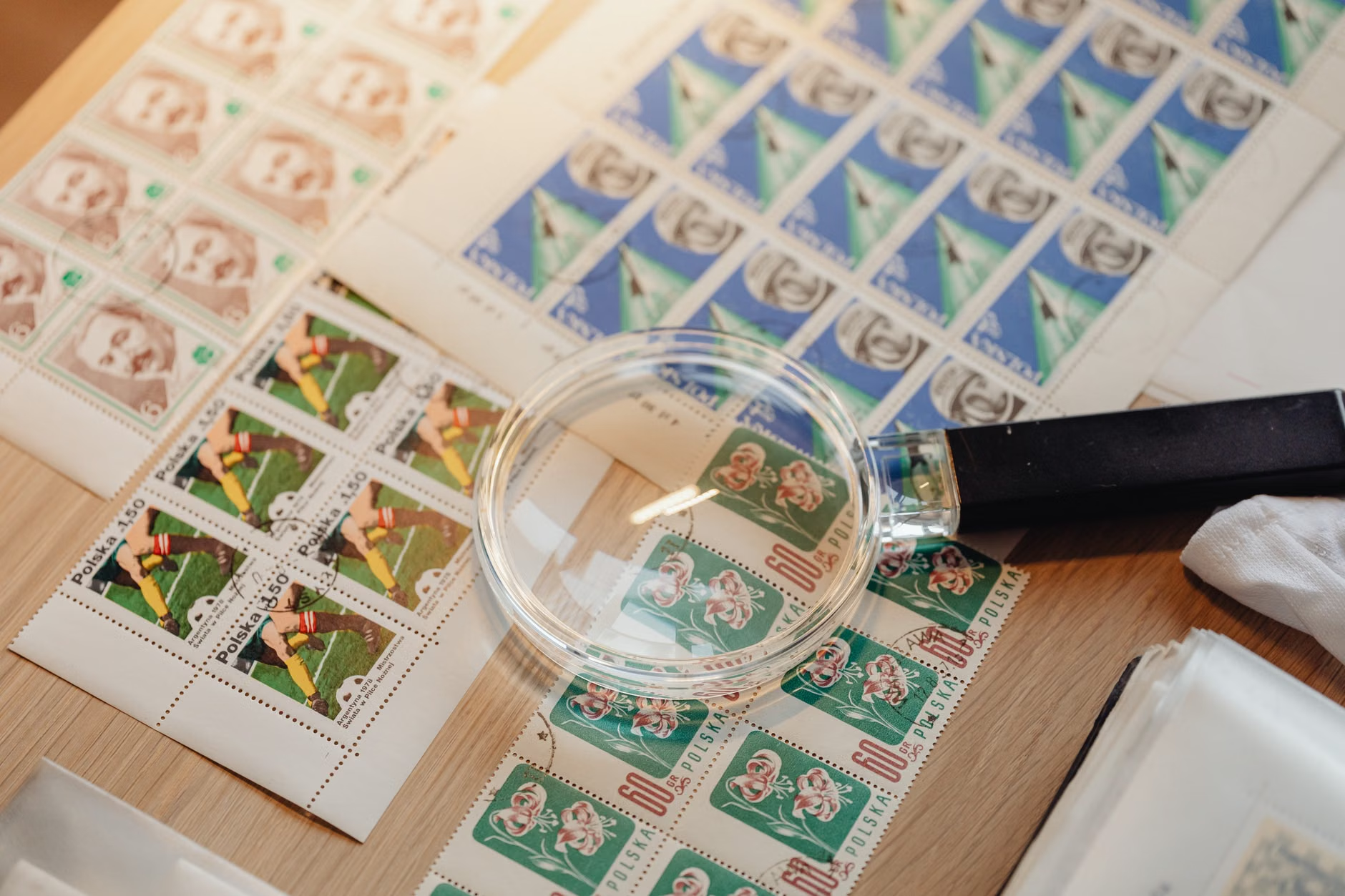
Stamp collecting is essentially a history lesson in miniature. Every stamp is a snapshot of a specific time, place, and political climate. When you collect, you aren’t just hoarding paper; you are curating a museum of human civilization.
Thematic Collecting: Why It Matters
Many collectors find that “thematic” or “topical” collecting is more rewarding than general collecting. Instead of trying to collect every stamp in existence, you focus on a subject that interests you personally. Examples include:
- Flora and Fauna: Collecting stamps featuring birds, flowers, or endangered animals.
- Space Exploration: Tracking the history of the moon landing and beyond.
- Art History: Collecting stamps that feature famous paintings or sculptures.
This approach allows you to engage with your interests more deeply. If you love gardening, for example, collecting botanical stamps will lead you to learn about the flora of countries you may never visit in person. This keeps the hobby fresh and prevents it from becoming a monotonous chore.
Common Mistakes and How to Avoid Them
Even a simple hobby can become frustrating if you fall into common traps. Here is how to navigate the pitfalls of early collecting:
1. Overspending on “Rare” Items: Beginners often feel the need to buy expensive, rare stamps immediately. Warning: The market for stamps is complex. Never purchase expensive items without first consulting a reputable guide or a trusted mentor in a local club. Focus on the joy of discovery rather than the monetary value.
2. Poor Storage Conditions: Stamps are sensitive to humidity, light, and temperature. Storing them in a damp basement or in direct sunlight will cause the colors to fade and the paper to deteriorate. Always keep your collection in a climate-controlled room, out of direct sunlight.
3. Ignoring the “Why”: If you find yourself just collecting for the sake of accumulating, the joy will fade. Keep a journal or a small notebook alongside your collection where you write down why you chose a particular stamp or what you found interesting about its history. This reflection is what turns a collection into a meaningful narrative.
Integrating Technology into Philately
While the physical act of handling stamps is the core of the hobby, technology can enhance your experience. High-quality digital scanners can help you see details that are invisible to the naked eye. Furthermore, online databases like Colnect (https://colnect.com) allow you to catalog your collection digitally, making it easier to track what you have and identify what you need.
However, be cautious: do not let the digital aspect replace the physical experience. The tactile sensation of holding a stamp with tongs and the smell of old paper are part of the therapeutic value of the hobby. Use technology as a tool for organization, not as a replacement for the physical collection.
Safety and Mobility Considerations
When pursuing this hobby, consider your physical environment. If you have reduced mobility or vision, ensure your workspace is set up to minimize strain:
- Lighting: Use a high-quality desk lamp with adjustable brightness. Eye strain is a common barrier for older collectors.
- Seating: Use a chair with proper lumbar support. Because sorting can take hours, physical comfort is essential to prevent back pain.
- Accessibility: Store your albums on shelves that are at waist height, avoiding the need to climb stools or reach into low cabinets.
Conclusion: The Value of a Lifelong Pursuit
Stamp collecting is a hobby that grows with you. It does not require extreme physical exertion, nor does it demand a high-tech learning curve. It simply asks for your curiosity and your time. By engaging with this hobby, you are not just building a collection; you are building a bridge to the world, staying mentally sharp, and finding a quiet, meaningful joy in the details of everyday life.
Your next step is simple: find a few envelopes that have arrived in your post this week. Carefully remove the stamps, soak them in a shallow bowl of lukewarm water to separate them from the paper, and let them dry on a paper towel. This small act of preservation is the foundation of your new, cognitively rewarding journey.
Frequently Asked Questions
1. Is stamp collecting an expensive hobby to maintain?
Not at all. While some rare stamps sell for thousands, the vast majority of stamps are quite affordable. You can build a beautiful, interesting collection using stamps from your own mail or by purchasing affordable packets from reputable dealers.
2. My eyesight isn’t what it used to be. Can I still enjoy this hobby?
Yes. Modern magnifying glasses with built-in LED lights are excellent for collectors with vision challenges. You can also use digital magnifiers or high-resolution scanners connected to a computer screen to make the details of the stamps much easier to see.
3. Should I focus on collecting for profit or for fun?
Always focus on fun. The stamp market is volatile and requires deep expertise to navigate for profit. If you treat your collection as a source of intellectual joy and historical record, you will always get your “return on investment” through the cognitive and social benefits of the hobby.
Official resources for further exploration:
The American Philatelic Society (APS) provides extensive guides and resources for beginners of all ages.