Key Takeaways:
- Shift in Logic: By 2026, intergenerational housing has moved from a niche experiment to a mainstream solution for addressing both senior social isolation and youth housing affordability.
- Legal Frameworks: Several jurisdictions are now offering tax incentives for homeowners who participate in “homeshare” programs, making it a viable financial strategy for those on fixed incomes.
- Universal Design as Standard: New intergenerational developments are prioritizing “Universal Design,” ensuring that homes are accessible for all mobility levels without looking like clinical or institutional facilities.
The Evolution of Living Arrangements in 2026
As we navigate 2026, the traditional view of retirement living—defined by binary choices between staying in a family home or moving into a retirement facility—is undergoing a significant transformation. The emergence of intentional intergenerational housing models represents a shift toward community-based autonomy. For adults aged 60 to 80, this isn’t just about finding a place to live; it is about curating a lifestyle that balances independence with meaningful social infrastructure.
Intergenerational housing models are designed to bridge the gap between generations. By placing seniors alongside younger professionals, students, or families, these models address the “loneliness epidemic” while providing younger generations with affordable living spaces. In 2026, these models are supported by sophisticated digital matching platforms and, in some regions, specific government-backed subsidies.
Understanding the Three Primary Models
Not all intergenerational housing looks the same. Depending on your mobility, social preferences, and financial situation, one of the following three models may be more suitable for your needs.
| Model | Structure | Best For |
|---|---|---|
| Homesharing | Renting a spare room to a student/young professional in exchange for rent or companionship. | Homeowners looking for extra income and a sense of security. |
| Co-housing | Private homes with extensive shared common areas (kitchens, gardens, workshops). | Those seeking strong community bonds and shared daily activities. |
| Integrated Developments | Large-scale apartment complexes with age-diverse residential zones. | Individuals wanting modern amenities with high accessibility and lower maintenance. |
What this comparison means: If you value total privacy but want a safety net, Co-housing provides the best balance. If you are an empty-nester with a large house, Homesharing turns your unused space into an asset. Integrated Developments are the most “hands-off” option, as they are usually managed by professional property companies.

Why Homesharing is Gaining Momentum in 2026
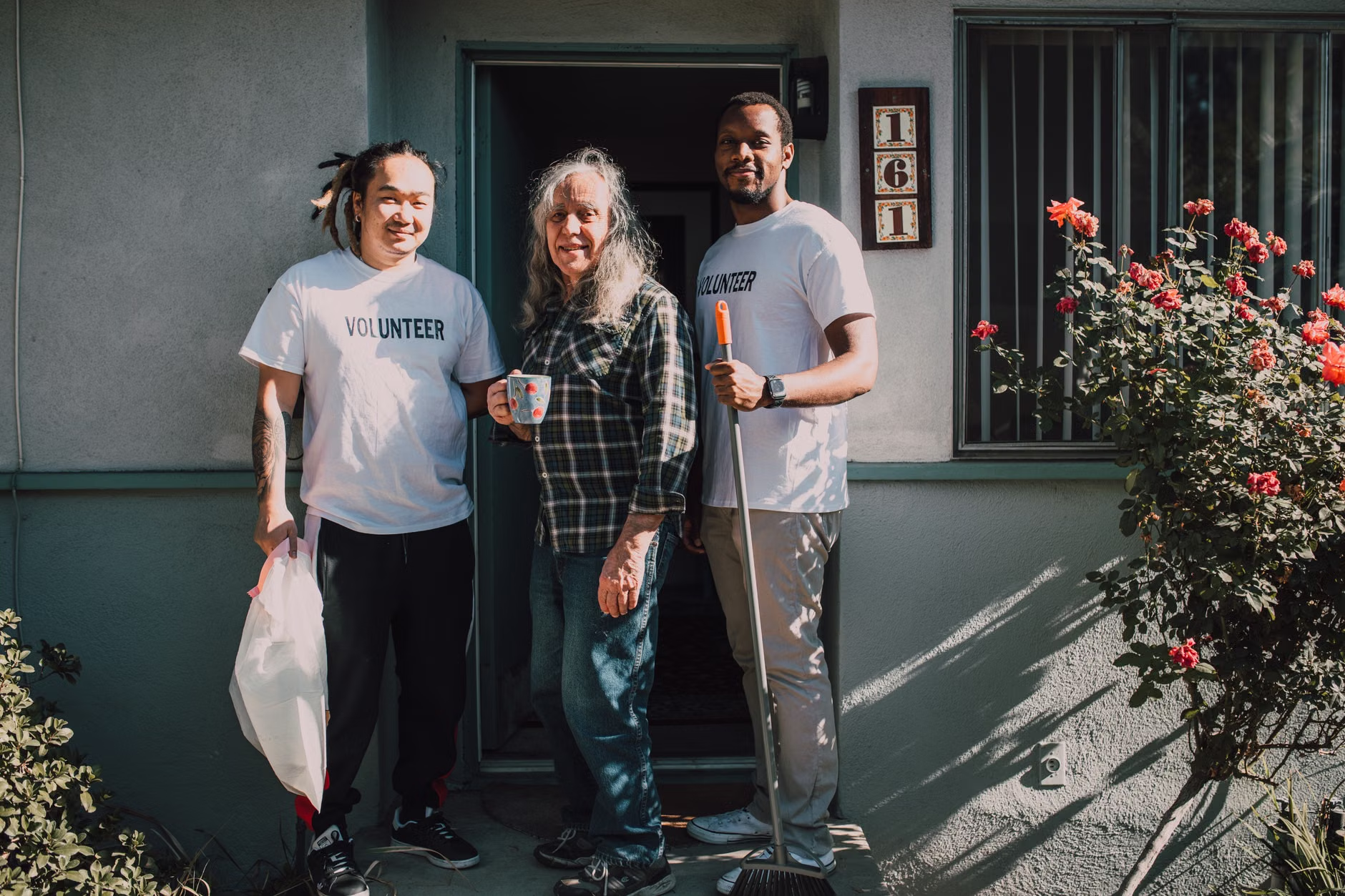
Homesharing has moved beyond informal arrangements. In 2026, many cities in the UK, Canada, and parts of Europe have implemented “Homeshare Accreditation” programs. These platforms perform background checks and facilitate formal agreements that protect both the homeowner and the guest.
The Financial and Social Impact
For a senior living on a fixed pension, the rising cost of property maintenance is a significant stressor. Homesharing addresses this by providing a secondary income stream. More importantly, the social aspect—having someone in the house—can provide a “passive” layer of care. While the guest is not a caregiver, their presence often means that if a fall occurs or a medical emergency arises, the senior is not alone.
Practical Steps to Consider Homesharing
- Check Local Regulations: In some jurisdictions, renting a room requires a permit or may affect your property tax status. Consult your local municipal office or a housing advocacy group.
- Define Boundaries: Before agreeing to a housemate, write down a list of non-negotiables—quiet hours, kitchen usage, and guest policies.
- Use Vetted Platforms: Never rely on informal social media ads. Use established, insured platforms that handle the vetting process for you.
The Rise of Purpose-Built Co-housing
Co-housing in 2026 is no longer just a “hippie” concept from the 70s. It is a sophisticated real estate model. These communities are often designed with “Universal Design” principles. This means that even if you have mobility challenges, the environment is built to accommodate you without making you feel like you are in an assisted living facility.
What Universal Design Looks Like in 2026
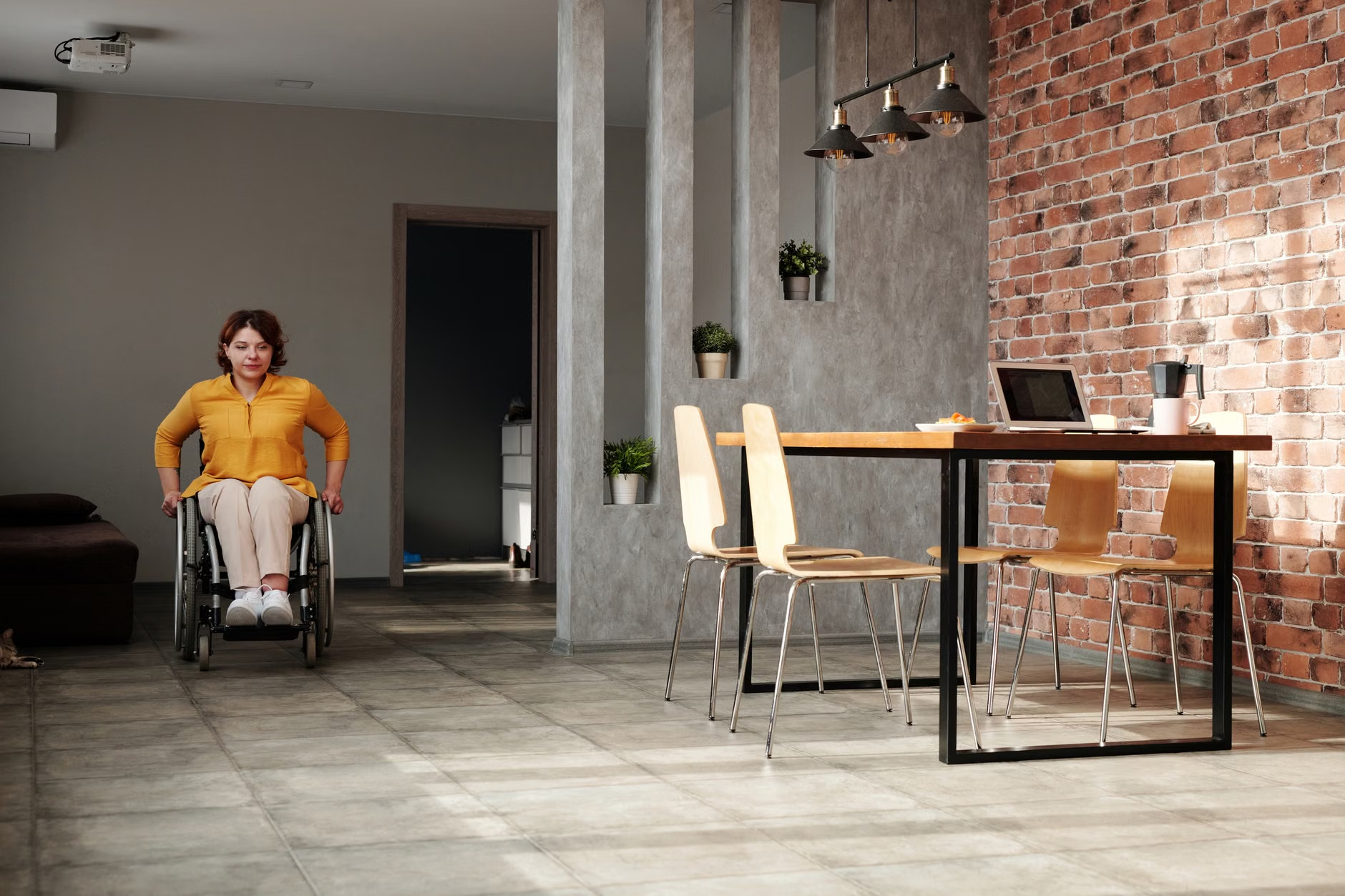
Universal design is the practice of designing environments so they can be accessed, understood, and used to the greatest extent possible by all people. In a modern 2026 co-housing unit, you will see features like:
- Zero-threshold entries: No steps at the front door or between rooms, allowing for easy walker or wheelchair use.
- Smart Lighting: Motion-activated lights in hallways and bathrooms to prevent nighttime falls.
- Lever handles: Door handles that are easier to operate than round knobs, which is helpful for those with arthritis.
While the benefits of intergenerational living are clear, it is essential to approach these arrangements with a clear head. The most common mistake seniors make is failing to define the “exit strategy” of a living arrangement.
The Importance of a Trial Period
If you are considering moving into a co-housing community or inviting a housemate, always insist on a trial period. A three-month “probationary” period allows you to see if the noise levels, the culture, and the accessibility are actually a match for your lifestyle. Do not sign a long-term lease or purchase a unit without spending at least a week on-site.
Legal and Financial Protection
Always have a formal, written agreement. This should clearly state:
- Termination clauses: How much notice is required if the arrangement isn’t working?
- Maintenance responsibilities: Who is responsible for snow removal, gardening, or plumbing repairs?
- Emergency protocols: Who is the designated point of contact for family members in case of a health event?
In many regions, free legal aid clinics for seniors can review these agreements to ensure your rights are protected.
Integrated Developments: A New Wave of Urban Planning
In 2026, we are seeing the rise of “Vertical Villages.” These are large apartment buildings that reserve a percentage of units for seniors, while the rest are open to the public. These buildings are often located near public transport hubs, which is a major advantage for seniors who may be limiting their driving.
Why Location Matters More Than Ever
The “15-minute city” concept—where all essential services (grocery stores, pharmacies, doctors) are within a 15-minute walk—is the gold standard for these new developments. When evaluating a potential move, use a map tool to calculate the walking distance to the nearest public transit stop. A distance of more than 500 meters (about 0.3 miles) can be a significant barrier for someone with limited stamina.
The Hidden Variables of Intergenerational Living
Beyond the obvious benefits, there are subtle factors that determine the success of an intergenerational arrangement. One of the most overlooked variables is technological compatibility. If your living arrangement involves shared digital services—like a common Wi-Fi network, smart home security systems, or an app-based building entry system—ensure you have had a thorough orientation.
Do not be afraid to ask for a “tech-check.” If a building requires you to use a smartphone to unlock the front door, request a demonstration. If you are not comfortable with that, ask if there is an alternative physical key or fob system. Being tech-savvy is not a requirement for living in a modern space, but being able to communicate your needs to the building management is.
Addressing Potential Conflict
Even in the most well-designed communities, conflict can arise. Differences in lifestyle, volume, or cleanliness standards are common. The most successful intergenerational communities in 2026 have a “mediation council” or a designated community manager who acts as a neutral third party. When looking for a place to live, ask: “How do you handle disagreements between neighbors?” If the response is vague, it is a sign that the community may not have the necessary infrastructure to handle long-term disputes.
The Financial Reality of 2026
It is important to understand that intergenerational housing is not a “cheap” fix for retirement poverty. While some programs are subsidized, others are premium, purpose-built developments. Before committing financially, review your pension and savings projections. Use a calculator to determine the “Total Cost of Living,” which includes not just rent or mortgage, but also homeowners association (HOA) fees, potential maintenance assessments, and the cost of transport.
In some jurisdictions, you may be eligible for “Home Modification Grants” if you choose to adapt your current home to facilitate a multi-generational setup. Check with your local housing authority to see if your region offers such programs.
Conclusion: Taking the Next Step
The shift toward intergenerational living in 2026 is a positive step toward more inclusive and connected aging. However, it requires a proactive approach. Start by assessing your current environment: Is it serving your needs for social connection and physical accessibility? If not, begin researching the options mentioned above—homesharing, co-housing, and integrated developments.
The most important action you can take today is to define your “must-haves.” Are you looking for social interaction, financial relief, or a more accessible space? Once you identify your primary goal, you can begin to filter the available options. Remember, the goal is not to find the “perfect” home, but to find the one that gives you the most autonomy, safety, and joy in this stage of your life.
Frequently Asked Questions
- Is intergenerational housing safe for someone with health conditions?
Yes, provided the facility is designed with universal access. However, it is not a substitute for assisted living. If you require daily medical support, ensure the housing model you choose is located near professional healthcare services and that your living agreement accounts for potential changes in your health status. - How do I find legitimate homesharing programs in my country?
Start by visiting the website of your national or regional “Homeshare” association. In the UK, for example, look for organizations accredited by “Homeshare International.” Always verify that the program provides insurance and vetting for both parties. - What if I don’t get along with the younger people in my community?
Conflict is a reality in any living situation. Look for communities that have a formal conflict resolution policy or a professional manager. During your trial period, observe how neighbors interact in common areas to gauge if the community culture matches your own.
For further reading on housing rights and senior living standards, please refer to official resources such as the World Health Organization’s Age-friendly World portal or your local government’s housing department website.
To truly understand why intergenerational living is gaining traction, we must look at the macro-economic shifts of 2026. Global inflation has made traditional retirement homes prohibitively expensive for the middle class. Simultaneously, the “youth housing crisis” in major urban centers has left students and young professionals struggling to find affordable, safe accommodation. This convergence of needs is the primary driver behind the 2026 housing shift.
When you participate in a homeshare program, you are effectively entering into a micro-economy. You are providing a service (housing) that has high market value, and in return, you are receiving two things: a financial supplement and a service-in-kind (companionship or light household help). In some countries, this income is tax-exempt up to a certain threshold. It is vital to consult with a tax professional to understand if your specific arrangement qualifies for these exemptions. Failing to report income can lead to penalties, but failing to claim exemptions can lead to unnecessary costs.
The Psychological Benefits of Age-Diversity
Research consistently shows that social isolation is as detrimental to health as smoking. By living in an intergenerational environment, you are naturally exposed to different life perspectives, modern trends, and a more vibrant daily rhythm. This is not about “being young again”; it is about remaining relevant and connected to the world around you. The psychological stimulation of interacting with different generations can help maintain cognitive function and emotional resilience.
Technical Nuances: Evaluating “Smart” Housing
As mentioned, 2026 housing is increasingly “smart.” If you are considering a new-build apartment, you will likely encounter features like:
- Voice-activated climate control: Useful if you have limited mobility, but ensure it is compatible with your hearing aids or speech patterns.
- Telehealth-ready infrastructure: Some modern complexes now have dedicated “telehealth booths” in the lobby, designed to provide private, high-speed connections for virtual doctor visits.
- Automated waste management: In some high-tech buildings, waste is handled through vacuum systems. While convenient, ensure you understand how to use these systems, as they are very different from traditional trash disposal.
Always ask for a guided tour of these systems. Do not assume they are intuitive. If you find a system confusing, ask for a written “cheat sheet” or a demonstration video.
The Role of Advocacy and Policy
If you find that your local area lacks intergenerational options, consider joining or starting a local advocacy group. In 2026, many cities are looking for feedback on urban planning. By voicing the need for accessible, age-diverse housing, you can influence future developments. Your voice as a voter and a consumer is a powerful tool in shaping the housing market of the future.
Remember, the goal of these housing models is to ensure that your later years are defined by your choices, not by your limitations. Whether you choose to stay in your home and share it, or move into a modern, integrated development, the key is to stay informed, stay proactive, and always prioritize your personal comfort and safety above all else.