How to Lower Blood Sugar? The Science-Backed ‘Reverse Eating Order’ and Best Foods for Diabetes
Hello everyone! It’s Cooldy here, your friendly neighborhood health enthusiast who loves digging through research papers so you don’t have to! 😊
Have you ever felt that overwhelming urge to take a nap right after a delicious lunch? Or maybe you’ve felt a bit “hangry” or shaky just a couple of hours after eating a big bowl of pasta? We often laugh it off as a “food coma,” but in reality, our bodies are sending us a pretty loud message about our blood sugar levels.
Managing blood sugar isn’t just something “people with health conditions” need to worry about. In today’s world of hidden sugars and highly processed snacks, keeping our glucose levels stable is the secret to lasting energy, better moods, and long-term vitality. Today, I’ve brought some fascinating scientific “prescriptions” that don’t come from a pharmacy, but from the way you arrange your plate. Let’s dive into the world of smart eating!
🚨 The Silent Rollercoaster: Understanding Blood Sugar Spikes
Before we get to the “how,” we need to understand the “why.” You might have heard the term ‘Blood Sugar Spike’ (or glucose spike) lately. Think of your blood sugar like a gentle hill. Ideally, after you eat, it should rise slowly and fall slowly.
However, when we eat a lot of refined carbs or sugar on an empty stomach, that hill turns into a jagged mountain peak. Your blood sugar skyrockets, and your pancreas has to pump out a massive amount of Insulin to deal with it. Then, just as quickly, your sugar crashes down.
According to research published by the Endocrine Society, these constant spikes and crashes are like hitting the “wear and tear” button on your blood vessels. Over time, your cells can become “deaf” to insulin—a condition called Insulin Resistance. This is often the starting point for more serious health challenges. The goal isn’t just to have low blood sugar, but to have stable blood sugar.
🥦 The “Magic” Sequence: The Reverse Eating Method
What if I told you that you could eat the exact same meal but get a completely different blood sugar result just by changing the order of your bites? It sounds too good to be true, but it’s backed by heavy-duty science.
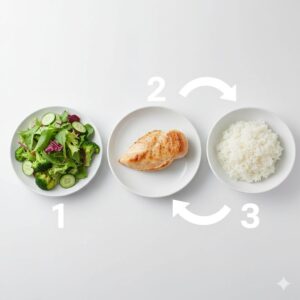
This is known as the ‘Reverse Eating Order’ or ‘Food Sequencing.’ The rule is simple:
Vegetables First ➡️ Protein & Fats Second ➡️ Carbohydrates Last
This isn’t just a trend. A groundbreaking study by Dr. Louis Aronne at Weill Cornell Medical College proved this. In the study, participants were given the same meal (bread, chicken, salad, and orange juice) on different days but in a different order.
The results were mind-blowing: When participants ate their vegetables and protein first, their blood sugar levels were 29%, 37%, and 40% lower at the 30, 60, and 120-minute marks compared to when they ate the carbs first! Their insulin levels were also significantly more stable. It’s like giving your body a protective shield before the sugar hits.
💡 The Science of the “Protective Shield”
Why does this work so well? It’s all about the biology of your digestive tract.
- The Fiber Barrier: When you eat fiber-rich vegetables first, they create a viscous, gel-like “mesh” in your small intestine. Think of it like a safety net. When the sugars from the rice or bread arrive later, they get trapped in this net and enter your bloodstream much more slowly.
- Slowing the Exit: Adding protein and healthy fats (like meat, fish, or olive oil) after the veggies further slows down “gastric emptying”—the speed at which food leaves your stomach. The slower the food moves, the slower the glucose is absorbed.
- The Incretin Effect: Eating protein and fat triggers the release of a special hormone called GLP-1 (Incretin). This hormone tells your pancreas to start preparing insulin in advance and tells your brain you are getting full. It’s your body’s natural way of managing the upcoming energy load.
※ What is GLP-1? It’s a hormone produced in the gut that stimulates insulin secretion and slows down stomach emptying. Many modern wellness treatments actually try to mimic this exact hormone!
🥗 Your Natural “Food Prescription” List
Now that we know how to eat, let’s talk about what to put on that plate. There are some specific foods that act like natural blood sugar stabilizers.
1. Bitter Melon: The “Plant Insulin”
Bitter melon (Goya) might be an acquired taste, but it’s a powerhouse. It contains a compound called P-insulin, which acts very similarly to the insulin produced by our bodies. Research in the Journal of Ethnopharmacology suggests that bitter melon helps move glucose into the cells for energy, rather than letting it sit in the blood.
2. Jerusalem Artichoke: The Inulin King
Don’t let the name fool you—it’s not an artichoke! This root vegetable is packed with Inulin, a type of soluble fiber. Unlike other starches, inulin isn’t digested into sugar; instead, it feeds your good gut bacteria and helps keep your blood sugar levels flat.
3. The Power of Vinegar (ACV)
A study published in the Journal of Evidence-Based Integrative Medicine found that consuming about two tablespoons of vinegar (like Apple Cider Vinegar) with or just before a high-carb meal can improve insulin sensitivity by up to 34%. The acetic acid in vinegar interferes with the enzymes that break down starches, preventing a sharp spike.
4. Pre-loading with Nuts
Eating a small handful of almonds or walnuts about 30 minutes before a meal can prime your GLP-1 hormones. This “pre-load” makes your body much more efficient at processing the meal that follows.
🕒 Small Habits, Big Changes: Timing and Movement
Beyond the food itself, how we live around our meals makes a huge difference.
- The 20-Minute RuleDid you know it takes about 20 minutes for your “fullness hormones” to reach your brain? If you rush through your meal in 5 or 10 minutes, you’ll likely overeat before your brain even knows you’re satisfied. Try to chew each bite 20-30 times. Not only does this help with digestion, but it also allows your blood sugar to rise more gently.
- The “Post-Meal Power Walk”The absolute best time to move is right after you eat. You don’t need a heavy workout! Just 10 to 15 minutes of light walking—clearing the table, a stroll around the block, or even some light stretching—can be transformative. A study from the University of Otago found that a short walk after meals was much more effective at managing blood sugar than one long walk at another time of day. Your muscles literally “vacuum up” the sugar in your blood to use as fuel!

📝 Let’s Wrap It Up! (The Cooldy Summary)
I know we covered a lot of ground today! Here is your “Cheat Sheet” for a happy, stable blood sugar:
- Sequence Matters! Eat your veggies first, then your protein/fats, and save the carbs for last.
- Fiber is Your Friend. Incorporate things like Jerusalem artichokes, leafy greens, and bitter melon into your diet.
- Vinegar Hack. A little vinegar before a starchy meal can work wonders.
- Slow Down. Take 20 minutes to enjoy your meal and chew thoroughly.
- Walk it Off. A 10-minute stroll after eating is the best gift you can give your metabolism.
Managing your health doesn’t have to mean giving up everything you love. It’s about being a little smarter with the “how” and “when.” I hope these tips help you feel more energized and in control of your wellbeing!
Do you have a favorite healthy snack or a trick for staying active after dinner? Share your stories in the comments below! I’d love to hear from you. Stay healthy and happy!
Reliable Sources for Further Reading
- American Diabetes Association (ADA)
- Mayo Clinic – Diabetes Diet, Eating, & Physical Activity
- Harvard Health – The low-glycemic diet: What’s the evidence?
👉Related Posts
Stop Just Walking! Boost Muscle and Lower Blood Sugar with the ‘3-Minute Interval Walking’ Method
The 10-Minute Post-Meal Secret: Stop Blood Sugar Spikes and Control Diabetes Risk