Hello everyone! I’m Cooldy, your friendly neighborhood information hunter who loves digging deep into health trends to find what really works.
Have you ever walked into a room and completely forgotten why you went there? Or perhaps you’ve found yourself staring at a familiar face, struggling to recall their name? We’ve all been there, and while we often laugh it off as a “senior moment,” a tiny part of us might wonder: Is my brain starting to fade?
The fear of cognitive decline and dementia is something many of us share. But here is the incredible news—modern science is proving that our brains are much more resilient than we once thought. In fact, the most powerful tool to protect your memory isn’t a “miracle pill” found in a pharmacy; it’s actually sitting right in your kitchen! Today, I want to share a life-changing nutritional approach called the MIND Diet. I’ve spent hours researching medical journals and university studies to bring you this comprehensive guide on how to eat your way to a younger, sharper brain. Let’s dive in!
🧠 What is the MIND Diet? (The Science of Hope)
First, let’s talk about where this all comes from. The MIND diet (Mediterranean-DASH Intervention for Neurodegenerative Delay) was developed by Dr. Martha Clare Morris and her team at Rush University Medical Center. They combined the best parts of the Mediterranean diet and the DASH (blood pressure-lowering) diet to create a powerhouse specifically for brain health.
The results of their study were nothing short of mind-blowing. People who followed the MIND diet strictly reduced their risk of Alzheimer’s disease by up to 53%. Even those who followed it “moderately well” still saw a 35% reduction in risk. This means even small changes can make a massive difference in your long-term mental clarity!
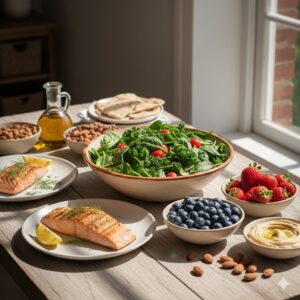
🌿 1. The Power of Leafy Greens: Your Brain’s Green Shield
If there is one thing you should add to your plate today, it’s leafy green vegetables. We’re talking about spinach, kale, collards, and even your basic Romaine lettuce.
- Why they work: Research shows that eating at least one serving of leafy greens a day is linked to a slower rate of cognitive decline—equivalent to being 11 years younger in age! These greens are packed with Vitamin K, lutein, and folate, which work together to shield your neurons from damage.
- How to enjoy them: You don’t have to eat a boring salad every day. Try tossing a handful of spinach into your morning fruit smoothie (you won’t even taste it!), or sauté kale with a bit of garlic and lemon as a delicious side dish.
※ Cooldy’s Dictionary: ‘Neurons’
Think of neurons as the “electrical wiring” of your brain. They send messages that allow you to move, think, and remember. Protecting these wires is the key to a sharp mind!
🍇 2. Berries: Nature’s Brain Candy
While the MIND diet encourages eating plenty of vegetables, it is very specific about fruit. The true superstars here are Berries. Whether it’s blueberries, strawberries, raspberries, or blackberries, these tiny fruits are packed with “anthocyanins.”
- The Harvard Connection: A major study from Harvard University found that women who ate at least two servings of blueberries or strawberries per week delayed their brain aging by up to 2.5 years.
- The Antioxidant Punch: Berries help reduce oxidative stress and inflammation in the brain. Think of them as a “deep clean” for your brain cells.
- Pro Tip: Frozen berries are just as nutritious as fresh ones! Keep a bag in your freezer to top your oatmeal or yogurt year-round.
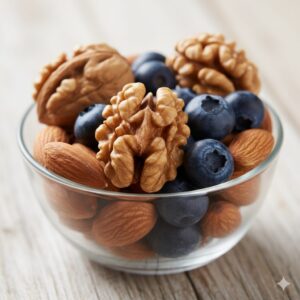
🥜 3. Nuts: The Ultimate Brain Snack
Have you ever noticed that a walnut looks remarkably like a tiny human brain? It’s almost as if nature is giving us a hint! Nuts are a vital component of the MIND diet because they provide healthy fats and fiber.
- Vitamin E for Protection: Nuts are rich in Vitamin E, which is known to protect cells from the kind of oxidative damage that leads to cognitive decline.
- Walnuts are Kings: Walnuts, in particular, are high in DHA, a type of Omega-3 fatty acid that has been shown to improve cognitive performance and prevent age-related mental decline.
- Mind the Portion: Because nuts are calorie-dense, a “small handful” (about 1 ounce or 30g) a day is the perfect amount.
🐟 4. Fatty Fish: Liquid Gold for Your Neurons
Your brain is about 60% fat, so it needs “good fats” to stay lubricated and functional. This is where fatty fish comes in.
- Weekly Goal: Unlike some diets that require fish every day, the MIND diet suggests eating fish at least once a week.
- Omega-3 Power: Salmon, mackerel, sardines, and trout are rich in Omega-3 fatty acids. These fats help lower levels of beta-amyloid in the blood—that’s the protein that forms damaging clumps in the brains of people with Alzheimer’s.
- Cooking Tip: Try baking or poaching your fish instead of deep-frying it to keep those delicate healthy fats intact!
※ Easy Terminology: ‘Beta-Amyloid’
Think of this as “brain trash.” In a healthy brain, this trash is cleared away. In Alzheimer’s, it builds up and blocks the signals between your brain cells. Fish helps “take out the trash.”
🫒 5. Olive Oil: The Mediterranean Secret
If you have various oils in your pantry, make Extra Virgin Olive Oil (EVOO) your primary choice. It is the cornerstone of the MIND diet.
- Oleocanthal: This is a natural compound found in EVOO that has a similar effect to anti-inflammatory medicines. It helps clear those “trash” proteins (amyloids) from the brain.
- Selection Matters: Look for “Extra Virgin” and “Cold Pressed” on the label. This ensures the oil hasn’t been processed with high heat, which can destroy its brain-boosting properties. Use it for low-heat cooking or as a finishing drizzle over your meals.
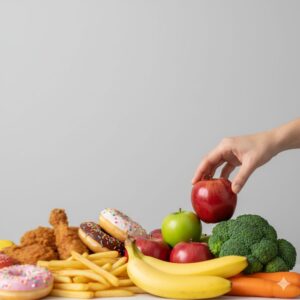
🚫 The “No-Go” List: Foods That Fog the Brain
To let the good foods work their magic, we also need to limit the foods that cause inflammation and “clog” our mental pipes. The MIND diet suggests limiting these five groups:
- Red Meat: Limit to fewer than 4 servings a week.
- Butter and Margarine: Keep it to less than 1 tablespoon per day.
- Cheese: Limit to once a week (I know, this one is tough for cheese lovers!).
- Pastries and Sweets: Try to keep these to fewer than 5 servings a week.
- Fried or Fast Food: Aim for less than once a week.
🚶 Beyond the Plate: Daily Habits for a Sharp Mind
Nutrition is the foundation, but your lifestyle acts as the scaffolding that holds everything together. To get the most out of your MIND diet, consider these three habits:
- Stay Hydrated: Even mild dehydration can cause brain fog and poor concentration. Carry a reusable water bottle and sip throughout the day.
- Move Your Body: Physical exercise increases blood flow to the brain, helping it grow new cells. A brisk 20-minute walk is plenty!
- Socialize and Learn: Engaging in deep conversations or learning a new hobby (like a language or a craft) creates new connections in your brain, making it more resilient.
I know this might seem like a lot of information, but remember: you don’t have to change everything overnight. The beauty of the MIND diet is that even small improvements count. Why not start today? Maybe swap your butter for olive oil, or grab a bag of frozen blueberries on your next grocery run. Your brain is a magnificent organ that has taken care of you your whole life—now is the perfect time to return the favor.
Stay curious, stay healthy, and keep nourishing that wonderful mind of yours! I’m Cooldy, and I’ll be back soon with more tips to help you live your best, most vibrant life.

🔗 Credible Resources for Further Reading
- National Institute on Aging (NIH): https://www.nia.nih.gov/health/brain-health
- Harvard Health Publishing – MIND Diet: https://www.health.harvard.edu
- Alzheimer’s Association – Food and Diet: https://www.alz.org
- Mayo Clinic – Brain Healthy Diet: https://www.mayoclinic.org
👉Related Posts
Is It Dementia or Depression? The Hidden Signs of ‘Masked Depression’ and How to Heal Your Mind
Is Your Brain Clogged? 5 Science-Backed Sleep Habits to Detox Your Brain and Prevent Dementia