Hello there! I’m Cooldy, your friendly guide to a healthier, more vibrant life.
Have you noticed your knees feeling a bit stiff when you wake up in the morning? Or perhaps that “crackling” sound and a sharp twinge when you’re walking down the stairs? It’s a common story for many of us, and it often leads us to look at the sky and wonder if rain is on the way. While we often chalk it up to “just getting older,” our knees are actually incredible biological machines that have worked tirelessly for decades.
Think of your knees as the ultimate shock absorbers of a luxury car. Over time, the padding—what we call cartilage—can wear thin. But here is the good news: you aren’t just a machine with unchangeable parts! Your body is a living organism that responds powerfully to what you put into it. Today, I’ve gathered the latest scientific research, clinical studies, and global success stories to bring you a “Food Prescription” that can help soothe inflammation and support your cartilage. Let’s dive into how you can eat your way to stronger, happier knees!
Understanding Your Knees: Protecting the ‘Shock Absorbers’
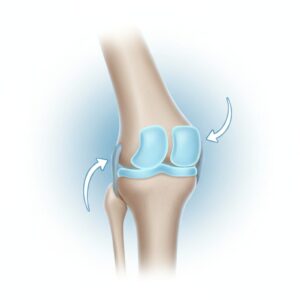
Inside your knee joint, there is a smooth, rubbery tissue called cartilage. Its main job is to prevent your bones from rubbing directly against each other. It’s the perfect cushion. However, cartilage is unique—it doesn’t have its own blood supply. This means it doesn’t get nutrients as easily as your muscles or skin do. It relies on the synovial fluid (the joint’s natural lubricant) to “soak up” what it needs.
Recent global health statistics show a rising trend in joint discomfort, even among those who are relatively active. While wear and tear are natural, chronic inflammation is the real villain that speeds up the process. By choosing foods that lower inflammation and provide the raw materials for repair, we can significantly improve our quality of life and mobility.

Prescription #1: The Golden Healer – Turmeric and Curcumin
If there is one spice that has taken the medical world by storm, it’s Turmeric. Used for thousands of years in traditional medicine, its active compound, Curcumin, is now being hailed as a “natural ibuprofen.”
[The Science Behind the Spice]
A study published in the journal Arthritis & Rheumatology found that curcumin is incredibly effective at blocking the enzymes that cause inflammation in the joints. In some clinical trials, patients who took curcumin experienced pain relief comparable to standard non-steroidal anti-inflammatory drugs (NSAIDs), but without the common side effects like stomach irritation.
- Cooldy’s Pro Tip: Curcumin is notoriously difficult for the body to absorb. To unlock its full potential, always pair it with black pepper (which contains piperine) and a source of healthy fat (like olive oil or avocado). This can increase absorption by up to 2,000%! A warm “Golden Milk” latte made with ginger, turmeric, and a hint of black pepper is a perfect evening ritual.
Prescription #2: The New Zealand Secret – Green-Lipped Mussel
Nature often provides solutions in the most unexpected places. The Green-Lipped Mussel, native to the pristine waters of New Zealand, became a subject of intense research when scientists noticed that the coastal Maori people had significantly lower rates of arthritis compared to those living inland.
[Clinical Insights]
These mussels contain a rare combination of omega-3 fatty acids known as Lyprinol. Research suggests that these specific lipids are far more potent at reducing joint inflammation than standard fish oils. They work by inhibiting the ‘leukotriene’ pathway—a major trigger for swelling and pain in the joints. For those dealing with “hot” or swollen knees, this is a powerhouse ingredient.
Prescription #3: Building Blocks of Cartilage – MSM and Cruciferous Veggies
To maintain or repair cartilage, your body needs a steady supply of Sulfur. This is where MSM (Methylsulfonylmethane) comes in. Think of sulfur as the “glue” that holds collagen strands together, giving your cartilage its structure and strength.
[Research Highlight]
Researchers at the University of East Anglia (UEA) discovered that a compound called Sulforaphane, found in abundance in broccoli, can actually block the enzymes that cause joint destruction. By eating cruciferous vegetables like broccoli, Brussels sprouts, and cabbage, you are essentially putting up a shield to protect your knees from being “eaten away” by inflammation.
- Daily Habit: Try to include at least half a cup of steamed broccoli or a fresh cabbage slaw in your daily meals. It’s like sending a repair crew directly to your knee joints.
Prescription #4: Lubricating the Gears – Omega-3 Fatty Acids
When your joints feel stiff and “rusty,” they need lubrication. Omega-3 fatty acids, found in fatty fish like mackerel, salmon, and sardines, as well as in flaxseeds and walnuts, act as a high-quality lubricant for your body.
[Real-World Evidence]
Large-scale population studies consistently show that those who follow a Mediterranean Diet—rich in fish and olive oil—report lower levels of joint pain and higher mobility scores. These healthy fats help regulate the consistency of your synovial fluid, making every movement feel smoother and less abrasive.

Lifestyle Wisdom: Small Changes, Big Results
While what you eat is crucial, how you move and live also dictates the health of your knees. Here are a few “Cooldy-approved” lifestyle tips:
- Manage the Load: Every extra pound you carry adds 3 to 5 pounds of pressure on your knees with every step. Losing even a small amount of weight can feel like taking a heavy backpack off your knees.
- The “Seated Leg Lift”: You don’t need a gym. While sitting in a chair, simply straighten one leg and hold it for 10 seconds. Repeat 10 times for each leg. This strengthens the quadriceps (thigh muscles), which take the pressure off the actual knee joint.
- Avoid the “Deep Squat”: Sitting on the floor or squatting for long periods can “pinch” the cartilage. Whenever possible, choose chairs and beds that allow your knees to remain at a comfortable angle.
The Ultimate Knee-Friendly Daily Menu
- Breakfast: Greek yogurt topped with walnuts, blueberries (high in antioxidants), and a sprinkle of ground flaxseed.
- Lunch: Grilled mackerel or salmon served with a large portion of steamed broccoli and garlic-infused brown rice.
- Snack: A handful of almonds or a cup of warm ginger and turmeric tea.
- Dinner: A hearty vegetable stir-fry with plenty of onions, garlic, and peppers, sautéed in extra virgin olive oil.
Glossary & Footnotes:
- VAS (Visual Analogue Scale): A tool used by doctors to measure a patient’s pain intensity on a scale of 0 to 10.
- Sulforaphane: A natural plant compound found in many cruciferous vegetables that has potent anti-inflammatory properties.
- Synovial Fluid: A thick liquid located between your joints that reduces friction and nourishes the cartilage.
I hope you found today’s guide helpful! Remember, there is no “magic pill” that fixes everything overnight, but the choices you make at the grocery store today will determine how you feel on your walk tomorrow. Start with one small change—maybe adding some turmeric to your dinner or some broccoli to your lunch. Your knees will thank you!
If you have any questions or have a secret “knee-saver” recipe of your own, please share it with me! I’m always here to learn and grow with you.

Reliable Sources for Further Reading:
- Arthritis Foundation: https://www.arthritis.org/
- Mayo Clinic – Osteoarthritis Information: https://www.mayoclinic.org/
- Harvard Health – Diet and Inflammation: https://www.health.harvard.edu/
👉 Related Posts
Don’t Just Warm Your Knees! 5 Counterintuitive Ways to Save Your Joints This Winter