Hello everyone! It’s your friendly neighborhood researcher and information enthusiast, Cooldy!
Have you ever settled into bed after a long day, feeling ready for a peaceful night’s sleep, only to be jolted awake by an unbearable, maddening itch between your toes? Or perhaps you’ve noticed your heels getting unusually thick and crusty, thinking it’s just a sign of getting older, only to realize that no amount of lotion seems to fix it. If this sounds familiar, you’re definitely not alone. We’re talking about a guest that no one ever invites but seems to overstay its welcome far too often: Athlete’s Foot.
While the name sounds like something only marathon runners get, the truth is that this fungal infection is a common companion for many of us as we move through different stages of life. It’s a bit embarrassing to talk about, isn’t it? We hide our feet in socks and hope it goes away. But today, I’ve done a deep dive into everything you need to know to reclaim the comfort of your own feet. We’ll talk about why it happens, the mistakes we all make, and how to finally say goodbye to that itch—all in plain, simple English!
🍄 What Exactly is Athlete’s Foot? (The Uninvited Guest)
To fight the enemy, we first have to understand it. Athlete’s foot, known medically as Tinea Pedis, isn’t caused by a virus or bacteria. It’s caused by fungi—specifically a group called dermatophytes. These tiny organisms are a bit like mushrooms; they love dark, warm, and damp environments. And what’s darker and more humid than the inside of a shoe on a busy day?
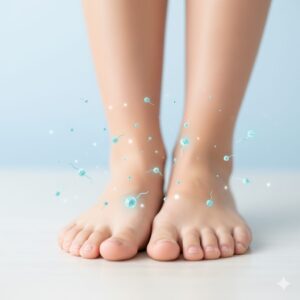
As we navigate through our golden years, our skin changes. It becomes a bit thinner, and our immune system might not be as “on guard” as it used to be. Plus, blood circulation to our extremities (our hands and feet) can slow down a little. This creates the perfect “vacation home” for fungi. They feed on keratin, a protein found in your hair, skin, and nails. It sounds a bit like a sci-fi movie, doesn’t it? But don’t worry, it’s very treatable!
🔍 Identify Your Type: Not All Itches are Created Equal
Did you know there are actually different “flavors” of athlete’s foot? Identifying which one you have is the first step to getting the right help.
1. The “Between the Toes” Type (Interdigital)
This is the classic version. It usually starts between the fourth and fifth toes. You’ll notice the skin looks white, feels soggy, and might even peel or crack. And the itch? It can be intense, especially right after you take off your shoes and socks.
2. The “Moccasin” Type (Hyperkeratotic)
This one is tricky because it doesn’t always itch. Instead, the skin on your soles and heels becomes thick, dry, and scaly. Many people mistake this for just having “dry skin” or calluses from aging. If you apply moisturizer and the scales just keep coming back, it might actually be a fungal infection masquerading as dry skin.
3. The “Blister” Type (Vesicular)
This is the least common but often the most uncomfortable. It involves sudden outbreaks of small, fluid-filled blisters, usually on the bottom of the foot. These can be quite painful and very itchy.
⚠️ The Great Vinegar Myth: Why Home Remedies Can Be Dangerous
I’ve heard it all—soaking feet in pure vinegar, rubbing garlic directly on the skin, or even using bleach. While it’s tempting to try a “natural” fix from the pantry, we need to be very careful.

Vinegar is an acid. While it can kill some fungi, it can also severely irritate skin that is already damaged by the infection. If your skin has tiny cracks (which is common with athlete’s foot), the acid can cause a chemical burn or open the door for a much more serious bacterial infection called Cellulitis (a deep skin infection that causes swelling and heat).
💡 Cooldy’s Note: If your foot is red, hot to the touch, or you start running a fever, stop the home remedies and see a doctor immediately. That’s a sign that bacteria have joined the party, and that’s a much bigger deal than just fungus!
🧴 The Secret to Treatment: The “Two-Week Rule”
Most people fail at treating athlete’s foot not because the medicine doesn’t work, but because they stop too soon.
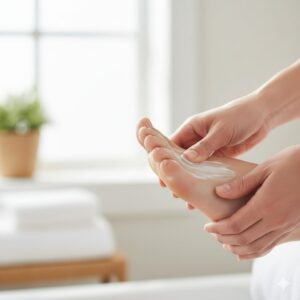
When you apply an over-the-counter (OTC) antifungal cream (look for ingredients like Clotrimazole or Terbinafine), the itching usually stops within 3 to 5 days. We think, “Hooray, I’m cured!” and put the tube away.
But wait! The fungi are sneaky. They have deep “roots” in the upper layers of your skin. If you stop the cream the moment the itch stops, they will just grow back.
- The Golden Rule: Continue applying the cream for at least one to two weeks AFTER the skin looks completely normal. This ensures every last spore is gone.
🥗 Eating for Stronger Feet: Diet and Immunity
You might wonder, “What does my dinner have to do with my feet?” Well, everything! A strong immune system is your best defense against any infection.
- The Power of Garlic: Garlic contains a compound called Allicin, which has natural antifungal properties. Adding fresh garlic to your meals isn’t just tasty; it’s like sending a little internal security guard to your skin.
- Probiotics (The Good Bacteria): Foods like yogurt, kefir, or kimchi help keep your gut microbiome healthy. A healthy gut often leads to a more balanced immune response on your skin.
- Stay Hydrated: Dry, cracked skin is an open door for fungus. Drinking enough water keeps your skin supple and hard to penetrate.
🌬️ The “Dry Foot” Protocol: Your Daily Routine
Fungus needs moisture to survive. If you take away the water, the fungus dies. It’s as simple as that! Here is my recommended daily routine for keeping those feet as dry as a desert:
- The Blow-Dry Method: After your shower, don’t just pat your feet with a towel. Use a hair dryer on the cool or warm setting to thoroughly dry between every single toe. It feels great and ensures no moisture is trapped.
- The Shoe Rotation: Never wear the same pair of shoes two days in a row. Shoes need at least 24 hours to fully air out and dry inside.
- Cotton is King: Wear 100% cotton socks. Synthetic fabrics trap sweat and create a “sauna effect” for your feet. If your feet get sweaty during the day, change your socks! It’s worth the extra laundry.
- Sunlight is the Best Disinfectant: Whenever possible, put your shoes out in the sun. UV rays are a natural enemy of fungi.

👞 When to Visit the Professional (Podiatrist)
Sometimes, a little cream isn’t enough. If you notice your toenails are becoming thick, yellow, or crumbly, the fungus has likely moved into the nail bed (Onychomycosis). Creams can’t get through the hard nail, so you’ll need a doctor to prescribe specialized nail lacquer or oral medication.
Also, for those who manage conditions like Diabetes, any foot issue is a priority. Because diabetes can affect feeling in the feet and slow down healing, even a small case of athlete’s foot should be checked by a professional to prevent complications.
I hope this guide helps you feel more confident about taking care of your feet! We spend our whole lives on these two feet; they carry us to see our grandchildren, on walks through the park, and through every dance in the kitchen. They deserve a little extra love and attention.
Don’t let a little itch keep you from enjoying your day. Start the “Dry Foot” protocol today, be persistent with your treatment, and remember that there’s no shame in taking care of yourself.
Stay healthy, stay happy, and keep those feet 뽀송뽀송 (bbosong-bbosong—that’s a fun Korean word for ‘perfectly dry and soft’)! If you have any questions or your own tips to share, please leave a comment below. I love hearing from you!
Until next time, this is Cooldy!
Reliable Sources for Further Reading
- Mayo Clinic: Athlete’s Foot (https://www.mayoclinic.org/diseases-conditions/athletes-foot/symptoms-causes/syc-20353841)
- NHS: Athlete’s Foot (https://www.nhs.uk/conditions/athletes-foot/)
- American Academy of Dermatology (https://www.aad.org)
👉Related Posts
Stop Just Walking! Boost Muscle and Lower Blood Sugar with the ‘3-Minute Interval Walking’ Method