Hi there! Have you ever had one of those days where your head feels like it’s being squeezed by a giant pair of pliers, or perhaps it’s throbbing like a drum? I’m Cooldy, and believe me, I’ve been there. Whether it’s from staring at a computer screen for too long or dealing with the stresses of everyday life, headaches are something almost 90% of us experience at some point. 😖
While most headaches are just our body’s way of saying, “Hey, take a break!”, some are actually important signals that we shouldn’t ignore. Today, I want to walk you through the different types of headaches, how to tell if one is dangerous, and some simple, natural ways to find relief. We’re going to dive deep into what’s happening inside your head so you can feel better and stay informed! 🕵️♀️
That Throbbing Pain: Identifying Your Headache (Primary Headaches)
First, let’s talk about ‘Primary Headaches.’ These are headaches that aren’t caused by an underlying disease. They are the “main event” themselves. Most of the headaches we deal with fall into this category.
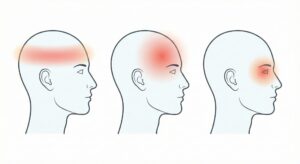
1. The ‘Tight Band’ Feeling: Tension Headaches
This is the most common type of headache. It feels like a tight band is wrapped around your entire head, creating a dull, aching pressure. You might also feel soreness in your neck and shoulders.
- The Cause: Usually, it’s stress, fatigue, or—most commonly—poor posture. When we slouch or look down at our phones for too long, the muscles in our neck and scalp tighten up, triggering this pain.
- The Fix: Relaxation is key here. A warm shower, a heating pad on your neck, or a gentle massage can work wonders. Try to take “posture breaks” every hour to reset your spine.
2. The Pulsating Pain: Migraines
A migraine is much more than just a bad headache. It often feels like a “pounding” or “throbbing” sensation, usually on one side of the head, but it can be on both. It often comes with sensitivity to light and sound, and even nausea.
- The Cause: While the exact cause is still being studied, it’s often related to temporary changes in the chemicals and blood vessels in the brain. Genetics also play a big role.
- The Fix: If you feel a migraine coming on, find a dark, quiet room and lie down. Applying a cold compress to your forehead or the back of your neck can help constrict blood vessels and dull the pain.
3. The Sharp Stabbing: Cluster Headaches
These are rare but incredibly intense. The pain is usually centered around one eye and feels like a sharp, piercing, or “burning” sensation. They are called “cluster” headaches because they occur in groups over several weeks or months.
- The Feature: They often happen at the same time every day, frequently waking people up in the middle of the night.
- Pro-tip: During a cluster period, avoid alcohol entirely. Alcohol is a major trigger that can set off an attack almost instantly.
When to Worry: Recognizing ‘Secondary Headaches’
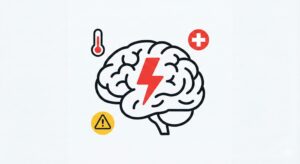
‘Secondary Headaches’ are symptoms of something else happening in your body. While most are minor (like a sinus headache from a cold), some can be life-threatening. 🚨
1. The “Thunderclap” Headache
If you suddenly experience the worst headache of your life—one that reaches maximum intensity within seconds—this is a medical emergency. It could be a sign of a brain hemorrhage. Please call for help immediately.
2. Fever and a Stiff Neck
If your headache is accompanied by a high fever and your neck is so stiff that you can’t touch your chin to your chest, it might be meningitis (an inflammation of the brain’s lining). This requires urgent medical attention.
3. Vision Changes or Numbness
Does the world look blurry or doubled? Do you feel weakness in one arm, or is your speech becoming slurred? These can be warning signs of a stroke. Don’t wait to see if it passes—seek help right away.
💡 What is an ‘Aura’?
Some people experience an “aura” before a migraine starts. This might look like flashing lights, blind spots, or tingling in your hands. It’s like an early warning system! If you recognize your aura, you can take your medication or rest early to prevent the full-blown pain.
Natural Relief: Healing Without Medication
We don’t always want to reach for a pill bottle. Here are some of my favorite “Cooldy-approved” ways to soothe a headache naturally. 😉
1. Target the Pressure Points
- The ‘Pung-ji’ Point (GB20): These are the two indentations at the base of your skull, where your neck muscles meet your head. Pressing these firmly with your thumbs for a minute can relieve tension and clear your head.
- The ‘Tae-yang’ Point (Temple): Use your index and middle fingers to gently massage your temples in a circular motion. This is great for soothing the eyes and relaxing the mind.
2. The Power of Hydration
Dehydration is one of the most common—and overlooked—causes of headaches. When your body lacks water, your brain can actually shrink slightly, pulling away from the skull and causing pain. Try drinking a large glass of room-temperature water before reaching for aspirin.
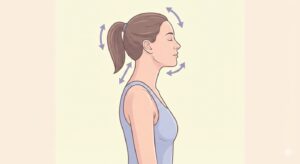
3. Fix Your Tech-Neck
Are you reading this while hunched over? Your head weighs about 10-12 pounds, but when you tilt it forward 45 degrees, the strain on your neck increases to nearly 50 pounds! Practice the “chin tuck”: pull your head straight back (like making a double chin) to realign your vertebrae.
The Headache Diet: What to Eat and What to Avoid
What we put in our bodies has a massive impact on how our heads feel. 🥗
👍 The “Headache Heroes” (Foods that Help)
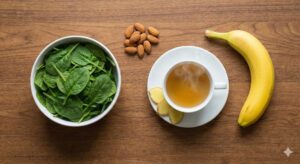
- Magnesium-Rich Foods (Spinach & Almonds): Magnesium helps relax blood vessels. A handful of almonds or a spinach salad can be a great natural preventative.
- Ginger: This root is a natural anti-inflammatory. A cup of warm ginger tea can be as effective as some over-the-counter painkillers for migraines, plus it helps with nausea!
- Bananas: They provide a quick energy boost and are high in potassium and magnesium, which help balance your body’s fluids.
👎 The “Headache Hazards” (Triggers to Avoid)
- Processed Meats: Ham, bacon, and sausages often contain nitrates, which can cause blood vessels to swell and trigger headaches.
- Aged Cheeses and Red Wine: These contain ‘Tyramine,’ a substance that can cause blood pressure changes in the brain.
- MSG (Monosodium Glutamate): Found in many savory snacks and some restaurant foods, it can cause “brain fog” and dull aches in sensitive people.
Building a Headache-Free Lifestyle
Consistency is the best medicine! Here are three habits to keep the “head-monsters” away:
- Stick to a Sleep Schedule: Your brain loves routine. Going to bed and waking up at the same time—even on weekends—prevents “let-down headaches” caused by sleeping in too late.
- Watch the Caffeine: Caffeine is tricky. A little can help a headache, but too much (or skipping your usual morning cup) can cause a withdrawal headache. Try to keep your intake steady.
- Walk in the Sunlight: A 20-minute walk boosts serotonin (the feel-good hormone) and improves blood flow. Plus, the fresh air does wonders for mental clarity! ☀️

I hope this guide helps you understand those pesky headaches a little better. Remember, your body is always talking to you—sometimes it’s just asking for a glass of water, a better pillow, or a little less stress.
Take care of yourselves, stay hydrated, and keep that posture tall! If you have any questions or your own secret headache remedies, I’d love to hear them in the comments below. Let’s stay healthy and “So Cool” together! 💪✨
Trusted Resources for Further Reading:
- International Headache Society: https://ihs-headache.org
- Mayo Clinic – Headaches: https://www.mayoclinic.org/symptoms/headache/basics/definition/sym-20050800
- National Institute of Neurological Disorders and Stroke: https://www.ninds.nih.gov
👉 Related Posts
🚨Warning Sign: Angina Symptoms, Self-Diagnosis, and 5 Essential Habits for a Healthier Heart