- Prioritize “Ro-Ro” (Roll-on/Roll-off) vessels: These larger ferries offer vehicle decks that provide level entry, significantly reducing the need to navigate steep gangplanks or stairs.
- Check the “Last Mile” of access: Accessibility on the ferry is only half the battle; verify the incline of the terminal ramp and the distance from the arrival pier to local transport at your destination.
- Strategic Booking: Always book “Priority/Accessible” seating near the exit or the elevator to minimize walking distances and avoid congestion during the boarding and disembarking process.
Island hopping is a rewarding way to experience diverse cultures and landscapes, but for travelers aged 60 to 80, the logistics of ferry crossings require careful planning to ensure safety, comfort, and independence. The “accessible” label on a travel website can be broad, and understanding the nuances of maritime transport is essential to avoiding physical strain or unexpected complications at the pier.
Understanding Ferry Vessel Types and Their Impact on Mobility
Not all ferries are created equal. The most critical factor in your travel experience is the type of vessel you select. For travelers with limited mobility or those who prefer to conserve their energy for the destination, understanding the difference between vessel classes is the first step in planning.
Ro-Ro (Roll-on/Roll-off) Ferries
These are the workhorses of the seas. Designed primarily to transport vehicles, they feature massive stern or bow ramps that lower directly onto the pier. For the senior traveler, this is the gold standard. Because these ships are large and stable, they provide a smooth ride, which is vital for those prone to motion sickness or balance issues.
- Level Boarding: You can often walk or use a mobility aid directly from the terminal onto the main deck without climbing stairs.
- Elevator Access: Most modern Ro-Ro ferries are equipped with elevators that travel from the vehicle deck to the passenger lounges.
- Spaciousness: The wide corridors and ample deck space allow for easy movement, even if you are carrying luggage.
High-Speed Catamarans and Hydrofoils
While these vessels are faster, they often come with significant trade-offs regarding accessibility. They are typically smaller, lighter, and more sensitive to sea conditions.
- The “Stair” Problem: Many high-speed catamarans require passengers to climb steep, narrow stairs immediately upon boarding to reach the seating areas.
- Motion Sensitivity: Due to their lighter build, these boats can experience significant “pitch and roll” in rough waters, which can be jarring and increase the risk of falls for those with stability challenges.
- Restricted Movement: Once seated on a high-speed craft, you are often required to remain in your seat for the duration of the voyage, limiting your ability to stretch or access the restroom comfortably.
| Feature | Ro-Ro Ferry | High-Speed Catamaran |
|---|---|---|
| Boarding Incline | Low / Level | High / Steeper |
| Stability | High (Less motion) | Lower (More motion) |
| Movement on Board | Easy (Elevators/Flat) | Restricted |
| Best For | Comfort & Mobility | Speed & Efficiency |
Decision Rule: Choose the Ro-Ro ferry if your priority is physical comfort and ease of boarding. Choose the high-speed catamaran only if the travel time is short (under 45 minutes) and you are confident in your balance and ability to navigate stairs.
Evaluating Terminal Accessibility: The “Pier-to-Ship” Gap
A ferry may be accessible, but the terminal infrastructure is where most travel plans encounter friction. When researching your route, look beyond the ship itself and investigate the harbor facilities.
The Reality of Gangplanks
In many smaller island ports, the “gangplank” is not a motorized bridge but a manual ramp. These can vary significantly in length and steepness depending on the tide. At low tide, a ramp that is perfectly manageable at high tide can become a steep, slippery incline.
Actionable Step: When booking, call the ferry operator directly and ask: “Is the boarding process via a level ramp, or are there steps involved?” If they mention steps, ask if there is an alternative boarding procedure for passengers with limited mobility. Many operators have a “priority boarding” protocol where they allow passengers with mobility needs to board before the main crowd, often using a secondary, flatter ramp.
Terminals are often chaotic hubs of activity. For seniors, the primary risk is not just the ship, but the distance from the ticket office to the boarding gate. Look for the following indicators of a senior-friendly terminal:
- Distance: Does the terminal offer shuttle buses from the entrance to the pier? If not, is the walk within your stamina limits?
- Seating: Are there adequate, comfortable chairs in the waiting area? Avoid terminals that only offer “standing room” until boarding.
- Signage: Is the signage clear and in a language you understand? If not, ensure you have a digital map of the terminal saved on your phone.
Strategic Seat Selection and Onboard Safety
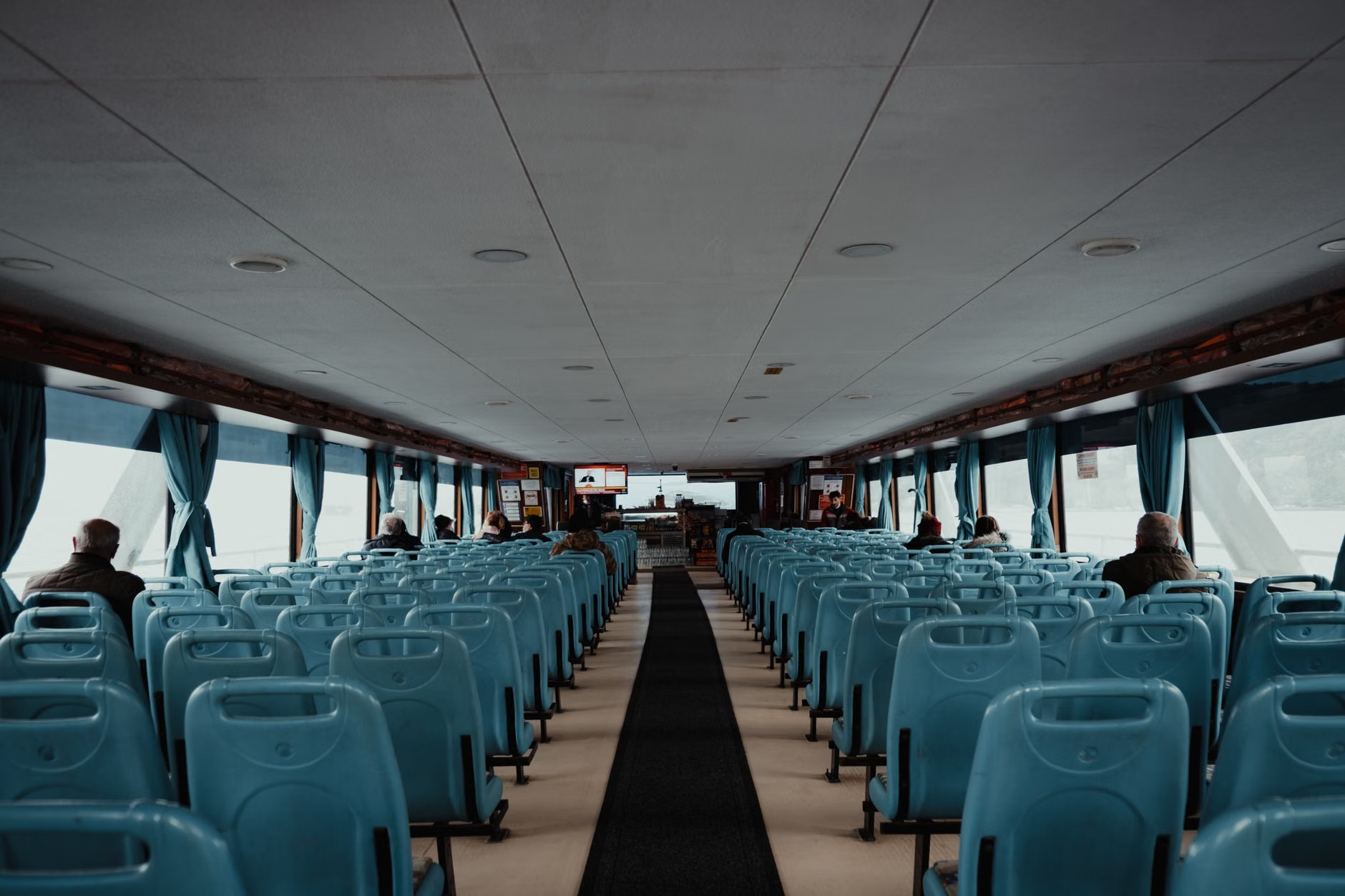
Once you are on the ferry, your choice of seat can dictate your comfort level for the entire journey. Do not leave this to chance; if the ferry allows seat selection, prioritize the following criteria.
Proximity to Facilities
Always aim for seating near the main exit, the elevator, or the restroom. This reduces the distance you need to walk when the ship docks. Common Mistake: Choosing a seat by the window for the view, only to realize it is at the furthest end of the ship, requiring a long, potentially crowded walk through narrow aisles during disembarkation.
Securing Your Position
If you have any concerns about stability, choose a seat that faces the direction of travel. This is a common physiological trick to reduce motion sickness and helps you brace yourself more naturally if the ship encounters rough waves. Ensure your bag is tucked firmly beneath your seat or in a designated rack, never in the aisle where it could become a tripping hazard.

Health and Stamina Management During Transit
Travel stamina is a finite resource. A ferry journey is not just the time spent on the water; it is the travel to the pier, the waiting time, the boarding process, and the transit upon arrival. Managing your energy levels is vital to ensuring you enjoy the island destination once you arrive.
The “Buffer Zone” Strategy
Always schedule your arrival at the terminal at least 60 minutes before departure. This is not just for security; it is to ensure you have the time to navigate the terminal at a slow, comfortable pace. Arriving early allows you to scout the boarding ramp, locate the restrooms, and secure a comfortable seat before the “rush” of passengers arrives.
Hydration and Nutrition
Air-conditioned ferry cabins can be dehydrating. Avoid relying on the onboard cafeteria, which may have long lines or limited, salty food options. Carry a small “transit kit” containing:
- A refillable water bottle (check if the ferry has a water station).
- A light, easily digestible snack (e.g., crackers, nuts, or fruit).
- Any necessary medications in your carry-on, never in checked luggage.
Managing Motion Sickness
If you are prone to motion sickness, do not wait until you feel nauseous to act. The best seat is usually in the center of the ship, on the lowest deck, as this area experiences the least amount of movement. Look for a seat with a view of the horizon; keeping your eyes fixed on a stable point in the distance can help your brain reconcile the motion of the ship with your visual input.
Advanced Planning: Digital Tools and Information Sources
Technology can significantly reduce the “unknowns” of ferry travel. Before you head to the port, use these tools to gather intelligence.
Official Operator Websites
Do not rely on third-party booking aggregators. They often omit accessibility information. Go directly to the ferry operator’s website. Look for sections labeled “Assistance,” “Special Needs,” or “Accessibility.” These pages often specify the exact weight limits for elevators or whether the ship is equipped with accessible restrooms.
Google Maps and Satellite View
Use the satellite view on map applications to inspect the port layout. You can often see the distance between the parking area and the pier. If the distance looks significant, you can plan to use a taxi or a local shuttle service to get closer to the boarding area.
Regional Differences in Ferry Accessibility
Accessibility standards are not global. What is considered “fully accessible” in Northern Europe or parts of North America may look very different in Southeast Asia or the Mediterranean.
Europe: The Standardized Approach
In the European Union, ferry operators are governed by Regulation (EU) No 1177/2010, which mandates rights for passengers traveling by sea. This includes the right to assistance for passengers with disabilities and reduced mobility. When traveling within the EU, you are legally entitled to request assistance at the port and on board, provided you notify the carrier 48 hours in advance. Always keep this regulation number in mind if you encounter an operator who seems unaware of their obligations.
The Developing World: Local Knowledge is Key
In regions where formal accessibility regulations are less strictly enforced, the burden of information falls on the traveler. In these areas, prioritize larger, government-operated ferries over private “speed boat” operators. Government-run routes often prioritize consistency and safety over speed, which usually translates to more robust and accessible vessels.
Putting It All Together: Your Pre-Trip Checklist
To ensure a smooth transition from land to sea, follow this checklist before you depart for your trip:
- Verify the Vessel: Check the specific ship name on your ticket. Search for its “General Arrangement” or “Deck Plan” online to locate elevators and accessible restrooms.
- Request Assistance: If you use a cane, walker, or wheelchair, call the operator 48 hours in advance. Even if you don’t require full assistance, informing them allows staff to prepare a ramp or clear a path for you.
- Pack Light: If you cannot easily carry your luggage up a flight of stairs, reconsider your packing. Assume that at some point, you may need to carry your own bags.
- Check the Tides: For smaller ports, check local tide charts. If you are traveling at extreme low tide, the boarding ramp will be at its steepest.
- Confirm Local Transport: Once you arrive at the island, how will you leave the pier? Have a taxi number or a pre-arranged transfer service ready, as island ports can be far from the main village centers.
Conclusion: The Value of Slow Travel
The most important insight for senior travelers is to embrace the “slow travel” philosophy. The ferry is not merely a means to an end; it is part of the experience. By choosing larger, more stable vessels, allowing extra time for boarding, and proactively communicating your needs to operators, you remove the stress that often accompanies transit. Accessibility is not about finding a “perfect” boat; it is about choosing the vessel that matches your stamina and mobility needs, allowing you to arrive at your island destination refreshed and ready to explore.
For more information on passenger rights and accessibility standards, you can consult the official guidelines provided by the European Commission on Maritime Passenger Rights or your local national transport authority.
Frequently Asked Questions (FAQ)
1. Do I need to book my ferry ticket in advance?
Yes, especially if you have mobility needs. Booking in advance allows you to notify the operator of your requirements (such as needing a seat near the elevator or assistance with boarding). It also secures your spot on larger, more accessible vessels that may sell out during peak tourist seasons.
2. Can I bring a mobility aid like a folding walker or wheelchair on board?
Most ferries accommodate these, but you must notify the operator in advance. On Ro-Ro ferries, there is typically plenty of space to store these items. On smaller, high-speed boats, you may be required to check them in as luggage, so always clarify the storage policy before booking.
3. What should I do if the boarding ramp looks too steep when I arrive?
Do not attempt to navigate it if you feel unsafe. Immediately find a member of the ferry staff and explain that you require assistance. They are trained to handle these situations and can often provide a more gradual ramp, manual assistance, or even a shuttle service to the vessel’s entrance.