- Respiratory Efficiency: Seated chest openers help counteract the natural tendency for the upper back to round with age, allowing the lungs to expand more fully.
- Safety First: The most effective exercises are performed in a stable chair without wheels, prioritizing spinal alignment over range of motion.
- Consistency vs. Intensity: Gentle, daily practice is significantly more effective for long-term respiratory ease than infrequent, high-intensity stretching.
For many adults aged 60 to 80, the subtle decline in respiratory ease is often attributed to the natural aging process. However, a significant portion of this feeling is actually related to postural changes—specifically, the gradual rounding of the upper back (thoracic kyphosis) and the tightening of the pectoral muscles. When the chest remains in a slightly “closed” or hunched position, the diaphragm has less room to descend, and the rib cage cannot expand fully during inhalation. This article provides a practical, evidence-based approach to using seated chest openers to maintain respiratory mobility and comfort.
Understanding the Mechanics of Seated Respiratory Health
To understand why chest openers are effective, we must look at the relationship between the thoracic spine and the lungs. The thoracic spine—the middle section of your back—is naturally slightly curved. As we age, this curve can become more pronounced. This compression can physically limit the space available for the lungs to inflate. Furthermore, the muscles across the front of the chest, specifically the pectoralis major and minor, tend to shorten if we spend significant time sitting in chairs, reading, or using digital devices.
When these muscles are tight, they pull the shoulders forward, locking the chest into a restricted position. By performing gentle, controlled movements that move the shoulders back and open the sternum, we are not “fixing” an ailment, but rather optimizing the mechanical environment in which the lungs operate. This is a form of functional maintenance, similar to lubricating the hinges on a door that has become stiff over time.
The Importance of a Stable Foundation
Before beginning any movement, the setup is critical. A common mistake is practicing these movements on a sofa or a chair with wheels. A sofa is typically too soft, which prevents the pelvis from being neutral, and a rolling chair creates a safety risk. Always use a firm, stationary chair. Ensure your feet are planted firmly on the floor, shoulder-width apart. This foundation provides the stability needed to lengthen the spine without putting unnecessary strain on the lumbar (lower) back.

Step-by-Step Guide: Gentle Chest Opening Techniques
The following exercises are designed to be performed in a seated position. They focus on slow, controlled movements rather than force or momentum. If you feel any sharp pain, stop immediately and return to a neutral, resting posture.
1. The Shoulder Blade Retraction (The “Scapular Squeeze”)
This movement targets the muscles between the shoulder blades, which are often weak or “long” from constant slouching. By strengthening these, you naturally encourage the chest to open.
- Preparation: Sit tall, imagining a string pulling the crown of your head toward the ceiling.
- Action: Gently draw your shoulder blades down and back, as if you are trying to squeeze a pencil between them.
- Duration: Hold for 3 to 5 seconds, then relax. Repeat 5 to 8 times.
- Common Mistake: Shrugging the shoulders toward the ears. Keep your neck long and your shoulders away from your ears throughout the movement.
2. The Seated Cactus Arms
This movement is excellent for stretching the front of the chest and the anterior deltoids.
- Action: Raise your arms to the side, bending at the elbows so that your hands are pointing toward the ceiling (like a cactus or a goalpost).
- The Stretch: As you inhale, gently push your elbows back until you feel a comfortable stretch across the front of your chest. Do not force this—only go to the point of gentle tension.
- The Release: As you exhale, slowly bring your elbows and forearms together in front of your chest.
- Why it matters: This movement synchronizes breath with movement, which helps retrain the body to use the full capacity of the lungs during exertion.
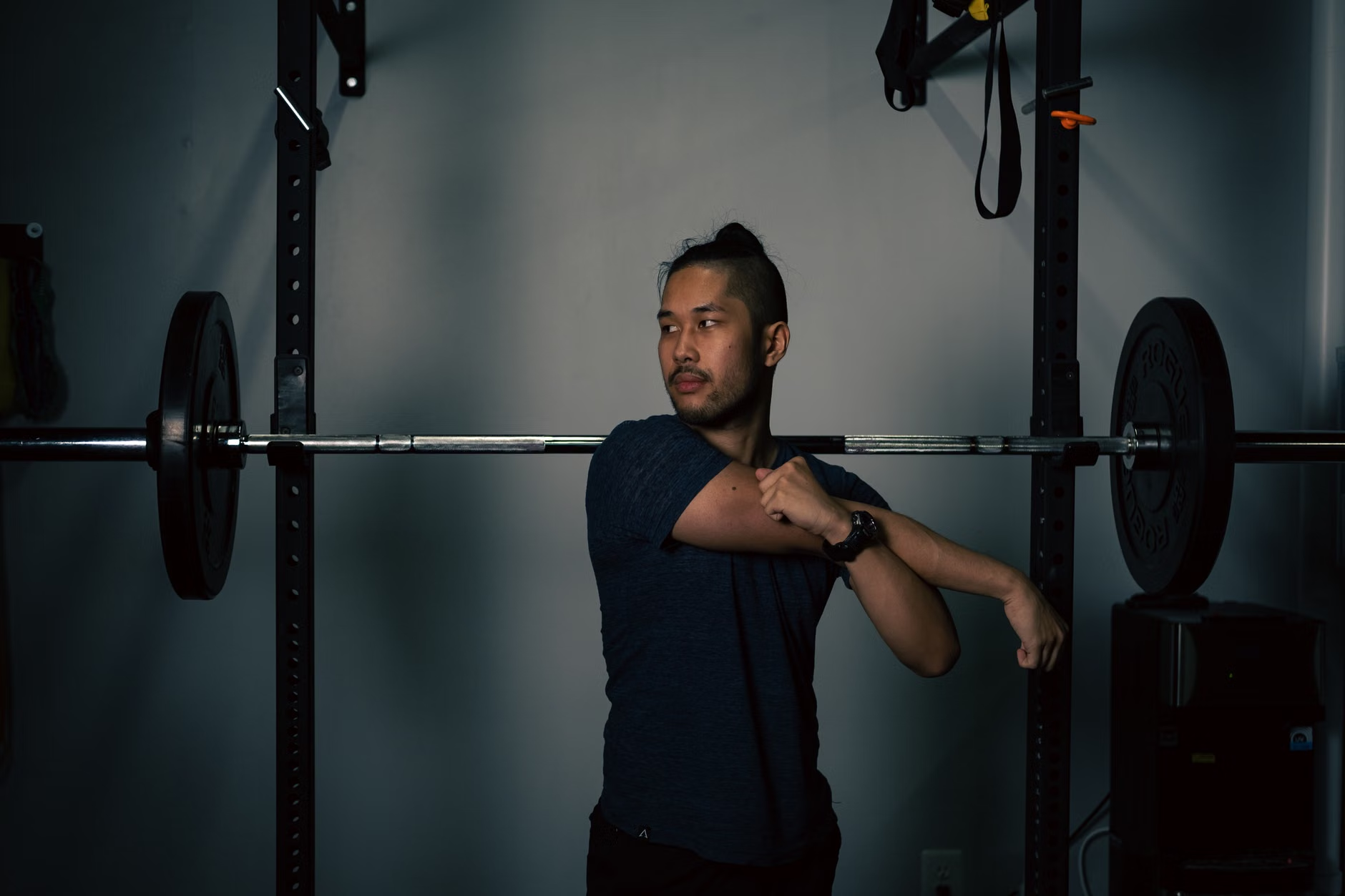
3. The Lateral Rib Cage Expansion
Respiratory ease is not just about the front of the chest; it is also about the sides of the rib cage. The intercostal muscles (the muscles between the ribs) can become stiff, limiting the expansion of the lungs.
- Action: Place your left hand on the side of your chair for stability. Reach your right arm up toward the ceiling.
- The Tilt: Gently lean your torso to the left, feeling a stretch along the right side of your rib cage.
- The Breath: Take a slow, deep breath into the right side of your chest. You should feel the ribs expanding like an accordion.
- Safety Note: Keep both sit-bones firmly on the chair. Do not lift your hip off the seat.

Comparing Exercise Methods for Seniors
When selecting a routine, it is important to understand the trade-offs between different approaches. Not all exercise is equally suited for every individual’s current mobility level.
| Method | Primary Benefit | Best For | Risk Level |
|---|---|---|---|
| Seated Stretching | Flexibility & Posture | Beginners & those with balance issues | Very Low |
| Wall-Assisted Standing | Range of Motion | Those with moderate balance | Low |
| Resistance Band Rows | Strength Building | Those with good stability | Moderate |
For those just beginning, seated stretching is the gold standard. It eliminates the risk of falling and allows the user to focus entirely on the quality of the movement. Once you have built a habit of consistency, you might consider incorporating resistance bands, but only under the guidance of a physical therapist to ensure the resistance does not cause shoulder impingement.
Integrating Practice into Your Daily Routine
The biggest barrier to respiratory health is not physical ability, but the habit of sedentary behavior. Many people find that they “forget” to breathe deeply throughout the day. A practical strategy is to attach these exercises to an existing habit.
- The Morning Coffee/Tea Ritual: Perform five rounds of shoulder blade retractions while waiting for your kettle or coffee machine.
- The Screen-Time Break: If you use a computer or tablet, set a timer for every 45 minutes. When it goes off, perform three seated cactus arm stretches.
- The Television Commercial Break: Use the two-minute break during your favorite program to perform the lateral rib cage expansion.
By “stacking” these exercises onto existing parts of your day, you remove the need for willpower. The goal is to make these movements as routine as brushing your teeth.
When to Consult a Professional
While gentle chest openers are generally safe, there are circumstances where you should speak with a primary care physician or a physical therapist. If you experience any of the following, do not rely on self-directed exercises:
- Persistent Shortness of Breath: If you feel winded while resting or doing very light activity, this is a symptom that requires a clinical evaluation, not just exercise.
- Chest Pain or Pressure: Any sensation of tightness that feels like a weight on your chest, especially if it radiates to the arm, jaw, or back.
- Structural Issues: If you have a history of spinal fractures, severe osteoporosis, or recent shoulder surgery, you must obtain a personalized exercise plan from a professional.
When visiting your doctor, bring a list of your current medications and, if possible, a short note describing when you feel the most respiratory discomfort. This helps the professional distinguish between postural stiffness and other potential health conditions.
Advanced Considerations: The Role of Diaphragmatic Breathing
Opening the chest is only half the equation; the other half is learning to use the diaphragm. Many adults unconsciously switch to “shallow breathing” (using the muscles in the neck and shoulders) when they are stressed or tired. This is inefficient and contributes to tension.
To practice diaphragmatic breathing: Place one hand on your chest and one on your abdomen. As you inhale, focus on making the hand on your abdomen move outward while the hand on your chest remains relatively still. This ensures the diaphragm is doing the work. When combined with the chest openers mentioned earlier, this creates a comprehensive approach to respiratory maintenance.
Conclusion
Maintaining respiratory ease as you age is a process of active maintenance. By addressing the physical constraints of posture through gentle, seated chest openers, you provide your lungs with the space they need to function optimally. Start slowly, prioritize stability, and focus on the quality of your breath. These small, consistent actions are the most effective way to support your long-term wellbeing.
Frequently Asked Questions
- How long does it take to see improvements in posture and breathing?
- Consistency is key. Most people notice a feeling of “looseness” in the chest within one to two weeks of daily practice. Significant postural changes take longer, often requiring three to six months of dedicated, daily habit.
- Can I do these exercises if I have chronic obstructive pulmonary disease (COPD) or asthma?
- You must consult your respiratory specialist first. While these movements are generally beneficial, individuals with chronic conditions need to ensure that the physical exertion does not trigger symptoms. Your doctor can tailor these moves to your specific lung function.
- What if I feel dizzy when doing these stretches?
- Dizziness may occur if you are holding your breath or moving too quickly. Always ensure you are breathing rhythmically throughout the movement. If dizziness persists, stop immediately and consult your physician to rule out blood pressure or inner ear issues.
Official guidance on physical activity for older adults can be found through resources such as the World Health Organization (WHO) Guidelines on Physical Activity and Sedentary Behaviour, which emphasize the importance of flexibility and functional movement for maintaining independence.