- Standardized Ergonomics: Starting in 2026, many major urban centers are adopting stricter height, depth, and armrest requirements to ensure park seating supports safe sitting and standing for those with reduced joint mobility.
- The “Rest-Stop” Strategy: New planning guidelines emphasize placing seating at intervals of 100 to 150 meters, specifically designed to help individuals with limited stamina navigate parks without overexertion.
- Practical Advocacy: You can now use local government feedback portals to request specific seating adjustments, such as high-contrast colors for visibility or proximity to flat, paved pathways.
As we look toward 2026, urban planning is shifting its focus toward a concept known as “Universal Design for Aging.” A primary component of this shift is the redesign of public park seating. For millions of adults aged 60 to 80, a simple walk in the park is not just about exercise—it is about maintaining independence and social connection. However, poorly designed benches—those that are too low, lack armrests, or are placed on uneven terrain—can act as physical barriers rather than aids.
The 2026 initiatives, currently being rolled out in various jurisdictions including parts of the European Union, Japan, and North America, aim to standardize the “functional comfort” of public furniture. This article explores what these changes mean for your daily routine, how to evaluate if a park meets your needs, and how you can advocate for better infrastructure in your local community.
Why Park Seating Standards Are Changing
For years, public park seating was designed primarily for aesthetics rather than human biomechanics. In 2026, municipal guidelines are shifting toward evidence-based design. The core problem is that standard park benches often fail to account for the physical requirements of aging, specifically regarding joint health, balance, and the mechanics of rising from a seated position.
When a seat is too low, the force required to stand up puts significant strain on the quadriceps and knee joints. Conversely, a seat that is too deep can cause the user to “slump,” making it difficult to engage the core muscles necessary to rise safely. The new 2026 standards mandate specific metrics for these issues:
- Seat Height: Must be between 45cm and 50cm (approx. 18–20 inches) to minimize knee flexion.
- Armrests: Must be full-length and sturdy enough to support the user’s weight during the transition from sitting to standing.
- Surface Texture: Materials must be non-slip and temperature-neutral, avoiding materials that become dangerously hot in the sun or excessively cold in winter.
These changes matter because they directly impact your stamina. When you know there is a reliable, comfortable place to rest every 100 meters, your “walking radius”—the distance you feel comfortable traveling away from home—increases significantly. This is a critical factor in maintaining cardiovascular health and mental well-being.
Evaluating Your Local Park: A Practical Checklist
While government mandates are driving long-term change, not every park will be upgraded by the start of 2026. As an active adult, you can use the following criteria to evaluate whether a park is safe for your current mobility levels. If a park fails these tests, it is often best to view it as a site for short, stationary activities rather than long-distance walking.
| Feature | Ideal Specification | Why It Matters |
|---|---|---|
| Armrests | Present on both sides, firm, extending to the seat front. | Crucial for leverage when standing up. |
| Back Support | Solid backrest at a 90-100 degree angle. | Reduces lower back strain and prevents slouching. |
| Ground Access | Flat, paved surface leading directly to the bench. | Prevents tripping on grass or uneven mulch. |
| Placement | Located every 100–150 meters along paths. | Ensures you can rest before fatigue sets in. |
When assessing a park, look for the “Transition Test.” If you find yourself needing to use your hands to push off your knees to stand up, the bench is likely too low or lacks proper armrests. In such cases, avoid that specific bench for long rests, as it may increase the risk of over-straining your joints.
The Hidden Impact of Environmental Factors
Beyond the dimensions of the bench itself, the 2026 guidelines place heavy emphasis on the environmental context of seating. A perfectly designed bench is useless if it is placed in a location that is difficult to reach or uncomfortable to inhabit.
Visibility and Social Safety: Many older adults report that they avoid benches that are tucked away in secluded, unlit corners. The new standards prioritize “active frontage,” meaning benches should be placed in areas with clear sightlines and moderate foot traffic. This increases personal safety and reduces the feeling of isolation.
Micro-climates: A common mistake in park design is the lack of shade. By 2026, many cities are integrating “natural cooling” requirements. This means seating areas must be either naturally shaded by trees or equipped with permanent, weather-resistant pergolas. If you are planning a long walk, look for parks that have integrated these cooling features, as heat exhaustion is a significant, often overlooked risk for older walkers during summer months.
The “Companion” Variable: If you travel with a caregiver or a walking aid, ensure the seating area has adjacent space. New designs are now including “clear floor space” next to benches, allowing for a wheelchair or a walker to be parked directly beside you without blocking the main pathway. This simple design choice prevents the hazard of tripping over equipment left in the middle of a trail.
How to Advocate for Better Seating in Your Community
If your local neighborhood is not meeting these evolving 2026 standards, you are not powerless. Many municipal departments of Parks and Recreation have specific channels for resident feedback. Here is how you can effectively advocate for improvements:
- Document the Issue: Take a photo of the inadequate seating. Note the location and describe why it is difficult to use (e.g., “The bench is too low and has no armrests, making it difficult for residents with arthritis to use”).
- Identify the Decision-Maker: Visit your city’s official government website. Search for “Parks and Recreation” or “Urban Planning Department.” Look for a “Citizen Request” or “Accessibility Feedback” portal.
- Use Professional Language: Frame your request in terms of “Universal Design” and “Accessibility Compliance.” Using these terms signals that you are aware of modern standards and are not simply making a subjective complaint.
- Collaborate: Reach out to local senior centers or neighborhood associations. A request supported by multiple residents is far more likely to be prioritized in the municipal budget than an individual complaint.
Remember that budgets for these upgrades are often allocated on a rolling basis. By submitting your request now, you are positioning your community for the 2026 funding cycle.
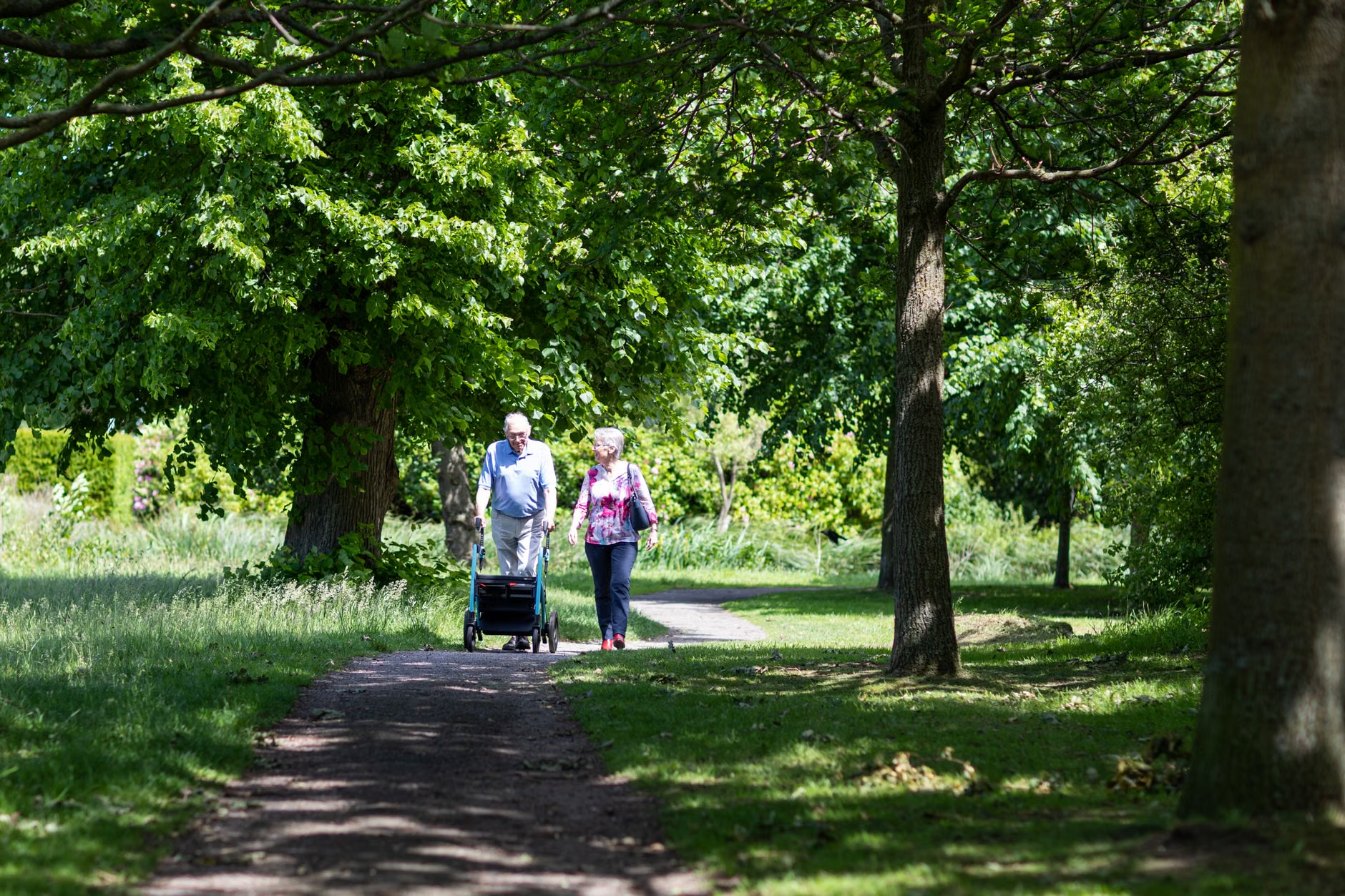
Even with the best benches in the world, it is important to manage your own stamina. The 2026 seating standards are designed to support you, but they cannot replace your own pacing strategies. If you are planning to visit a new or larger park, consider these practical steps to ensure a safe and enjoyable outing:
1. The “Rest-Ahead” Rule: Do not wait until you are tired to sit down. If you know a park has benches every 150 meters, make it a habit to sit for two minutes at every second or third bench. This “proactive recovery” prevents the buildup of muscle fatigue that can lead to falls later in your walk.
2. Check the Topography: Use digital mapping tools to check if a park has significant slopes before you go. A bench that is at the top of a steep incline may be helpful, but if the path to get there is strenuous, the benefit is negated. Choose routes that are primarily flat.
3. Hydration and Sun Protection: Even on short walks, carry water. If you are sitting on a public bench for an extended period, ensure you are not sitting in direct, intense sunlight for more than 15-20 minutes, as this can lead to dehydration and dizziness.
4. Wear Appropriate Footwear: While this sounds obvious, many fall-related incidents in parks happen because of unstable footwear on uneven surfaces. Choose shoes with high-traction soles and good ankle support, especially if the park has paved paths that may become slippery when wet.
By combining better infrastructure with smart personal pacing, you can continue to enjoy the mental and physical benefits of outdoor activity well into your 70s and 80s.
Understanding the Broader Context of 2026 Urban Initiatives
The movement toward age-friendly seating is part of a global trend often referred to as “The Silver Economy” in urban development. As the global population ages, cities are realizing that accessibility is not a “special interest” issue—it is a fundamental requirement for a functioning, inclusive city. When a city makes a park accessible for an 80-year-old, it simultaneously makes it more accessible for a parent with a stroller, a person recovering from a temporary injury, or someone carrying heavy groceries.
This is why these standards are gaining traction so quickly. Governments are viewing these investments as “multi-generational benefits.” For the older adult, this means that the political will to fund these projects is at an all-time high. However, change is often gradual. While the 2026 target is an important milestone for new installations, it does not mean that every existing bench will be replaced overnight. Most cities are adopting a “replacement-upon-repair” cycle, where old, non-compliant benches are replaced with new, compliant models as they break or reach the end of their lifecycle.
Therefore, patience is necessary. If you see a new park being built in your area, that is the perfect time to inquire about its accessibility features. If you see a park undergoing renovation, that is your opportunity to suggest that the new benches meet the latest ergonomic standards.
Ultimately, the 2026 shift is about dignity. Public spaces belong to everyone, regardless of age or physical capability. By ensuring that our parks provide the rest and support that older adults need, we are not just adding benches; we are ensuring that the outdoors remains a vibrant part of our lives, regardless of the number of candles on our birthday cakes.
Conclusion
The 2026 expansion of age-friendly public park seating represents a significant step forward in making our cities more inclusive for older adults. By focusing on ergonomic height, sturdy armrests, and strategic placement, these new standards will help you maintain your independence, increase your stamina, and stay connected with your community. While not every park will transform immediately, understanding what to look for and how to advocate for these changes will empower you to make the most of your local environment. Remember to pace yourself, prioritize your comfort, and never hesitate to reach out to your local representatives to ensure your voice is heard in the planning of your community’s future.
Frequently Asked Questions
1. Will all public parks be required to meet these 2026 standards immediately?
No. Most jurisdictions are implementing these standards as part of new construction projects or major renovations. Existing benches are typically being replaced on a rolling basis, often when they become damaged or are scheduled for routine maintenance. Check your local municipal website for their specific “Age-Friendly City” roadmap to see which parks are prioritized for upgrades.
2. What should I do if a bench is in a bad location but is otherwise in good condition?
If a bench is structurally sound but poorly placed (e.g., it has no shade or is blocked by overgrown bushes), this is a maintenance issue. You can report this through your city’s “311” system or local parks department contact page. Request a “site assessment for accessibility” and mention that the location hinders safe usage for seniors.
3. Are there specific materials I should look for when testing if a bench is “senior-friendly”?
Yes. Look for benches made of composite materials, sealed wood, or powder-coated metal. These materials tend to be more temperature-stable than raw steel or plastic. Avoid benches that have highly polished or smooth surfaces, as these can be slippery. The most important factor, however, is the presence of sturdy armrests that provide a solid grip for your hands.
For further reading on global age-friendly city standards, you can visit the World Health Organization’s (WHO) Age-Friendly World portal, which provides comprehensive guides on urban planning for older populations.