- Social Longevity: The 2026 expansion of intergenerational housing prioritizes combating social isolation by blending living spaces for seniors and younger generations.
- Financial Viability: These models often reduce individual housing costs through shared amenities and public-private partnerships, making them a sustainable alternative to traditional retirement homes.
- Proactive Planning: Evaluating these options requires assessing your personal mobility, desire for community involvement, and the specific legal framework of your local jurisdiction.
The Evolution of Living: Understanding Intergenerational Housing
As we approach 2026, the global housing landscape is undergoing a significant transformation. For decades, the standard path for retirees was either “aging in place” within a family home or moving into an age-segregated retirement community. However, a new model—intergenerational housing—is moving from niche pilot programs to mainstream policy in countries like the Netherlands, Germany, Japan, and parts of North America.
Intergenerational housing is not simply “living near young people.” It is an intentional design strategy where seniors and younger cohorts (often students or young families) reside in the same complex, sharing common facilities and participating in structured social programs. The goal is to create a mutually beneficial environment: younger residents often receive subsidized rent in exchange for providing light assistance or simply maintaining an active social presence, while older adults gain security, companionship, and a vibrant community environment.

Why 2026 Marks a Turning Point
Why is this gaining momentum now? The answer lies in the intersection of three global trends: the aging demographic, the rising cost of urban living, and the urgent need to address the “loneliness epidemic.” By 2026, many municipal governments are finalizing urban development plans that include mandatory quotas for “mixed-use, mixed-age” residential developments. This is not just a trend; it is a shift in public policy aimed at reducing the burden on public healthcare systems by fostering healthier, more connected lifestyles for older citizens.
For the individual, the move to an intergenerational model offers more than just a roof over one’s head. It offers a sense of purpose. Research consistently shows that social engagement is a critical determinant of cognitive health in older adults. Living in a multi-generational environment provides daily, organic opportunities for interaction that are often absent in traditional senior-only facilities.
| Feature | Traditional Retirement Home | Intergenerational Housing |
|---|---|---|
| Social Demographic | Exclusively 65+ | Mixed (Students, Families, Seniors) |
| Environment | Structured & Clinical | Integrated & Community-focused |
| Cost Structure | Often High (Service-based) | Variable (Often subsidized/Social rent) |
The table above highlights that while traditional retirement homes focus heavily on clinical care, intergenerational housing focuses on community integration. For those who remain active and value independence, the intergenerational model is often more attractive, whereas those requiring 24/7 medical supervision may still find traditional nursing models more appropriate.
What Does Intergenerational Housing Look Like in Practice?
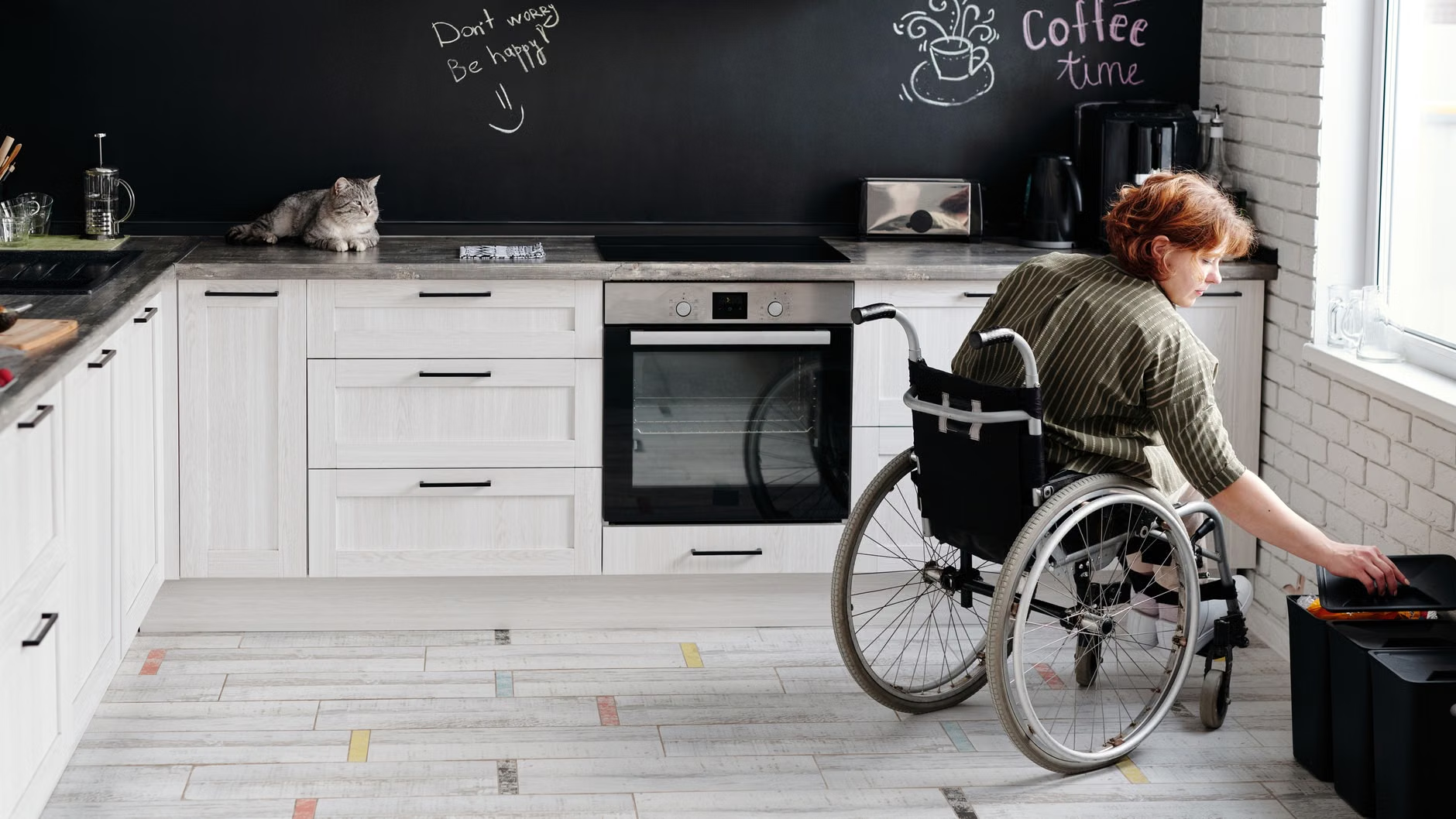
In real-world scenarios, these projects are often designed with “anchor” amenities. Imagine a central courtyard that serves as a playground for children during the day and a community garden for seniors in the afternoon. Inside the units, the focus is on universal design—a concept that ensures the space is accessible to everyone, regardless of age or physical ability.
Key Design Features to Look For:
- Zero-step entryways: Essential for those using mobility aids.
- Wide doorways and hallways: Ensuring easy navigation for wheelchairs or walkers.
- Smart Home Integration: Sensors for fall detection or temperature control that can be monitored by family members or onsite staff.
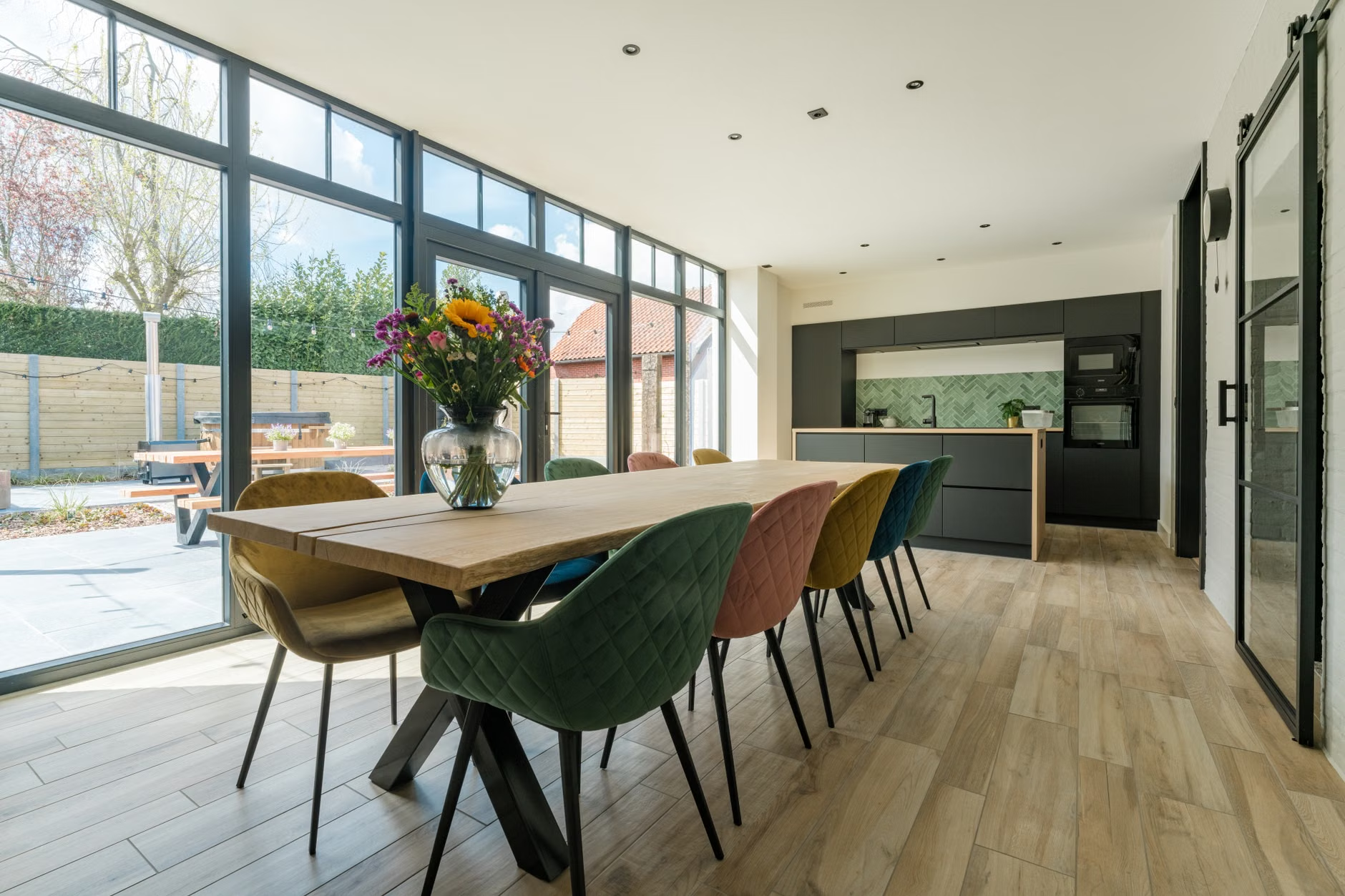
- Communal Kitchens and Lounges: Spaces specifically designed to encourage social overlap.
Assessing Whether This Model Fits Your Life
Before considering a transition to an intergenerational housing project, it is vital to perform a realistic self-assessment. These communities are not for everyone. They require a willingness to engage with people of different life stages, which can be noisy or unpredictable compared to the quiet solitude of a traditional senior complex.
Decision Criteria Checklist:
- Social Tolerance: Are you comfortable with the presence of children or students in your immediate living area?
- Independence Level: Do you currently manage your daily living tasks (ADLs) independently, or do you require daily medical support? (Most intergenerational projects are for independent living).
- Location Needs: Are these projects located near the amenities you value, such as public transport, hospitals, or cultural centers?
- Financial Commitment: How do the long-term lease terms compare to your current mortgage or rent?
A note on hidden trade-offs: One frequently overlooked aspect of these communities is the social dynamic. While the prospect of “mentoring” or “being mentored” sounds idealistic, the reality is that it requires active effort. If you are someone who prefers a high degree of privacy, the communal nature of these housing units might feel intrusive.
As these projects expand in 2026, the legislative framework governing them varies significantly by country. In some European jurisdictions, these projects are heavily supported by social housing grants, meaning eligibility may be tied to income levels. In parts of North America, these are often private-sector developments marketed as “lifestyle communities.”
Action Step: Check your local government’s urban planning department website. Search for terms like “Inclusive Housing Policy,” “Age-friendly City Initiatives,” or “Mixed-use Residential Zoning.” These documents often list upcoming developments that receive public funding or tax incentives, which can be significantly more affordable than purely private developments.
Preparing for the Future
The shift toward intergenerational living is a response to the reality that we are living longer and need better, more sustainable ways to exist within our cities. By 2026, the options will be more diverse than ever. Whether you choose to move into such a community or simply advocate for them in your own neighborhood, the key is to prioritize social health as much as you prioritize financial and physical health.
If you are considering a move, do not look at brochures alone. Visit the site. Observe the common areas. Ask the current residents about the “vibe” of the community. Is it genuinely interactive, or is the “intergenerational” label just marketing? A true community will have active social programs and clear evidence of residents of all ages using the shared facilities together.
Conclusion
The expansion of intergenerational housing in 2026 presents a unique opportunity for seniors to redefine their later years. By moving away from the isolation of age-segregated living and toward integrated, community-based environments, older adults can maintain their independence while contributing to and benefiting from the energy of younger generations. As you evaluate your housing options for the coming years, look for projects that offer real accessibility, foster genuine connection, and align with your vision for an active, engaged life.
Frequently Asked Questions (FAQ)
1. Is intergenerational housing the same as assisted living?
No. Intergenerational housing is generally designed for independent seniors. While it may offer accessible design features, it does not typically provide the 24/7 medical or nursing care found in assisted living facilities. Always confirm the level of care provided by the specific housing project.
2. Are these housing projects more affordable than traditional options?
Often, yes. Because many of these projects are supported by local government initiatives or social housing grants, they are frequently more cost-effective than private retirement luxury developments. However, costs can vary widely depending on the country and the specific development model.
3. How do I find intergenerational housing projects in my area?
Start by visiting your local municipal government or city council website and searching for “age-friendly housing” or “intergenerational community projects.” Additionally, national organizations dedicated to senior advocacy often maintain databases of housing alternatives that go beyond traditional retirement homes.
For further information on global aging policies and housing trends, you may consult the World Health Organization’s Age-Friendly World initiative.