Hello everyone! Cooldy is back with some essential health wisdom you won’t want to miss. Today, we’re talking about something often called a “silent time bomb” inside the body—the Abdominal Aortic Aneurysm (AAA). It sounds like a complicated medical term, right? But if you’ve ever felt like your heart was beating in your stomach, you need to pay close attention. This condition can be life-threatening without any warning, yet it’s entirely manageable if you know what to look for. Let’s dive in and protect your health together!
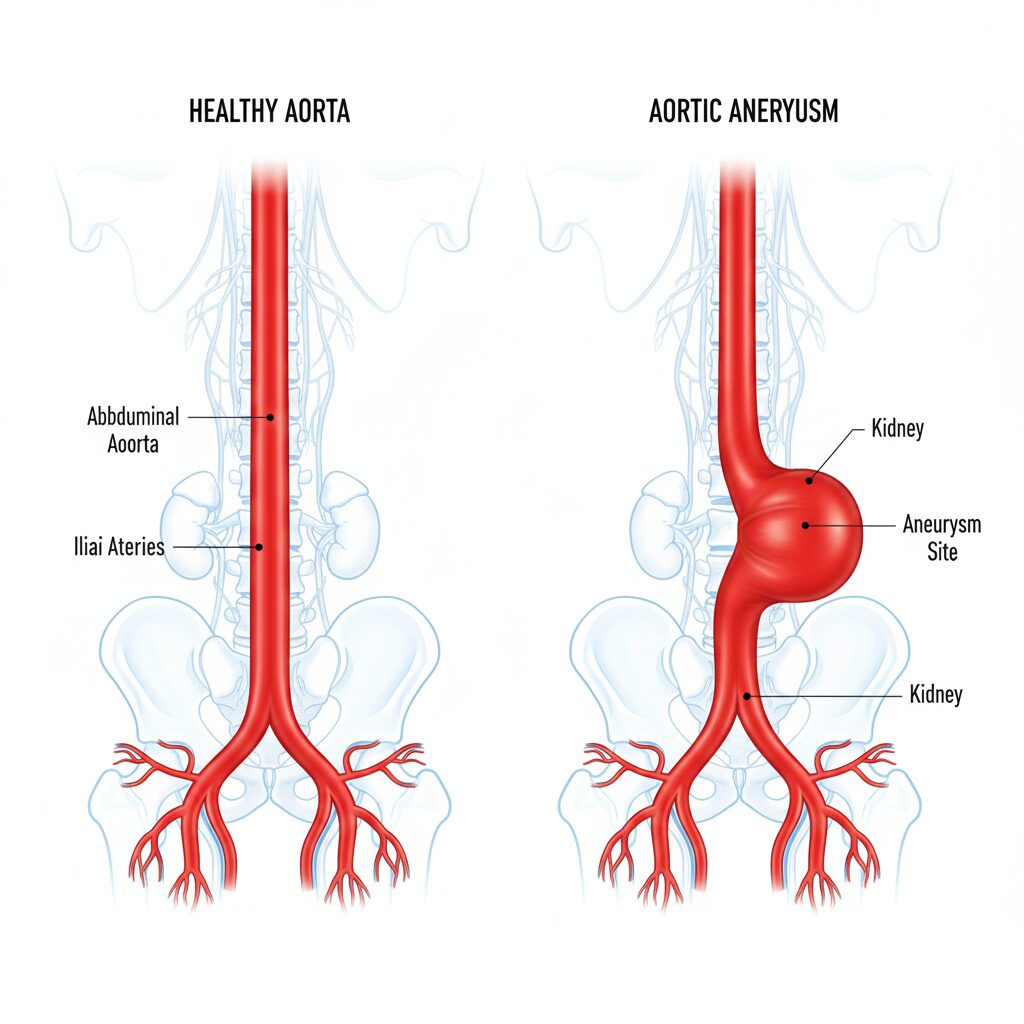
What Exactly is an Abdominal Aortic Aneurysm?
To understand this, we first need to look at the ‘Aorta.’ Think of it as the main highway of your body—it’s the largest blood vessel that carries oxygen-rich blood from your heart to everywhere else. The part of this highway that runs through your belly is the abdominal aorta. Sometimes, due to various reasons, the wall of this vessel weakens and starts to bulge out like a balloon. This bulge is what we call an aneurysm.
The scary part? As the “balloon” gets bigger and thinner, it faces the risk of bursting. Because the aorta is so large, a rupture causes massive internal bleeding, often before someone can even reach the hospital. With a survival rate of only 10–20% after a rupture, it truly is a silent threat we must take seriously.
Is That Your Heart in Your Belly? Watch for These Signs
Most of the time, an AAA doesn’t hurt. It grows quietly. However, there are a few “whispers” your body might send:
- A Pulsating Sensation: If you feel a strong rhythmic throbbing near your belly button—similar to a heartbeat—especially while lying down, it’s worth checking out. (※ Note: Pulsation refers to the rhythmic expanding and contracting of the vessel felt through the skin.)
- Dull Ache in the Back or Abdomen: Constant, unexplained discomfort in your lower back or side could mean the aneurysm is pressing against your nerves.
- Sudden, Severe Pain: If you experience intense, ripping pain in your stomach or back, it could mean the vessel is leaking or about to burst. This is a medical emergency!

Why Does This Happen? Risk Factors to Know
This condition is closely linked to the aging of our blood vessels. Over time, vessels lose their elasticity. You might be at higher risk if:
- You are a Smoker: Tobacco is the #1 enemy of your arteries. It weakens the vessel walls significantly.
- You have High Blood Pressure or Cholesterol: Constant pressure and fatty deposits act like a hammer, slowly wearing down the “highway” walls.
- You are Male: Statistically, men are more likely to develop AAAs than women, though everyone should stay vigilant.
A Simple Self-Check You Can Do at Home
While a professional ultrasound is the only sure way to diagnose an AAA, you can do a quick check at home. Lie flat on your back and relax. Gently press your fingers into the area just above your belly button. If you feel a very strong pulse that pushes your fingers back, or if you feel a firm, throbbing lump, it’s time to schedule a check-up with a vascular specialist.
Strengthen Your Vessels: Prevention is Key
Once an aorta has stretched, it won’t shrink back on its own. Prevention and management are your best tools:
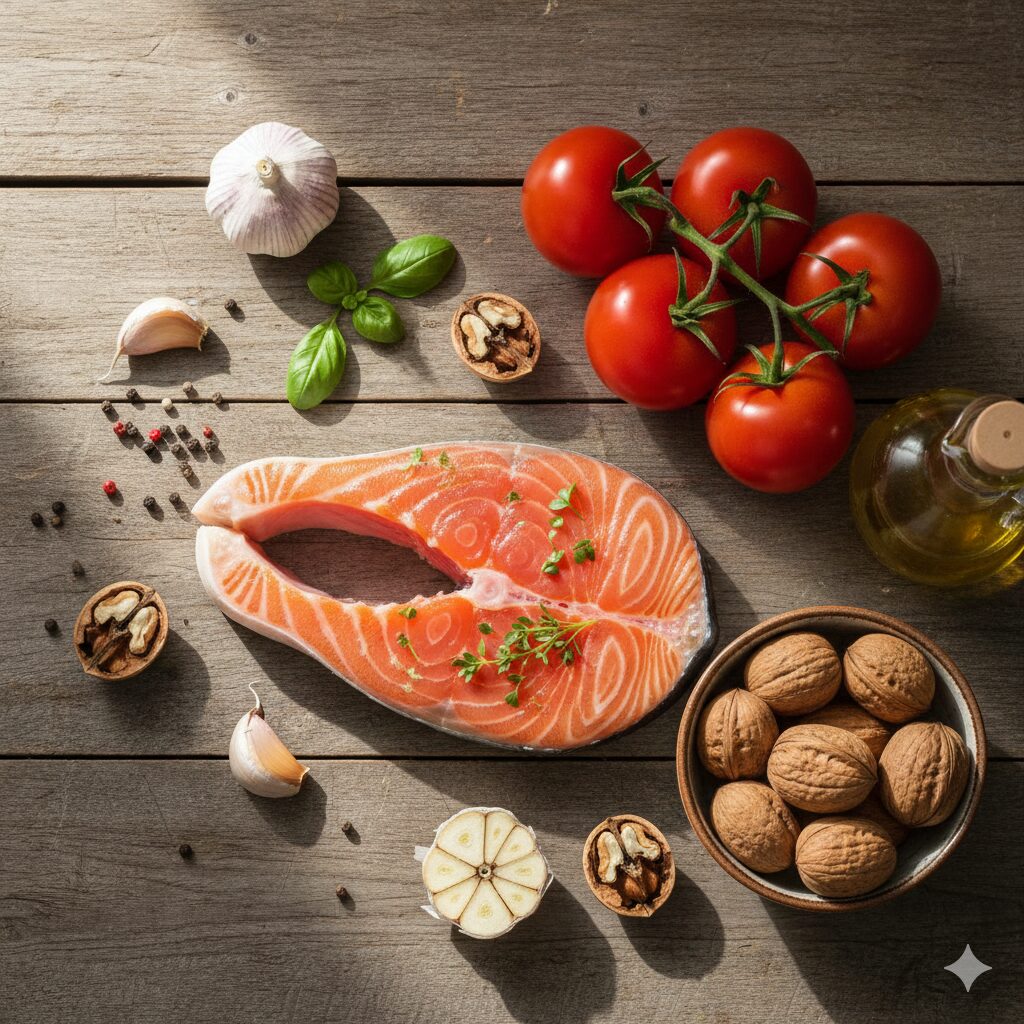
- Eat for Your Arteries:
- Garlic: Contains allicin, which helps clear out cholesterol and keeps vessels clean.
- Tomatoes: Rich in Lycopene, a powerful antioxidant that protects vessel walls from aging. Pro tip: Cook them slightly for better absorption!
- Fatty Fish: Omega-3s in salmon or mackerel reduce inflammation and keep blood flowing smoothly.
- Kick the Habits: Quitting smoking and moderating alcohol are non-negotiable. Don’t add extra “air” to the balloon!
- Move Gently: 30 minutes of brisk walking daily keeps your circulation healthy. However, avoid heavy weightlifting or activities that require extreme straining of the abdominal muscles.

A Little Awareness Saves Lives
An Abdominal Aortic Aneurysm sounds terrifying, but here is the good news: it’s very easy to detect with a simple, painless ultrasound during a regular check-up. Instead of worrying, take action. A little curiosity about your body’s signals can ensure many more healthy years with your loved ones.
Listen to your body’s rhythm, stay active, and eat well! Cooldy is always here rooting for your vibrant and healthy life.
Reliable Resources for Further Reading
- Mayo Clinic (https://www.mayoclinic.org) – Detailed medical overview of AAA
- American Heart Association (https://www.heart.org) – Heart and vascular health tips