Have you noticed your vision getting a bit blurry lately, or finding it harder to read the text on your smartphone? Many of us simply think, “Well, I’m just getting older.” But the truth is, some signals from our eyes aren’t just signs of aging—they could be ‘red flags’ for serious conditions like Macular Degeneration that can lead to permanent vision loss. Today, I’m Cooldy, and I want to take a deep dive into everything you need to know about protecting your sight.
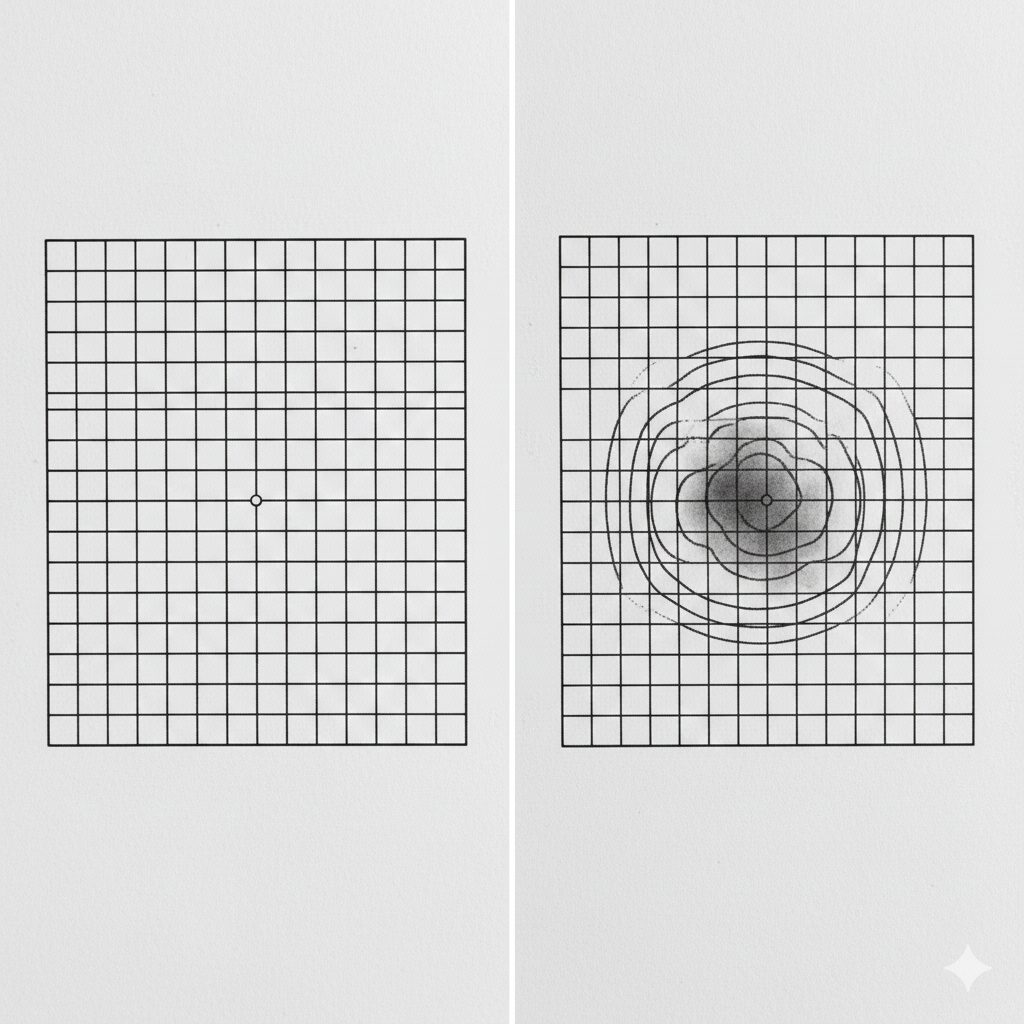
Is Your Vision Safe? The 10-Second Self-Test (Amsler Grid)
Before heading to the clinic, there is a very simple way to check your macular health at home using what’s called the ‘Amsler Grid.’ It’s a simple tool featuring a grid of horizontal and vertical lines.
- Wear the glasses or reading glasses you normally use under bright light.
- Cover one eye and look directly at the center dot of the grid from about 12 inches (30cm) away.
- If the lines appear wavy or distorted, the center dot looks faint, or certain areas look dark or blurry, do not wait. See an ophthalmologist immediately!
This is very different from normal presbyopia (age-related farsightedness). Macular degeneration affects the ‘macula,’ the part of your eye responsible for sharp, central vision. Early detection is everything.

Diagnosed with Macular Degeneration? Understanding the Treatment
There are two types: ‘Dry’ and ‘Wet.’ Dry AMD progresses slowly, but Wet AMD involves abnormal blood vessels leaking fluid under the retina, causing rapid vision loss. If you are diagnosed with the ‘Wet’ type, the treatment usually involves Anti-VEGF Injections.
I know, the idea of getting an injection directly into the eye sounds frightening. However, the eye is numbed with local anesthesia and a very fine needle is used, so the discomfort is much less than you might imagine. These injections help stop the growth of those “leaky” blood vessels.

How Long Does it Take? Can it be Cured?
A common question is, “How many shots until I’m cured?” It is important to understand that Macular Degeneration is a chronic condition that requires lifelong management, much like high blood pressure.
- Treatment Duration: Initially, you might receive injections once a month for about three months. After that, the frequency is adjusted based on how your eye responds. Some people eventually only need check-ups every few months, but you should view it as a long-term commitment.
- The Goal of Treatment: Currently, modern medicine cannot 100% “cure” or restore cells that have already been destroyed. However, the goal is to maintain your remaining vision and prevent legal blindness. With consistent care, most people continue to enjoy their daily activities.
Post-Treatment Care is Key!
The care you take after an injection is just as important as the treatment itself.
- Avoid Infection: Do not get water in your eyes or wash your face on the day of the injection. Most importantly, never rub your eyes with your hands.
- Use Eye Drops: Follow the schedule strictly for the antibiotic eye drops prescribed by your doctor.
- Monitor Symptoms: If you experience severe redness, pain, or sudden vision changes after a shot, contact your clinic immediately.

Life Habits to Prevent Vision Loss
Whether you have early-stage Dry AMD or want to prevent it entirely, these habits are non-negotiable:
- UV Protection is Mandatory: Sunglasses are not a fashion statement; they are a survival tool for your eyes. UV rays directly damage macular cells. Wearing a wide-brimmed hat also provides great protection.
- Stop Smoking Immediately: Smoking increases the risk of macular degeneration by 2 to 3 times. If you care about your sight, quitting is the best thing you can do today.
- Regular Check-ups: If you are over 50, get a comprehensive eye exam (including a dilated fundus exam) at least once a year, even if you have no symptoms.

Macular Degeneration might sound scary, but by staying informed and proactive, we can manage it effectively. Listen to the small signs your eyes are giving you. I’m Cooldy, and I’m rooting for your bright and clear future!
Reliable Resources
- National Eye Institute (AMD Information): https://www.nei.nih.gov
- American Academy of Ophthalmology: https://www.aao.org
- Macular Society: https://www.macularsociety.org