Hello, this is Cooldy! 😃 Today, I want to talk about a critical health topic that deserves all our attention: Colorectal Cancer (CRC), also known as colon cancer. While CRC is one of the most common cancers globally, the good news is that it boasts a high cure rate when detected early and prevented actively.
The challenge lies in its subtle initial symptoms, which are often mistaken for minor digestive issues or hemorrhoids. Instead of thinking, “It won’t happen to me,” it’s crucial to start paying attention to your body’s minor signals and reviewing your current lifestyle habits. Through the information I’ve prepared today, let’s learn how to self-diagnose early signs of CRC and explore the five practical prevention rules to significantly reduce your risk.

🧐 Early CRC Symptoms: Don’t Get Confused!
In its initial stages, Colorectal Cancer often presents no specific symptoms. However, as the cancer progresses, a few changes start to appear. Many people easily mistake these symptoms for simple indigestion or hemorrhoids.
1. Changes in Bowel Habits (The Most Common Early Signal)
If you suddenly experience constipation when you never had it before, or if constipation and diarrhea repeatedly alternate for more than two weeks, you should pay close attention. A feeling of incomplete evacuation after passing stool (tenesmus) or a noticeable narrowing in the diameter of the stool are also important signs.
- Changes in Stool Shape: Stools becoming thin, like a pencil, or ribbon-like.
- Tenesmus: The persistent feeling that you need to pass more stool, even after a bowel movement.
2. Unexplained Abdominal Pain or Discomfort
You might frequently feel vague abdominal discomfort, bloating, or excessive gas, rather than sharp, localized pain. When the tumor partially obstructs the bowel (known as an obstruction), it can cause more severe abdominal pain or vomiting.
3. Rectal Bleeding or Mucus in Stool
This symptom is easily confused with bleeding from hemorrhoids. Bleeding caused by CRC can appear as dark, sometimes black, blood (digested blood) or bright red blood mixed with the stool. The presence of sticky mucus in the stool is another critical signal.
4. Anemia and Chronic Fatigue
If the tumor in the colon bleeds continuously but in small amounts, it can lead to chronic anemia without you even realizing it. If you constantly feel tired, weak, or look pale without a clear reason, it’s wise to consult a specialist for a thorough check-up.
💡 Cooldy’s TIP: If any of the above symptoms are not temporary but persist continuously, I strongly recommend you seek medical advice from a gastroenterology specialist immediately!

🛡️ 5 Essential Rules to Reduce CRC Risk in Your Daily Life
It is widely known that approximately 70–80% of CRC cases are linked to lifestyle and environmental factors, rather than genetics alone. This means we can significantly lower the risk through proactive effort! Here are the five prevention rules that experts consistently emphasize.
Rule 1: Cut Down on ‘Red Meat’ & Load Up on Whole Grains
Dietary habits are central to colon health. Specifically, red meats (beef, pork, lamb) and highly processed meats (sausages, ham, bacon) are known culprits that increase the risk of CRC.
- Action Guide: Limit your consumption of red meat to less than 500g per week, and avoid processed meats as much as possible.
- Alternatives: Opt for white meat proteins like chicken or fish, or prioritize plant-based proteins such as beans and tofu.
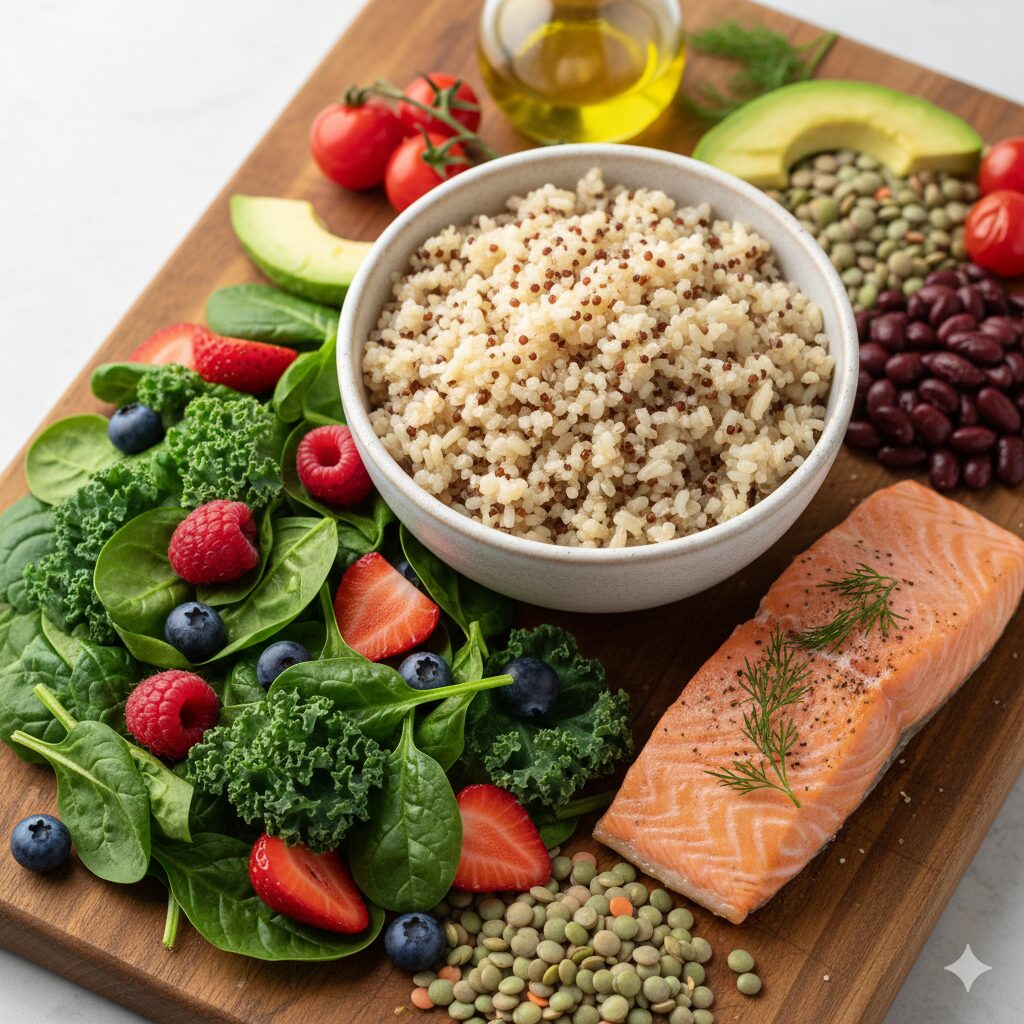
The most vital nutrient for CRC prevention is Dietary Fiber. Fiber increases stool bulk and shortens the transit time through the intestines, minimizing the contact between the colon wall and potential cancer-causing agents.
- Fiber Sources: Consume plenty of whole grains (brown rice, mixed grains, whole wheat bread), legumes, sea vegetables, and fresh fruits and vegetables.
- Note (Dietary Fiber): Dietary fiber is a nutrient that cannot be broken down by our body’s digestive enzymes. It passes through the digestive tract to aid bowel movements and helps manage blood sugar levels.
Rule 2: Regular Exercise is Non-Negotiable
Consistent physical activity does more than just burn calories. Studies show that regular exercise stimulates bowel peristalsis, reducing the time stool stays in the colon, thus lowering the risk of cancer development.
- Action Guide: Aim for at least 3–5 sessions per week of 30 minutes or more of moderate-intensity aerobic exercise (brisk walking, jogging, cycling, etc.).
- Cooldy’s Suggestion: Start by taking a brisk walk around your neighborhood every morning and evening. The key is increasing the time you spend moving in your daily routine.
Rule 3: Heavy Drinking and Smoking are ‘Absolutely Forbidden’
Smoking has been proven to increase the risk of almost all cancers, including CRC. Harmful substances in tobacco smoke travel through the bloodstream to the intestinal lining, triggering cancer.
Furthermore, excessive alcohol consumption also raises the CRC incidence rate. Substances created during alcohol metabolism can damage the colon mucosal cells.
- Action Guide: Quitting smoking is mandatory. Limit alcohol consumption, and if you must drink, try to restrict it to 1–2 drinks per day or less.
Rule 4: Ensure Sufficient Intake of Calcium, Vitamin D, and Folate
Certain nutrients are known to have a protective effect against CRC.
- Calcium and Vitamin D: Calcium helps inhibit the proliferation of intestinal mucosal cells, while Vitamin D plays a role in suppressing cancer cell growth. Get enough from dairy products, fish with bones, and sun exposure.
- Folate (Folic Acid): Adequate folate intake helps reduce the risk of CRC development. It is abundant in spinach, broccoli, and legumes.
Rule 5: Get Regular Colonoscopy Screenings
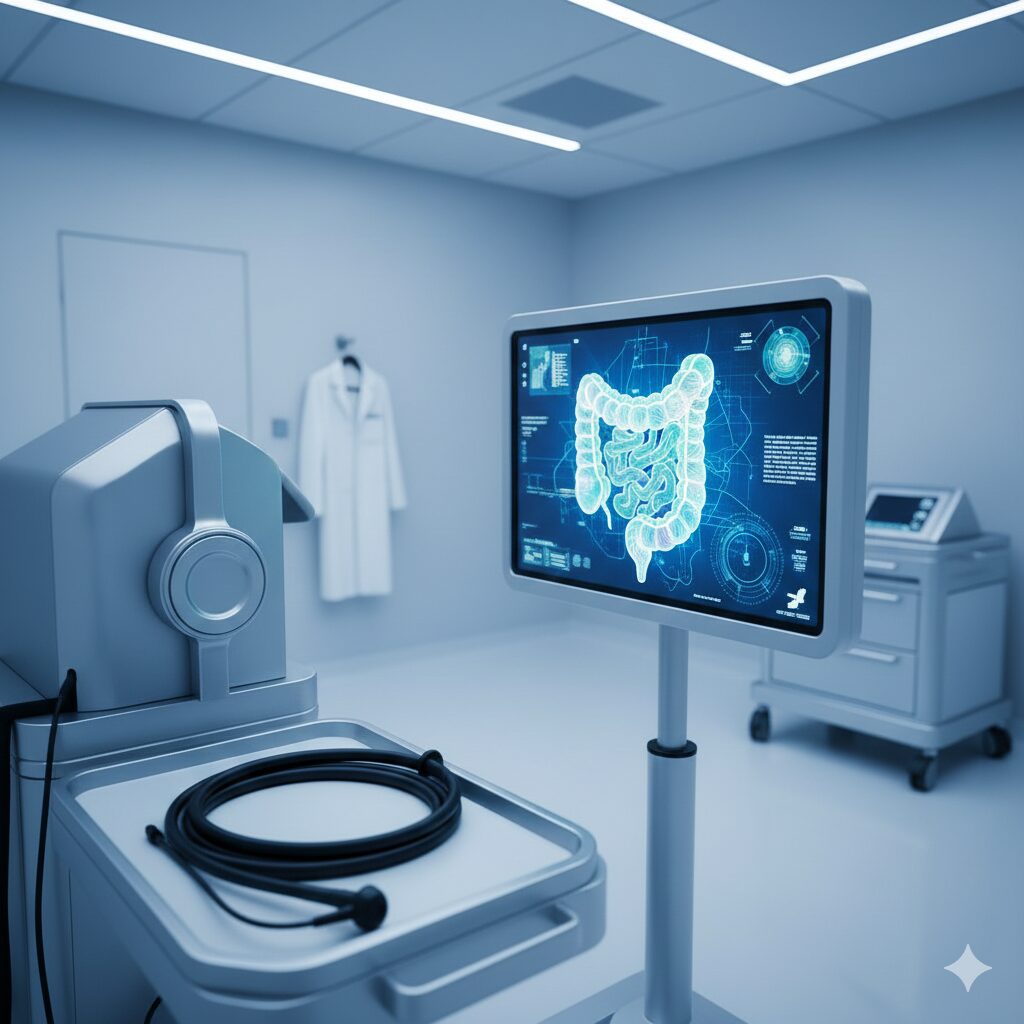
This fifth rule is the most crucial for ‘early detection,’ beyond prevention. CRC usually starts as small growths called polyps, which slowly progress into cancer. If polyps are detected and removed, it is essentially the same as preventing cancer.
- Action Guide: If you are over 45, it is vital to have a periodic colonoscopy, even if you have no symptoms. If you have a family history or other risk factors, you may need to start screening earlier, as advised by your doctor.
📌 A quick note: Are you afraid of colonoscopy? Recently, the amount of the bowel preparation liquid (purge) you need to drink has been reduced, and the taste has been improved, making the procedure much easier. A brief discomfort protects your lifelong health!
✅ The Path to a Healthy Colon is in Our Hands!
Today, we have thoroughly covered everything from the early symptoms of Colorectal Cancer to the five essential rules for prevention. CRC is considered a ‘manageable cancer’ whose risk can be significantly lowered just by changing lifestyle habits.
The most certain and powerful prevention strategy is to be sensitive to your body’s subtle signals (changes in bowel habits, bleeding, etc.) and consistently practice the five rules I shared today: a healthy diet, regular exercise, no smoking/moderate drinking, nutrient intake, and regular screenings.
Cooldy encourages you to make small, healthy changes starting now to firmly protect your colon health! I’ll be back with more useful and engaging health information soon. Thank you! 😊
💡 Useful References (Official Sources)
- National Cancer Institute (CRC Information): $\text{[https://www.cancer.gov/types/colorectal](https://www.cancer.gov/types/colorectal)}$
- Centers for Disease Control and Prevention (CRC Screening): $\text{[https://www.cdc.gov/cancer/colorectal/basic](https://www.cdc.gov/cancer/colorectal/basic)\_info/screening/index.htm}$