Hello, this is Cody, your blogger diving deep into health information! 😊
Have you ever worried about your cholesterol levels on a health checkup report? Or perhaps heard someone mention ‘sluggish blood’ or ‘fat in the vessels’? We’re talking about Hyperlipidemia (Dyslipidemia), the topic for today.
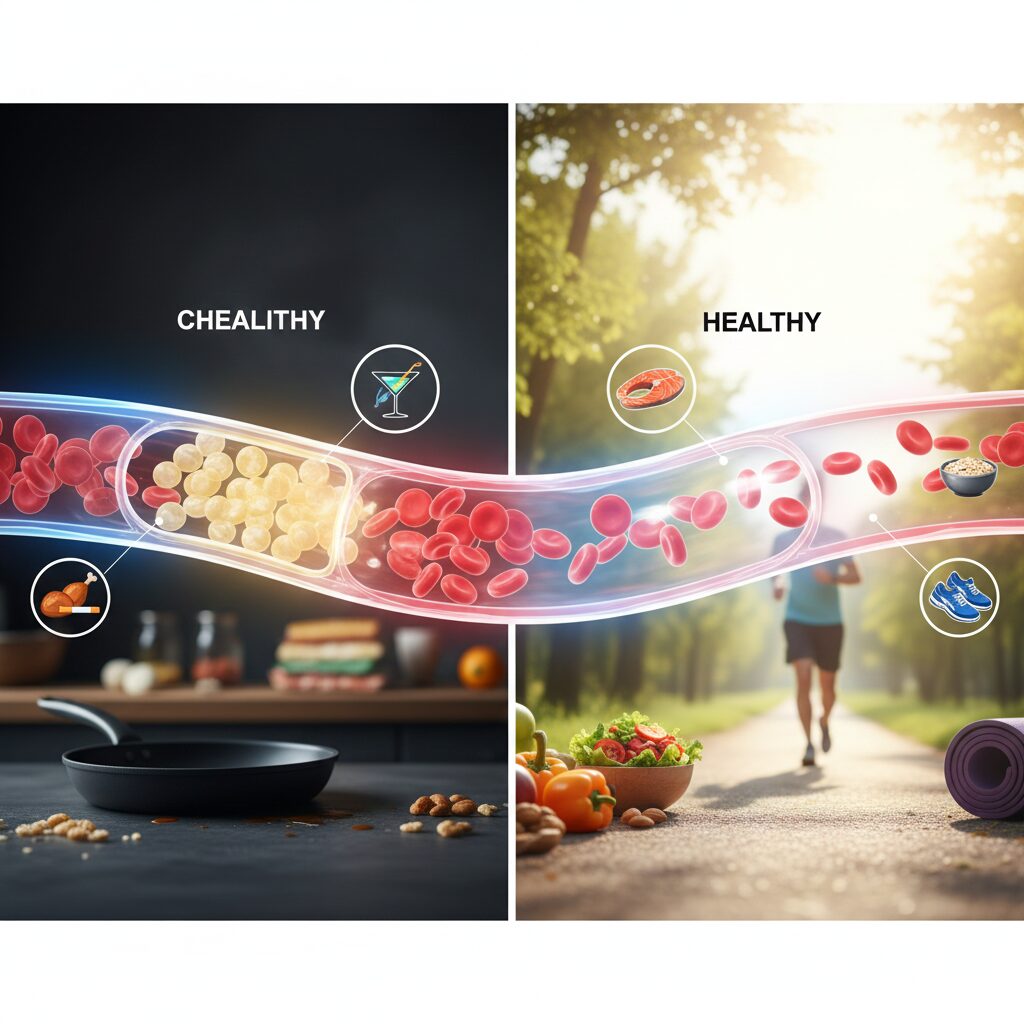
This condition, which sounds quite serious, is sometimes called the ‘silent killer’ because it has no specific symptoms in the early stages. However, over time, it can lead to severe vascular complications like stroke and myocardial infarction, making proactive management essential. Although I am not a specialist, I will break down what hyperlipidemia is and, most importantly, how we can healthily lower those crucial cholesterol numbers.
🩸 Why Does Hyperlipidemia Occur? (When, Who, Why)
Hyperlipidemia is a state where the levels of fat components in the blood are excessively high. These components mainly include cholesterol and triglycerides.
When does it occur? The risk of onset increases with age and irregular lifestyle habits. It tends to rise sharply, especially after the age of 40.
Who is affected? With the westernization of diets, it poses a risk to everyone, regardless of age, but it is particularly common in those who are overweight or obese, lack exercise, enjoy smoking and excessive alcohol, and have a family history.
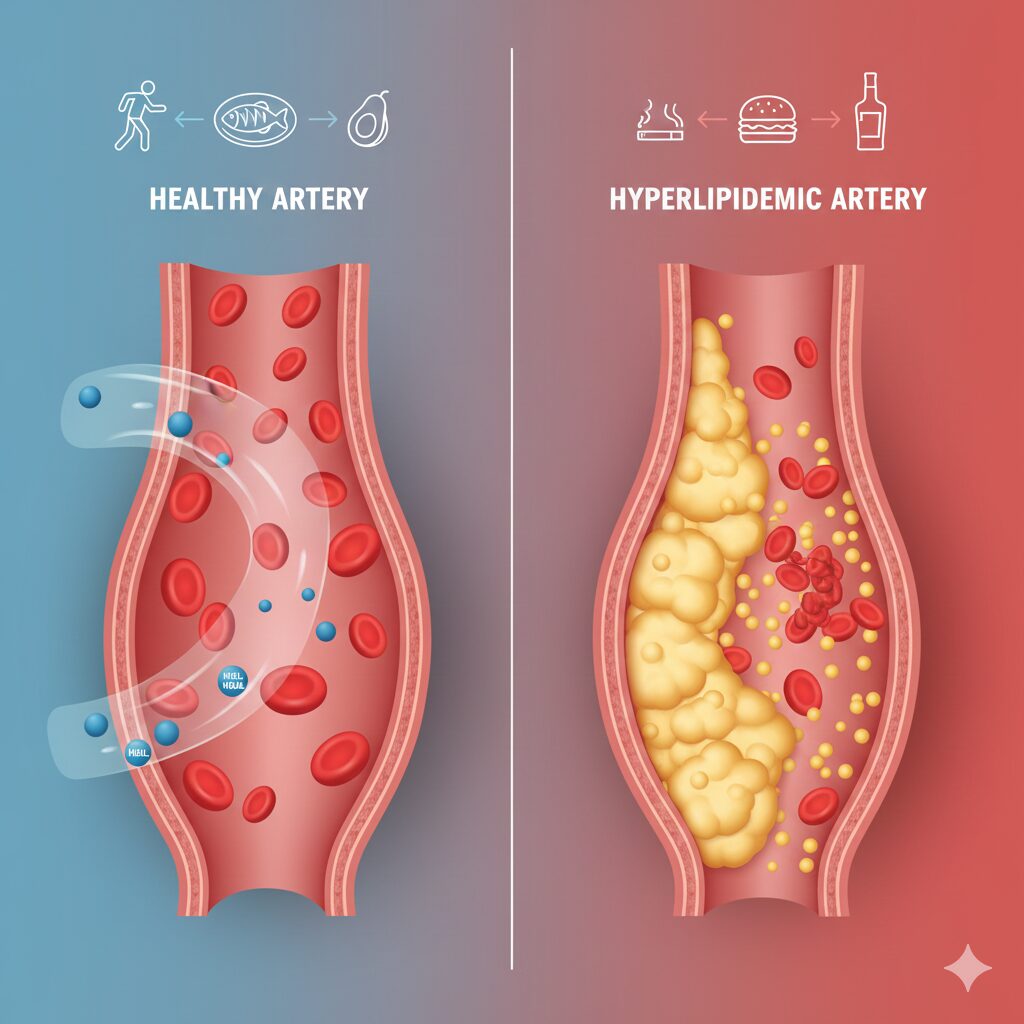
Why does it happen? While the main causes are poor diet and lack of exercise, it can also arise due to other conditions like diabetes or hypothyroidism. Primarily, when we frequently consume fatty foods (rich in saturated and trans fats) and reduce physical activity, the ‘bad cholesterol (LDL)’ increases in the blood, while the ‘good cholesterol (HDL)’ decreases, initiating the problem.
Terminology Quick Review
- Cholesterol: Essential for building cell membranes and synthesizing hormones in the body. However, too much becomes toxic.
- LDL Cholesterol (Bad Cholesterol): The main culprit in causing atherosclerosis by accumulating on the blood vessel walls. High levels are dangerous!
- HDL Cholesterol (Good Cholesterol): The ‘good’ cholesterol that helps transport accumulated cholesterol from the vessels back to the liver for excretion. Higher levels are better.
- Triglycerides: The storage form of energy from the food we eat. Excessive amounts can harm vascular health, similar to LDL.
💪 How to Manage Cholesterol Levels? (How: Diet, Exercise, Lifestyle)
While medication is important for hyperlipidemia, the foundation of treatment lies in lifestyle modification. You can experience surprising changes by sticking to just two things: diet and exercise.
🍽️ 1. Healthy Eating Habits to Melt Away Cholesterol
Food can be more powerful than medicine. It’s crucial to clearly distinguish between foods to avoid and foods to consume.
- ⚡️ Avoid: Foods high in saturated and trans fats, such as fried foods, processed meats (sausages, bacon), butter, cream, instant noodles, snacks, and organ meats (which are high in cholesterol). Also, be mindful of sugary drinks, fruit juices, and bread, as these can elevate triglyceride levels.
- 🥬 Consume Regularly:
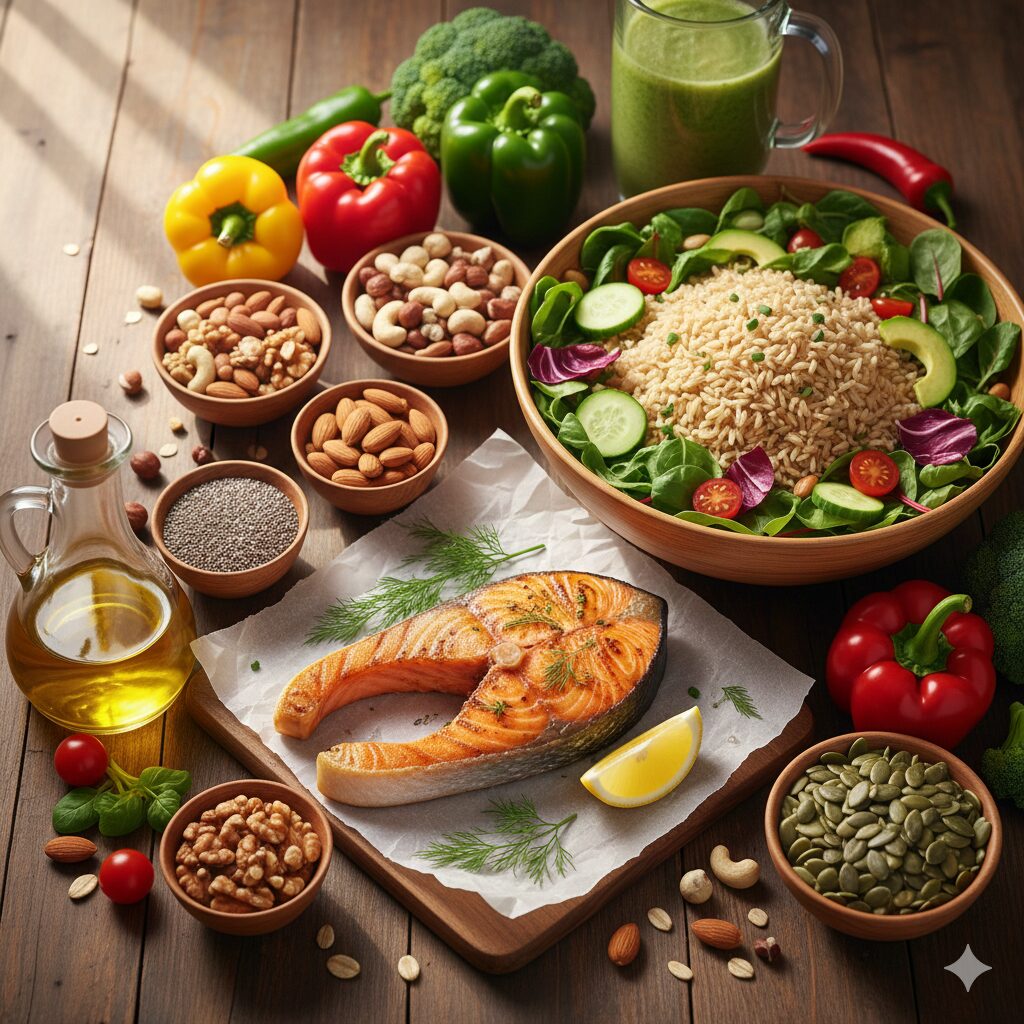
- Whole Grains and Fiber: Whole grains like brown rice, oats, and barley, as well as seaweeds, vegetables, and legumes, are rich in soluble dietary fiber. This fiber prevents cholesterol absorption in the intestines and helps excrete it from the body.
- Good Fats (Unsaturated Fats): Omega-3 fatty acids, abundant in oily fish (mackerel, tuna, pike), are excellent for lowering triglycerides and improving blood circulation. Foods like nuts (almonds, walnuts), olive oil, and avocados also help reduce LDL levels.
- Vegetables and Fruits: Rich in vitamins, minerals, and antioxidants, benefiting vascular health. However, since fruits contain sugar, it’s important to consume them in moderation according to the daily recommended amount.
🏃♀️ 2. Exercise Routine to Strengthen the Heart
Regular exercise increases HDL cholesterol (good cholesterol) levels and helps lower triglyceride levels by controlling body weight.
- Cardiovascular Exercise: Aerobic exercises that can consistently raise your heart rate—such as walking, jogging, swimming, or cycling—are best for vascular health.
- Recommended Routine: Aim for 30 minutes or more, 3 to 5 days a week, at an intensity where you are ‘slightly out of breath but can still hold a conversation’. Making exercise a habit is paramount. Starting with a walk around your neighborhood or taking the stairs is sufficient.
- Strength Training: Increasing muscle mass boosts basal metabolism, helping to burn fat. Combining light weightlifting or squats with cardio enhances the effect.
🧘 3. Lifestyle Changes for Better Health
There are things to observe beyond just diet and exercise.
- Quit Smoking & Moderate Alcohol: Smoking is the worst enemy, causing inflammation in blood vessels and lowering HDL levels. Alcohol rapidly raises triglyceride levels, so it must be reduced or quit. Excessive drinking is strictly prohibited.
- Weight Management: Obesity is one of the biggest causes of hyperlipidemia. Losing just 5-10% of your current body weight can lead to a noticeable improvement in cholesterol levels.
- Stress Management: Chronic stress elevates blood pressure and negatively affects cholesterol levels. Take care of your mental health through hobbies, meditation, and adequate sleep.
✨ Wrapping Up (Summary and Encouragement)
Hyperlipidemia is a chronic disease that requires continuous attention and effort. But don’t worry too much. We can effectively manage cholesterol levels and maintain a healthy life through dietary adjustments, steady exercise, and small lifestyle modifications.
Start with the small practices I’ve shared today, such as choosing brown rice over white rice or grilled fish instead of fried foods. It’s more important to gradually increase what you can do rather than trying to change everything overnight.
Important Note: If hyperlipidemia is left untreated due to a lack of symptoms, blood vessels can gradually narrow, leading to fatal consequences. If abnormalities are found during a health checkup, consulting with a doctor for an accurate diagnosis and treatment plan is paramount.
I wish you all vibrant days with healthy blood vessels! This has been Blogger Cody. I’ll be back soon with more beneficial health information!