- Prioritize Accessibility over Aesthetics: When booking, confirm “step-free” access and proximity to elevators, not just “wheelchair friendly,” as station layouts vary by country.
- The “Two-Bag Rule”: Limit luggage to one lightweight rolling carry-on and one small cross-body bag to ensure you can navigate narrow train aisles and station gaps independently.
- Stamina Management: Coastal rail routes often involve steep walks from stations to viewpoints; plan for “active recovery” days and utilize local shuttle services to conserve energy for the scenery.
The Promise of Coastal Rail Travel
This guide promises to provide a comprehensive strategy for seniors planning coastal rail journeys, focusing on physical accessibility, intelligent packing to minimize strain, and the logistical steps necessary to ensure a smooth, enjoyable experience on cliffside routes.
Coastal rail travel offers some of the most breathtaking views on the planet—from the rugged cliffs of the Cinque Terre in Italy to the dramatic coastlines of the Pacific Surfliner in California. However, these routes often traverse older infrastructure where steep inclines, narrow platforms, and uneven terrain are common. For the adventurous senior, these challenges do not have to be barriers; they are simply variables to be managed with careful preparation.
Understanding Station Infrastructure and Accessibility
Not all “accessible” stations are created equal. In many European and Asian coastal towns, stations were built in the 19th or early 20th century. While modern upgrades have been implemented, the definition of “accessible” can range from a fully elevator-equipped station to one that requires a ramp with a significant gradient.
What to look for: Before booking a ticket, check the official railway operator’s website for the specific station’s accessibility profile. Look for terms like “step-free access,” “tactile paving,” and “staff assistance availability.”
The “First and Last Mile” Reality
The most significant challenge for senior travelers is rarely the train ride itself, but the journey from the station to your accommodation or the scenic viewpoint. Coastal towns are often built on hillsides. A station might be at sea level, while your hotel is 500 meters away up a steep incline.
- Verify the Elevation: Use satellite map tools to check the elevation change between the station and your destination.
- Identify Local Shuttles: Many coastal tourist hubs operate small, electric, or accessible shuttle buses that bridge the gap between stations and town centers.
- Pre-book Assistance: In countries like the UK or Japan, you can book “Passenger Assistance” in advance, which ensures staff are waiting with a ramp when you arrive.

Packing Strategy: Mobility is Your Primary Asset
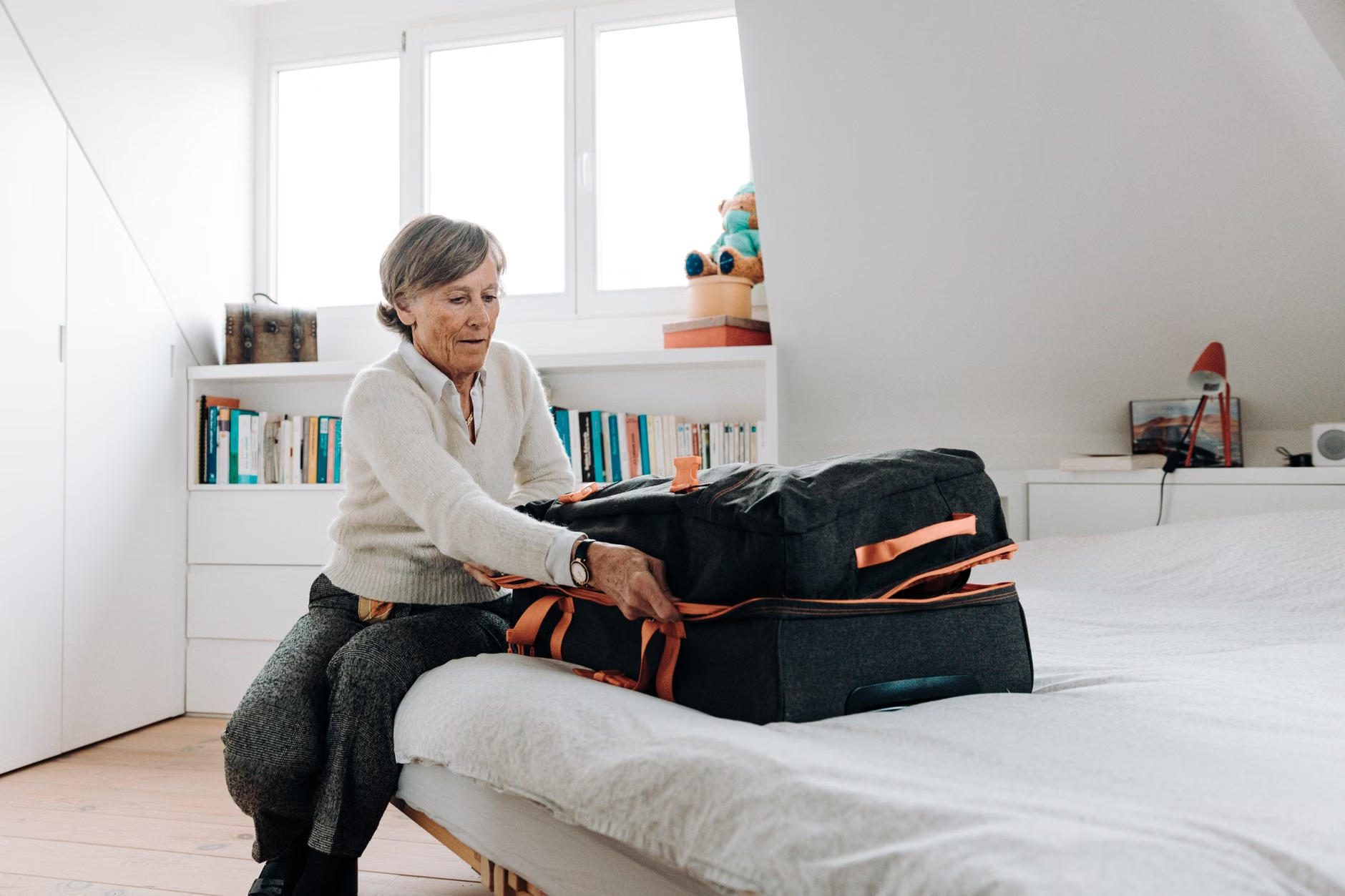
The golden rule for senior travel is “if you cannot lift it over your head, it is too heavy.” When navigating train gaps—which can sometimes be 10 to 20 centimeters wide—you need your hands free. A heavy, oversized suitcase is not just a burden; it is a safety hazard.
The Essential Packing Checklist
| Item Category | Recommendation | Why it Matters |
|---|---|---|
| Luggage | 4-wheel spinner carry-on | Reduces wrist and shoulder strain significantly. |
| Mobility Aid | Folding seat cane | Provides instant rest at crowded platforms. |
| Documents | Digital + Paper folder | Reduces anxiety if technology fails. |
The comparison table above highlights the shift from “packing for a trip” to “packing for mobility.” A 4-wheel spinner is superior to a 2-wheel rolling bag because it allows the luggage to stand upright beside you, rather than forcing you to pull the weight behind your body, which can strain the lower back.
Managing Stamina on Coastal Routes
Coastal cliffside travel is inherently more exhausting than inland travel due to the micro-climates, potential for wind, and the tendency for travelers to walk more than they realize. To maintain your energy, you must adopt a “rhythm of recovery.”
The 60-40 Rule
Plan your day so that 60% of your time is spent in transit or seated (on the train or at a cafe), and 40% is spent on active exploration. If you find yourself pushing past the 40% threshold, your risk of fatigue-related falls increases. Common mistakes include over-scheduling back-to-back excursions. Instead, treat the train ride itself as a primary attraction. If you are on a scenic line, stay on the train for an extra few stops just to enjoy the view without the need to walk.
Technological Aids and Digital Literacy
Modern travel requires a certain level of digital confidence. Apps like Google Maps, Citymapper, or official national rail apps provide real-time updates on platform changes—a common source of stress for older travelers. If a train is delayed or a platform is changed at the last minute, knowing how to access this information on your phone saves you from having to rush through a station.
Practical step: Before leaving, download the “offline maps” for the region you are visiting. This ensures that even if you lose cellular signal on a cliffside route, you can still navigate your way back to your accommodation.

Health Preparation and Safety Protocol
Preventive health during travel is about consistency. If you take daily medications, keep them in your carry-on bag, never in checked luggage. Always carry a summary of your medical history, current medications, and allergies in both digital format and as a laminated card in your wallet. In many countries, such as France or Switzerland, pharmacies are excellent resources for minor health concerns and are often more accessible than seeking a general practitioner for non-emergency issues.
Warning Signs: If you experience unexpected shortness of breath, dizziness, or severe joint pain, do not “push through.” These can be signs of dehydration or altitude/climate changes. Find a place to sit, hydrate, and assess your condition. If you are in a foreign country, locate the nearest pharmacy (often marked with a green cross in Europe) and ask for a pharmacist’s advice before attempting to continue your journey.
Deep Dive: Regional Considerations
The experience of accessibility varies wildly by region. In Western Europe, the European Union’s “Passenger Rights” regulations (e.g., EU Regulation 2021/782) mandate that rail companies provide assistance to persons with reduced mobility. In contrast, in parts of Southeast Asia or South America, while service is often very helpful, the physical infrastructure—such as high train steps—may not have been modernized. Research the specific country’s “Accessibility Standards for Public Transport” before booking.
When to Hire a Local Guide
For destinations with challenging topography, hiring a local guide for a half-day can be a game-changer. A local guide knows which elevators are currently broken, which paths are currently under construction, and where the most accessible toilets are located. This is an investment in your safety and enjoyment, not just a luxury.
Conclusion: The Art of the Slow Journey
Coastal rail travel is a marathon, not a sprint. By prioritizing step-free routes, packing for independent mobility, and respecting your own energy levels, you can enjoy the same spectacular views as any other traveler. The goal is to arrive at each destination with enough energy to appreciate the scenery, not just to reach the finish line. Start by planning one “low-impact” day for every two “active” days, and you will find that the journey becomes as rewarding as the arrival.
Frequently Asked Questions (FAQ)
- How can I confirm if a train station is truly accessible?
Never rely solely on a website’s “accessibility” label. Search for the specific station name on the national rail operator’s website and look for detailed station maps. If in doubt, call the station directly or use a travel forum to ask recent travelers about the current status of elevators. - What should I do if I am traveling solo and need help with my luggage?
Most major rail networks offer “porter” or “assistance” services that can be booked 24 to 48 hours in advance. If you are in a smaller town, don’t hesitate to ask a fellow passenger for help—most people are happy to assist a senior traveler with a heavy bag if asked politely. - Is it better to book a first-class ticket for accessibility reasons?
While first-class offers more space and quieter environments, it does not guarantee better accessibility. However, the extra space is often beneficial for storing mobility aids or larger bags. Check if the train type offers “wheelchair bays” or “priority seating” in standard class, as these are often just as accessible and significantly cheaper.
For further information on accessible travel rights, visit the official European Union transport page: https://transport.ec.europa.eu/transport-themes/passenger-rights/rail_en.