As of 2026, major global transit authorities are implementing standardized lighting protocols specifically designed to improve visual accessibility for older adults. These changes are not merely aesthetic; they are evidence-based interventions aimed at reducing trip-and-fall accidents, improving spatial orientation, and extending the period of independent mobility for aging commuters.
- Reduced Fall Risk: New 2026 standards mandate high-contrast, non-glare floor lighting at platform edges and stair treads to help those with age-related visual changes navigate transitions safely.
- Visual Comfort: Lighting systems are shifting from harsh, flickering fluorescents to warm-spectrum, flicker-free LED arrays that minimize glare, which is critical for those with cataracts or light sensitivity.
- Practical Advocacy: Passengers are encouraged to report “lighting dark spots” to local transit authorities, as many cities now have dedicated funds to retrofit stations based on user feedback.
The Science of Aging Eyes and Transit Environments
To understand why 2026 lighting standards are a significant shift, one must first recognize how the aging eye interacts with light. By the age of 65, the human pupil typically becomes smaller and less reactive, allowing less light to reach the retina. Furthermore, the crystalline lens often yellows and becomes denser, which scatters light and increases sensitivity to glare.
Traditional transit lighting—often characterized by high-intensity, cool-toned fluorescent tubes—can create “veiling glare.” This is a phenomenon where light reflects off surfaces, creating a “washed-out” effect that obscures depth perception. For an older adult, a step or a gap between the train and the platform can effectively “disappear” under poor lighting conditions. The 2026 initiatives represent a move toward “Human-Centric Lighting” (HCL), which prioritizes the biological and visual needs of the user over the cost-efficiency of the light source alone.
The 2026 Global Standards: What is Changing?
International standards, influenced by guidelines from organizations like the International Commission on Illumination (CIE), are now emphasizing three core pillars of transit lighting: luminance contrast, spectral distribution, and flicker suppression.
1. Luminance Contrast and Depth Perception
The most dangerous areas in transit are transitions—moving from a bright station concourse to a dimly lit platform, or stepping from a platform onto a vehicle. The new standards require a specific “Lux” (illuminance) ratio. Essentially, the difference in brightness between a stair tread and a riser must be distinct enough for the eye to track the edge of the step. Where this is not possible through ambient light, integrated LED strips are being installed directly into the step nosing.
2. Spectral Distribution and Glare Reduction
Older eyes struggle more with blue-light heavy spectra. New installations are favoring “warm-white” LEDs (around 3000K to 4000K). This shift reduces the scattering effect within the eye, making signs clearer and surfaces easier to judge. In cities like Tokyo, London, and New York, transit authorities have begun replacing reflective tiling with matte finishes in high-traffic zones to complement these new lighting standards, as lighting is only as good as the surface it hits.
3. Flicker Suppression
Many older lighting systems operate on a frequency that, while imperceptible to younger eyes, can be detected by the brain as a subtle flicker. This can cause disorientation, dizziness, or even trigger balance issues in some individuals. The 2026 mandate requires high-frequency drivers that ensure a constant, steady light output.
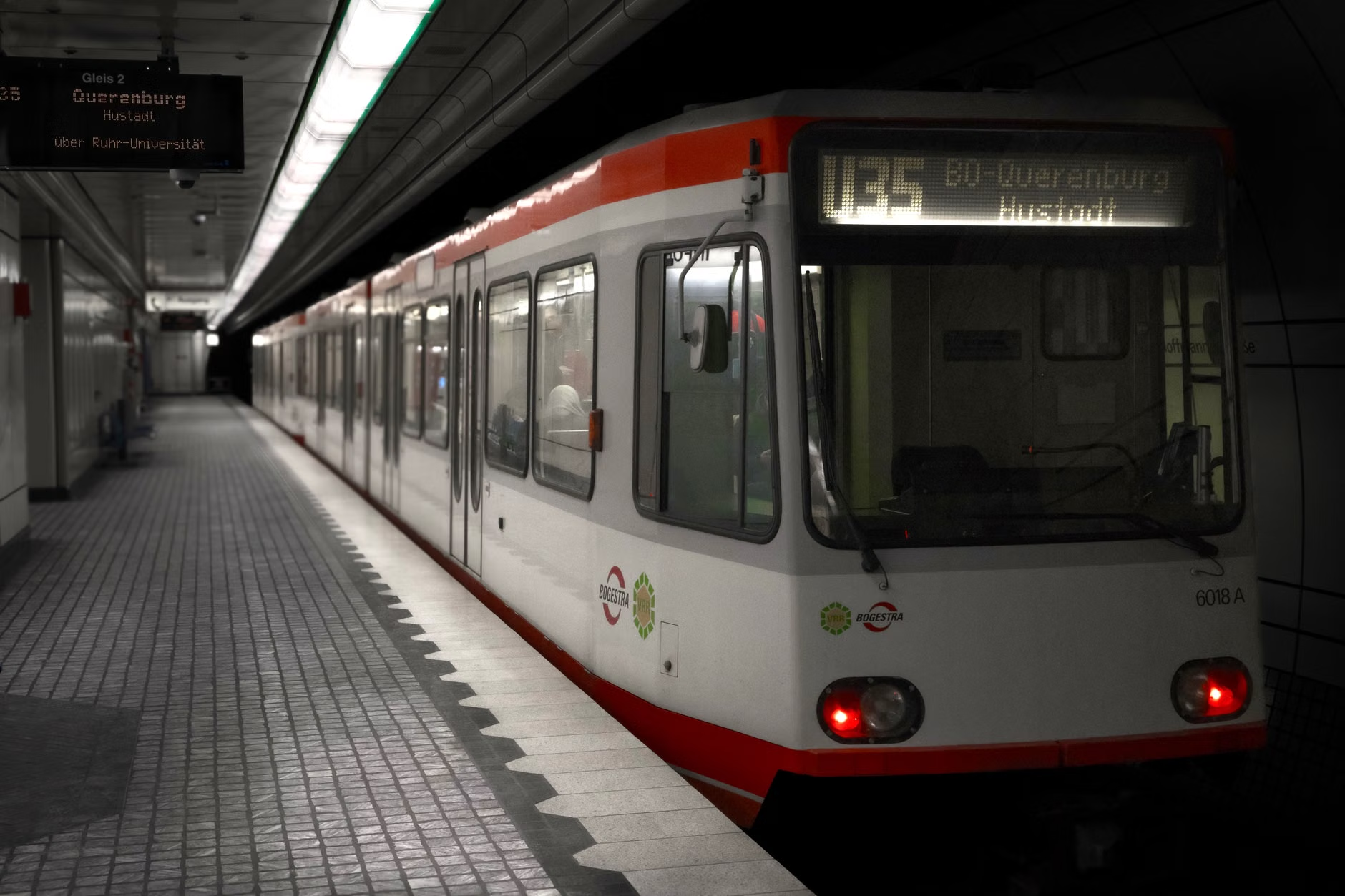
While transit authorities are upgrading infrastructure, the transition is gradual. Understanding how to interact with these changes can enhance your safety today. Use the following table to identify common transit hazards and the corresponding lighting solutions now being deployed.
| Hazard Location | Standard Risk | 2026 Lighting Solution | Passenger Action |
|---|---|---|---|
| Platform Edge | Misjudging gap distance | Integrated “halo” floor lighting | Look for the illuminated strip before boarding |
| Stairwells | Depth perception failure | High-contrast tread illumination | Use handrails; wait for motion-activated lights |
| Ticket Kiosks | Glare obscuring text | Anti-glare, adjustable overhead LEDs | Adjust your angle; use the kiosk’s contrast settings |
Decision Criteria for Travelers: If you are planning a trip in a major metropolitan area, look for stations labeled as “Universal Access Compliant” or “2026 Lighting Standard Certified.” These stations generally provide the highest level of visual security. If you find yourself in a station that feels dim or disorienting, prioritize using elevators over stairs, as elevator lighting is often the first to be upgraded due to safety regulations in confined spaces.
Advocating for Better Lighting in Your Local Transit System
Public infrastructure is maintained through public feedback. If your local transit station has lighting that makes you feel unsafe, you have the right to request an audit. Most transit authorities maintain an “Accessibility Advisory Committee.”
Step-by-Step Guide to Reporting Lighting Issues:
- Document the Location: Take note of the specific platform number, station name, and the time of day. Lighting issues are often different at night versus during the day.
- Identify the Specific Fault: Is it a flickering bulb, a dark “dead zone,” or excessive glare from a reflective wall? Be specific.
- Use Official Channels: Visit the transit authority’s website and look for “Accessibility” or “Customer Feedback” portals. Many now accept photo evidence of poor lighting.
- Connect with Local Advocacy Groups: If you are part of a community group for older adults, aggregate your concerns. Authorities are statistically more likely to act on a report backed by multiple users citing safety concerns.
The Unexpected Trade-off: The “Brightness Trap”
One common misconception is that “brighter is always better.” This is a significant error in transit design. Excessive brightness can cause “adaptation lag.” When you walk from a bright outdoor environment into a dim station, your eyes take time to adjust. If the station is too brightly lit, it can also create harsh shadows that are just as dangerous as darkness. The goal of the 2026 standards is uniformity, not maximum intensity. When moving through a station, give your eyes 30 seconds to adjust to a new lighting environment before navigating stairs or boarding a vehicle.
Technology and Digital Assistance
Beyond physical lighting, digital transit apps are now integrating “accessibility maps.” These maps, often updated in real-time, can sometimes indicate if a station has undergone lighting upgrades. Using a high-contrast mode on your smartphone can also help. If you struggle with reading digital transit screens, ensure your phone’s accessibility settings (such as “Bold Text” and “Increase Contrast”) are active. This creates a cohesive “visual ecosystem” that supports you from the moment you leave your home to the moment you arrive at your destination.
Conclusion: Taking Control of Your Mobility
The shift toward 2026 global transit lighting standards is a victory for inclusivity. By addressing the physiological realities of aging, transit authorities are making the world more accessible. However, infrastructure changes are only part of the solution. Your awareness of these standards, your ability to identify potential hazards, and your willingness to advocate for safe environments are equally important. As these lighting systems roll out globally, take the time to notice the improvements in your daily commute. If a station doesn’t meet the standard, use your voice to push for the necessary updates. Safe travel is not a luxury; it is a fundamental requirement for maintaining social connection, health, and independence.
Frequently Asked Questions
Q: Are these new 2026 lighting standards mandatory for all transit systems globally?
A: While many international bodies and national governments have adopted these as “best practice” or mandatory regulations for new construction, existing stations are often retrofitted on a schedule. Implementation varies by jurisdiction and budget. Check your local transit authority’s capital improvement plan for specific timelines.
Q: I feel dizzy under certain types of LED lights in subways. Is this common?
A: Yes, it can be. Some older or low-quality LED systems have a “flicker rate” that some individuals are sensitive to, even if the light appears steady to others. If you experience this, consider wearing tinted glasses designed to reduce blue light or glare, and report the specific station to the transit authority as a “visual safety concern.”
Q: How can I find out if my local station is compliant with these new standards?
A: Most transit agencies publish their “Accessibility Action Plan” online. These documents often list which stations have been upgraded with modern lighting and high-contrast features. If you cannot find this information, contact the agency’s “ADA” (in the U.S.) or “Accessibility” compliance office directly.
Sources and Further Reading:
– International Commission on Illumination (CIE) – Guidelines on Lighting for Accessibility
– World Health Organization – Global Report on Ageing and Health (Accessibility Standards)