- Universal Standardization: By 2026, many global transport hubs will implement harmonized tactile paving patterns to ensure consistency for visually impaired and mobility-challenged travelers.
- Predictable Navigation: Understanding the difference between “warning” (dome) and “directional” (bar) patterns allows you to navigate unfamiliar transit hubs with greater independence.
- Safety First: These tactile surfaces are designed to provide physical cues that complement visual signage, helping you maintain balance and orientation in busy travel environments.
For many older adults, the joy of travel often comes with the logistical challenge of navigating complex, bustling transport hubs. Whether you are moving through a massive international airport or a local train station, the environment can be overwhelming. A critical, yet often overlooked, component of your safety and independence in these spaces is tactile paving—the raised, textured tiles embedded into the floor to provide guidance and warnings.
As we approach 2026, international transit authorities are moving toward a more unified global standard for these surfaces. This shift is not merely an architectural update; it is a fundamental improvement in how transit hubs communicate safety information to all passengers. This guide explores what these changes mean for your future travels, how to interpret the different textures, and how you can use these features to maintain your mobility and confidence.
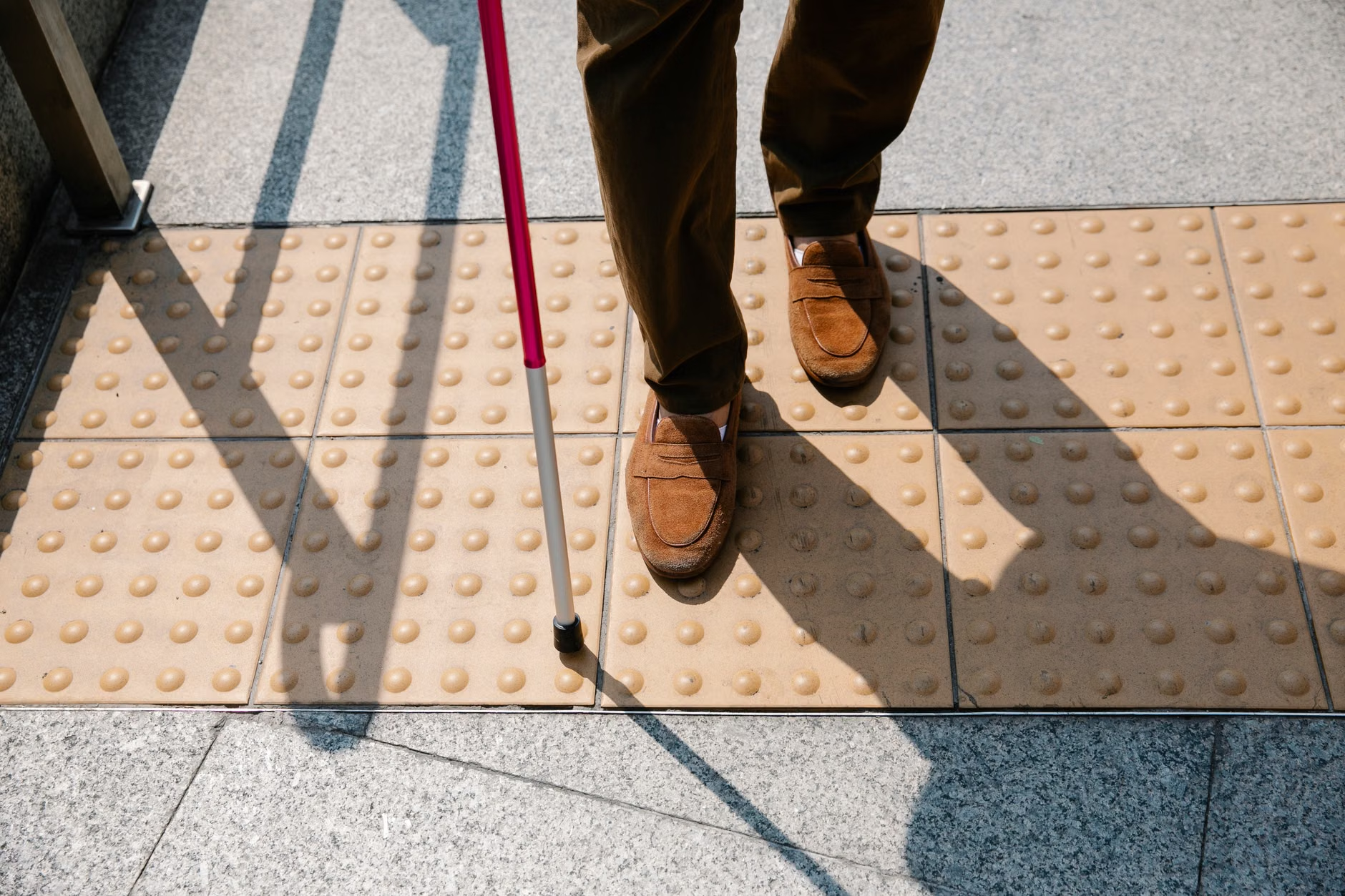
What is Tactile Paving and Why Does it Matter?
Tactile paving, or “tactile ground surface indicators” (TGSIs), serves as a physical interface between the built environment and the user. While often associated with the needs of the visually impaired, these surfaces are vital for everyone. For older adults, they provide clear, non-verbal cues about upcoming hazards—such as the edge of a platform or a change in floor level—without requiring you to constantly scan for signage.
The “why it matters” is simple: predictability. When you are in an unfamiliar city, the cognitive load of navigating a terminal can be high. Tactile paving acts as a “second pair of eyes” for your feet. By feeling the texture through the soles of your shoes or your walking aid, you receive immediate information about the path ahead, reducing the risk of trips and falls. The 2026 standards aim to make this experience consistent, regardless of whether you are in Tokyo, London, or New York.
The Two Primary Patterns
While regional variations have existed for decades, global standardization is converging on two primary types of patterns. Recognizing these can significantly improve your navigation skills:
| Pattern Type | Visual Appearance | Primary Function |
|---|---|---|
| Truncated Domes | Small, raised circular bumps | Warning: Stop, danger ahead, or change in level. |
| Linear Bars | Parallel raised ridges | Directional: Follow this path for a safe route or destination. |
Understanding these two patterns allows you to make split-second decisions. If you feel the domes, it is your cue to pause and look for a hazard. If you feel the bars, you can confidently follow them as they indicate a safe walkway or a guide to elevators, ticket counters, or exits.

The 2026 Global Shift: What Changes for You?
The 2026 standards are part of a broader international movement toward “Inclusive Design.” Previously, a country might have used different colors or slightly different spacing for their tactile tiles, which can be confusing for international travelers. The upcoming standards focus on three main areas: contrast, consistency, and placement.
For the traveler, this means that the “language” of the floor will become universal. You will no longer have to “re-learn” how to navigate a station in a different country. The high-contrast colors (often yellow or bright white) will be mandated to ensure that they are visible not only through touch but also to those with reduced peripheral vision or sensitivity to glare.
Improving Mobility in Transit Hubs
When planning your next trip, consider the following practical steps to leverage these improvements:
- Identify the “Safe Path”: Look for the long, linear bars when entering a new terminal. These are often designed to lead you from the main entrance to primary services like information desks or elevators.
- Respect the Domes: If you see or feel the dome pattern, do not attempt to walk across it unless it is the designated path. It is almost always placed at the edge of a drop-off or a high-traffic intersection.
- Test Your Footwear: If you are traveling with a cane or a mobility aid, practice “reading” these surfaces on a local walk before your trip. Knowing how your specific aid interacts with the texture will give you more confidence when you are in a busy terminal.
A common mistake is to ignore the floor while searching for wall-mounted signs. By shifting your focus to the floor-based indicators, you can maintain a better posture, which helps with balance and reduces the likelihood of fatigue. Furthermore, if you are traveling with a companion, these tactile paths serve as an excellent “common language” to help you stay oriented together.

Safety Precautions and Managing Expectations
While these standards are a massive step forward, they are not a substitute for situational awareness. It is important to remember that these systems are currently being retrofitted in many older facilities. This means you may encounter “gaps” in the system where a path suddenly stops or transitions into a different material.
Warning: Never rely exclusively on tactile paving in construction zones. Temporary walkways often lack these features. If you are in an area that looks like it is undergoing maintenance, revert to traditional visual navigation and be extra cautious of uneven surfaces.
Practical Checklist for Independent Travel
Before you depart, consider these steps to ensure you remain mobile and safe:
- Research the Facility: Many large airports provide “Accessibility Maps” on their websites. These maps often highlight the routes that are fully compliant with current tactile standards.
- Pack Light: A heavy bag can shift your center of gravity, making it harder to feel the subtle changes in the floor texture. Use a rolling suitcase with a high-quality handle to maintain your stability.
- Take Your Time: The most significant risk in a transit hub is the pace of the crowd. If you find yourself in a rush, stop, move to the side of the flow, and re-orient yourself using the tactile cues.
One overlooked variable is the impact of weather. In terminals that are partially open-air or have high humidity, tactile surfaces can become slightly slippery. Always prioritize footwear with good grip and a low heel. If you feel uncertain, do not hesitate to ask transit staff for assistance. Most modern hubs have specific training for employees to assist passengers with mobility requirements.
Beyond the Tiles: Building Your Travel Confidence
Independence is not just about the infrastructure; it is about the mindset you bring to your journey. By understanding the 2026 standards, you are equipping yourself with the knowledge to navigate the world on your own terms. These tactile systems are designed to provide a layer of security, but your best asset is your ability to plan and prepare.
Consider the environment of the hub as a puzzle. The tactile paving is the framework of that puzzle. As you move through the airport or train station, treat the tactile paths as your primary guide. If the path leads you to a lift, trust it. If it leads you to a warning zone, pause and assess your surroundings. This methodical approach will make you feel less like a “traveler trying to find their way” and more like a “confident navigator of the system.”
Furthermore, as these standards become global, you will find that the consistency makes the journey less mentally taxing. You will spend less energy on “where do I go?” and more energy on the excitement of your destination. This is the ultimate goal of accessible infrastructure: to make the transit process transparent and invisible, allowing you to focus on the experience itself.
Understanding the Technical Nuances of 2026 Standards
To truly grasp why these changes matter, we must look at the technical requirements being adopted globally. The 2026 standards are not just about “bumpy floors.” They involve specific spacing, height requirements, and material properties. For example, the truncated domes must be of a specific diameter and spacing to be detectable by a cane while remaining stable enough for a person using a walker or a wheelchair to pass over without difficulty.
The standardization of the color contrast is perhaps the most critical update. Research has shown that a high-contrast color (such as yellow against grey concrete) significantly improves reaction times for individuals with declining depth perception. When you are walking, your brain is constantly processing visual input. By providing a high-contrast physical cue, the environment does some of that processing for you, which helps reduce the physical and mental effort required to traverse a long terminal.
Another important aspect is the integration with digital maps. Many transit hubs are now working to link their tactile layouts with indoor navigation apps. While this technology is still evolving, the fact that the physical paths are being standardized makes it much easier for software developers to create accurate, accessible navigation tools for your smartphone. This intersection of “physical” and “digital” is where the future of accessible travel lies.
Common Misconceptions About Tactile Paving
There are several myths surrounding tactile paving that can hinder your confidence. Let’s address them:
- “Tactile paving is only for the blind.” False. It is for anyone who needs extra cues about their environment, including those with balance issues, reduced vision, or even individuals who are simply distracted by the complexity of a new environment.
- “I shouldn’t walk on the textured parts.” Generally, you should walk on the directional bars (the lines) as they represent the safe route. You should only avoid the dome patterns, which are specifically designed to mark hazards.
- “It will make me trip.” When installed correctly according to modern standards, these tiles are flush with the floor. If you find a tile that is loose or raised significantly above the surrounding floor, this is a maintenance issue that should be reported to the facility management.
Understanding these points helps you navigate with a sense of authority rather than apprehension. You have every right to use these facilities, and the infrastructure is there to support your independence.
Conclusion: Taking the Next Step
The implementation of the 2026 global standards for tactile paving is a significant milestone in making travel more inclusive for everyone. As these changes roll out, you will find that transit hubs become more predictable, safer, and easier to navigate. By learning to identify the two primary patterns—the warning domes and the directional bars—you can move through airports and stations with renewed confidence and independence.
Remember that your safety is a combination of this improved infrastructure and your own proactive preparation. Research your route, wear appropriate footwear, and take your time. Travel is a lifelong pursuit, and with the right tools and knowledge, you can continue to explore the world with ease and comfort. Next time you find yourself in a major transit hub, look down—you might be surprised by how much the floor is trying to help you.
Frequently Asked Questions (FAQ)
1. How do I know if a station follows the 2026 standards?
While “2026 compliance” may not always be explicitly posted, you can look for high-contrast, clean, and consistent tactile patterns. Most major international airports and newer rail hubs are already in the process of upgrading to these standards. If you are unsure, check the “Accessibility” section of the transit hub’s official website.
2. What should I do if the tactile path is blocked by luggage or crowds?
If a tactile path is obstructed, do not attempt to force your way through. Move to a safe area, wait for the flow of people to subside, or ask a member of the station staff for assistance. Your safety is more important than sticking to the exact path.
3. Are these tactile standards the same everywhere in the world?
The 2026 initiative is an international effort to harmonize these standards globally. While local implementation may vary slightly due to construction timelines, the core principles of using truncated domes for warnings and linear bars for direction are becoming the global “language” of accessibility. Always exercise caution when in a new environment.
For further reading on international accessibility standards, you may refer to the International Organization for Standardization (ISO) guidelines on accessible design.