- Local history circles provide structured cognitive stimulation that helps maintain executive function and memory through active research and storytelling.
- These groups offer a low-pressure, high-reward environment for building lasting social connections, which is a critical factor in preventing age-related isolation.
- Participating in historical documentation projects allows older adults to play an active role in community legacy, fostering a sense of purpose and intergenerational contribution.
Joining a local history circle—a group dedicated to researching, documenting, and sharing the past of a specific neighborhood or town—is one of the most effective ways to balance mental health with meaningful social interaction in later life. Beyond the simple enjoyment of uncovering old photographs or dusty records, these circles function as informal hubs for lifelong learning and community advocacy. Whether you are a lifelong resident or a newcomer to an area, the process of investigating local history offers a unique structure to your week, a reason to engage with neighbors, and a way to sharpen your critical thinking skills.
Understanding the Mechanics of a History Circle
At its core, a local history circle is a collective of individuals interested in the evolution of their immediate surroundings. Unlike academic historical societies that may focus on broad national narratives or complex political theories, local history circles are defined by their intimacy. They focus on the “micro-history” of streets, local businesses, ancestral families, and the physical changes in the landscape over the decades.
These groups typically meet in community centers, public libraries, or private homes. The activities vary based on the group’s interests, but they generally involve:
- Archival Research: Visiting local libraries or municipal offices to examine property deeds, old newspapers, or city maps.
- Oral History Collection: Interviewing long-term residents to document memories that aren’t captured in official records.
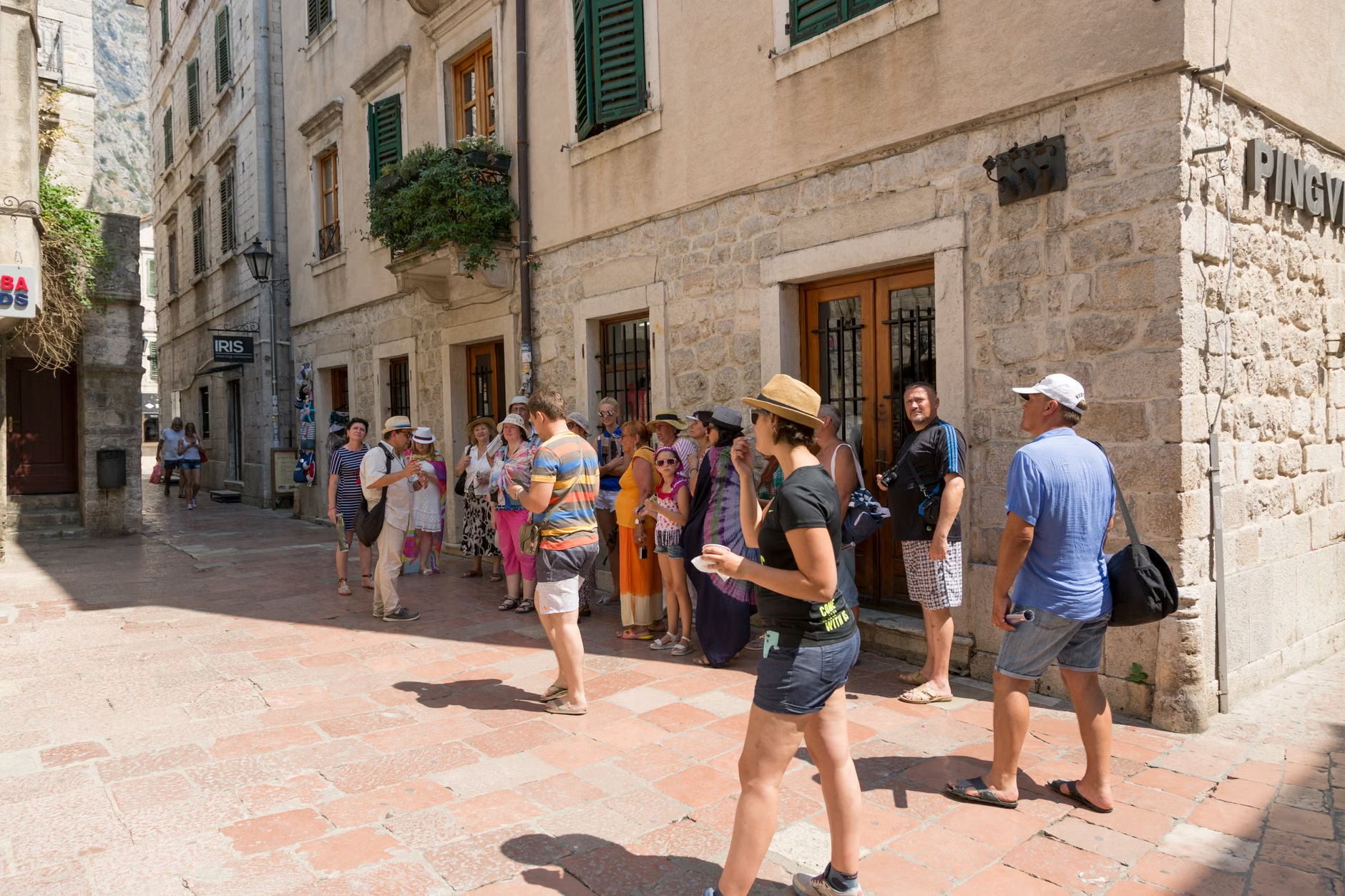
- Guided Walks: Organizing field trips to historical sites or architectural landmarks within the community.
- Digitization Projects: Helping to scan and preserve fragile family photographs or community records.
This structure provides a predictable routine. For many, the transition into retirement involves a loss of the “work-day” structure. History circles replace that structure with self-directed goals. You are not being graded or managed; instead, you are contributing to a shared objective, which provides the same neurological satisfaction of achievement found in professional environments.

Cognitive Stimulation and the “Research Mindset”
The primary cognitive benefit of a history circle is the requirement to synthesize different types of information. When you look at an old building or a historical record, you are engaging in a process of deduction. You are asking: “Why was this built here?” “Who lived here before the current residents?” “How did the local economy change to necessitate this new construction?”
The Neuroplasticity of Historical Inquiry
Neuroscience research suggests that lifelong learning is a key factor in building “cognitive reserve.” Cognitive reserve refers to the brain’s ability to improvise and find alternate ways of getting a job done, which can help delay the onset of cognitive decline. When you engage with history, you are practicing several high-level functions:
- Memory Retrieval: Connecting current observations to past knowledge.
- Critical Analysis: Comparing conflicting accounts in old newspapers or records.
- Spatial Awareness: Mentally mapping how a town looked 50 years ago versus today.
This is not passive learning like watching a documentary. It is active, generative work. By writing down what you find, discussing it with others, or even just organizing a collection of photos, you are forcing your brain to categorize and encode new information. This is significantly more effective for brain health than repetitive tasks or passive consumption of media.
Building Meaningful Social Connections
Loneliness is a significant health risk for adults over 60, often linked to increased inflammation and cardiovascular issues. However, social connection is not just about “being around people.” It is about having a shared purpose. History circles excel here because they provide a “third space”—a place that is neither work nor home—where interaction is mediated by a common interest.
The “Low-Stakes” Social Advantage
Many social environments for older adults can feel forced or overly structured. History circles are different because the focus is on the subject, not on the people. This reduces the pressure to perform socially. If you are shy or find small talk exhausting, the history circle provides a ready-made topic of conversation. You don’t have to talk about your health or your family unless you want to; you can talk about the history of the local railway station or the evolution of the town square.
| Activity Type | Social Benefit | Cognitive Benefit |
|---|---|---|
| Group Research | Collaboration and team problem-solving. | Pattern recognition and logical deduction. |
| Oral History Interviews | Deep, one-on-one connection with neighbors. | Active listening and narrative construction. |
| Walking Tours | Physical exercise and shared environmental engagement. | Spatial orientation and environmental observation. |
The table above illustrates that different activities within a circle serve different needs. For instance, if you are feeling isolated, the oral history interview is a highly effective way to forge a deep, personal connection. If you are feeling “mentally rusty,” the group research sessions offer a more rigorous challenge.
Practical Steps to Finding or Starting a Group
You do not need to be an academic historian to join or start a circle. In fact, the most effective groups are usually composed of people with diverse backgrounds—some with research skills, others with photography skills, and some who are simply “long-term locals” with great memories.
Step-by-Step: How to Get Started
- Check the Local Library: Most public libraries have local history collections. Ask the librarian if there is an existing group. If not, ask if you can leave a flyer to gauge interest.
- Use Community Bulletin Boards: Digital platforms like Nextdoor or Facebook Groups are often used by neighborhood associations to organize interest groups. Search for your town’s name + “history.”
- Start Small: If you cannot find an existing group, invite two neighbors for coffee to discuss a specific historical mystery in your street. You don’t need a formal charter; you just need a shared curiosity.
- Set a Consistent Time: The success of a circle depends on reliability. Meeting on the “first Tuesday of the month” is easier to remember than irregular dates.
A note on safety and accessibility: When choosing a meeting space, prioritize physical accessibility. Ensure the venue has comfortable seating, adequate lighting, and accessible restrooms. If the group plans to conduct walking tours, always vet the route for uneven pavement, steep gradients, and potential rest points. It is also wise to ensure that any physical activity is paced to accommodate different levels of stamina.
The Role of Technology in Modern History Circles
While history is an “old” subject, technology is the engine that keeps modern circles thriving. Learning to use basic digital tools can significantly enhance your experience and keep your brain engaged with modern skills.
Consider using these tools:
- Shared Cloud Folders (e.g., Google Drive or Dropbox): These allow members to upload scanned photos or documents so everyone can view them from home.
- Digital Archiving Apps: Simple apps on your smartphone can be used to scan old documents at high resolution, turning your phone into a portable archives scanner.
- Mapping Tools: Google Maps can be used to create custom “historic maps” of your town, dropping pins on locations where old buildings once stood.
Learning these tools is not just about the task; it is about “digital literacy.” Using a smartphone to scan a photo involves hand-eye coordination, understanding software interfaces, and organizing digital files. This is excellent practice for maintaining the technical agility required in many areas of modern life, from online banking to medical portals.

Overlooked Variables: When to Be Cautious
While history circles are overwhelmingly positive, there are a few practical considerations to keep in mind to ensure the experience remains stress-free.
The “Expert” Trap: Sometimes, a group can become dominated by one individual who insists on their version of events. This can stifle discussion and discourage newer members. If you find a group where one person dominates the narrative, feel free to look for another group or start your own. The goal is collaboration, not a lecture.
Managing Expectations: Do not feel pressured to “produce” something. Some people join history circles and never do any formal research; they simply enjoy listening to the stories and looking at the photographs. This is perfectly acceptable. Your presence and your own memories are valid contributions to the group’s collective knowledge.
Health and Stamina: If you are attending a field trip or walking tour, be realistic about your physical limits. It is perfectly acceptable to drive to the meeting point rather than walking the entire route, or to skip the walking portion and join the group for the discussion afterward. Always prioritize your comfort and safety. If you use a mobility aid, ensure that the group is aware of your needs so that they can select routes that are accessible.
The Legacy Aspect: Why It Matters
There is a unique sense of dignity in being a “custodian” of your community’s history. As we age, we often worry about our legacy. What will be remembered? By documenting the history of your area, you are ensuring that the stories of your generation—the specific cultural shifts, the local businesses that defined your childhood, the way the neighborhood felt before it changed—are preserved for the next generation.
This is often referred to as “generativity” in psychological circles—the desire to leave a mark on the world and contribute to the future. It is a powerful antidote to the feeling that one’s life is becoming less relevant. When you share a story about how the local park was built, you are bridging the gap between the past and the future, making you an essential part of the community’s ongoing story.
Conclusion
A local history circle is more than a hobby; it is a holistic wellness strategy. It combines the rigorous cognitive demands of research with the profound health benefits of social connection and the psychological satisfaction of community contribution. Whether you are a natural historian or simply looking for a new way to spend your Tuesday afternoons, the act of looking back at where you live can provide a surprisingly clear path forward for your own wellbeing.
Start by identifying one piece of local history that piques your curiosity. It could be the name of your street, the history of a local park, or the origin of a building you pass every day. Use that curiosity as your entry point into a group that shares your interest. You will find that the past has a remarkable way of making the present feel more vibrant, connected, and meaningful.
Frequently Asked Questions
1. Do I need to be a professional historian to join a local history group?
Absolutely not. Most local history groups are comprised of enthusiastic amateurs. The most valuable members are often those with a good memory for local landmarks or a willingness to help organize files. Your interest and curiosity are the only qualifications required.
2. What if I have limited mobility? Can I still participate in history circles?
Yes. Many history circles focus primarily on indoor activities like archival research, digitization, and storytelling. Even when groups do field trips, they are usually happy to plan routes that are accessible or to have members join for the “stationary” parts of the tour, such as a lunch or meeting afterward. Always communicate your mobility needs to the group leader upfront.
3. How much does it typically cost to join such a group?
Most local history circles are either free or have a very nominal fee (often just a few dollars to cover the cost of tea, coffee, or venue rental). They are usually volunteer-run and are not-for-profit. If a group asks for a large membership fee, it may be a more formal organization; check their website or mission statement to ensure it aligns with your expectations.
For further information on the benefits of community engagement and lifelong learning, you may consult resources from organizations such as the AARP (American Association of Retired Persons) or the Age UK guidance on social participation and mental wellbeing.