Maintaining skeletal muscle mass is the single most effective “insurance policy” for preserving independence and mobility as we move through our 60s, 70s, and 80s. While many people view muscle loss as an unavoidable consequence of aging, clinical research confirms that the condition known as sarcopenia—the progressive loss of muscle mass, strength, and function—is both preventable and, in many cases, reversible through specific nutritional and physical interventions.
- Anabolic Resistance means adults over 60 require higher concentrations of protein (25–30g per meal) and specific amino acids like leucine to trigger muscle growth compared to younger adults.
- Resistance Training is the only intervention that directly counters muscle atrophy; walking alone is insufficient for maintaining the fast-twitch muscle fibers required for balance and fall prevention.
- Early Detection through simple tools like the SARC-F questionnaire or grip strength tests allows for lifestyle adjustments before mobility is significantly compromised.
The Biological Reality of Muscle Loss After 60
Sarcopenia is not merely “getting thinner” or “feeling weaker.” It is a clinical condition characterized by the decline of skeletal muscle tissue quality and quantity. Starting around age 40, humans can lose roughly 1% of their muscle mass per year, a rate that often accelerates after age 60. However, the loss of strength happens three times faster than the loss of mass, which explains why a person might maintain their body weight while finding it increasingly difficult to lift a suitcase or rise from a low sofa.
The primary driver of this decline is a phenomenon called “anabolic resistance.” In younger bodies, a small amount of protein or a short walk is enough to signal the muscles to repair and grow. In the senior body, the “signaling pathways” become less sensitive. This means that to achieve the same muscle-building effect as a 20-year-old, a 70-year-old requires a more potent stimulus—specifically, more protein per meal and higher-intensity resistance exercise.
Muscle serves as more than just a tool for movement; it is a metabolic organ. It stores glucose, regulates insulin sensitivity, and even produces signaling molecules called myokines that support brain health. When muscle mass drops below a critical threshold, the risk of type 2 diabetes, cognitive decline, and cardiovascular issues increases. Therefore, preventing sarcopenia is a foundational step in holistic preventive health.

How to Assess Your Muscle Health at Home
You do not need an expensive laboratory scan to understand your current muscle status. While clinical tools like Dual-energy X-ray Absorptiometry (DXA) provide the most accurate measurements of lean mass, several validated “field tests” can indicate whether you are at risk for sarcopenia.
The SARC-F Questionnaire
Geriatricians often use the SARC-F scale as an initial screening tool. You can self-evaluate by asking these five questions:
- Strength: How much difficulty do you have lifting and carrying 10 pounds (approx. 4.5kg)?
- Assistance in walking: How much difficulty do you have walking across a room?
- Rise from a chair: How much difficulty do you have rising from a chair or bed?
- Climb stairs: How much difficulty do you have climbing a flight of 10 stairs?
- Falls: How many times have you fallen in the past year?
If you find “significant difficulty” in more than two of these areas, it is a clear signal to prioritize muscle-strengthening activities and consult a healthcare provider for a formal assessment.
The Grip Strength Benchmark
Grip strength is one of the most reliable predictors of overall body strength and longevity. Using a simple device called a handgrip dynamometer, you can measure the force of your squeeze. For men, a reading below 27 kg and for women, a reading below 16 kg generally indicates the onset of sarcopenia. Many local community centers or physical therapy clinics offer these tests, or affordable digital versions can be purchased for home use to track progress over time.
The Timed Up and Go (TUG) Test
This test measures mobility and balance. Sit in a standard armchair, start a timer, stand up, walk 3 meters (10 feet), turn around, walk back, and sit down again. Completing this in under 10 seconds indicates good mobility. Taking 12 seconds or longer suggests an increased risk of falls and a need for targeted leg-strength training.
Nutritional Interventions: Overcoming Anabolic Resistance
To prevent muscle loss, the “standard” adult dietary advice often falls short for the 60–80 age group. The goal is not just to eat “healthy,” but to provide the specific raw materials required to trigger Muscle Protein Synthesis (MPS).
The Protein Threshold Rule
A common mistake is spreading protein intake thinly throughout the day (e.g., a piece of toast for breakfast, a salad for lunch, and a large steak for dinner). Because of anabolic resistance, a small amount of protein (like 5–10g) may not “turn on” the muscle-building machinery in an older adult. Research suggests that each meal should contain at least 25 to 30 grams of high-quality protein to reach the “anabolic threshold.”
| Protein Source | Portion Size for ~25-30g Protein | Key Benefit for Seniors |
|---|---|---|
| Chicken Breast | 100g (approx. 3.5 oz) | High bioavailability, low fat. |
| Greek Yogurt (Plain) | 200g – 250g | Contains leucine and supports gut health. |
| Eggs | 4 large eggs | Highest quality protein; easy to chew/digest. |
| Lentils/Beans | 1.5 to 2 cups (cooked) | High fiber, but requires larger volume to meet protein goals. |
| Whey Protein Isolate | 1 scoop (approx. 30g powder) | Rapidly absorbed; ideal for post-exercise. |
The Role of Leucine
Leucine is an essential amino acid that acts as a “molecular switch” for muscle growth. For seniors, consuming 2.5 to 3 grams of leucine per meal is ideal. Foods naturally high in leucine include dairy, beef, poultry, and soy. If you find it difficult to eat large volumes of food, a leucine-enriched whey protein shake can be a practical way to meet this requirement without feeling overly full.
Hydration and Muscle Quality
Muscle tissue is approximately 75% water. Dehydration leads to a decrease in muscle cell volume, which can impair the muscle’s ability to contract effectively and repair itself. Older adults often have a diminished “thirst reflex,” so scheduling water intake (e.g., a glass with every meal and one between meals) is a vital, yet overlooked, component of muscle maintenance.
Exercise: Why Walking is Not Enough
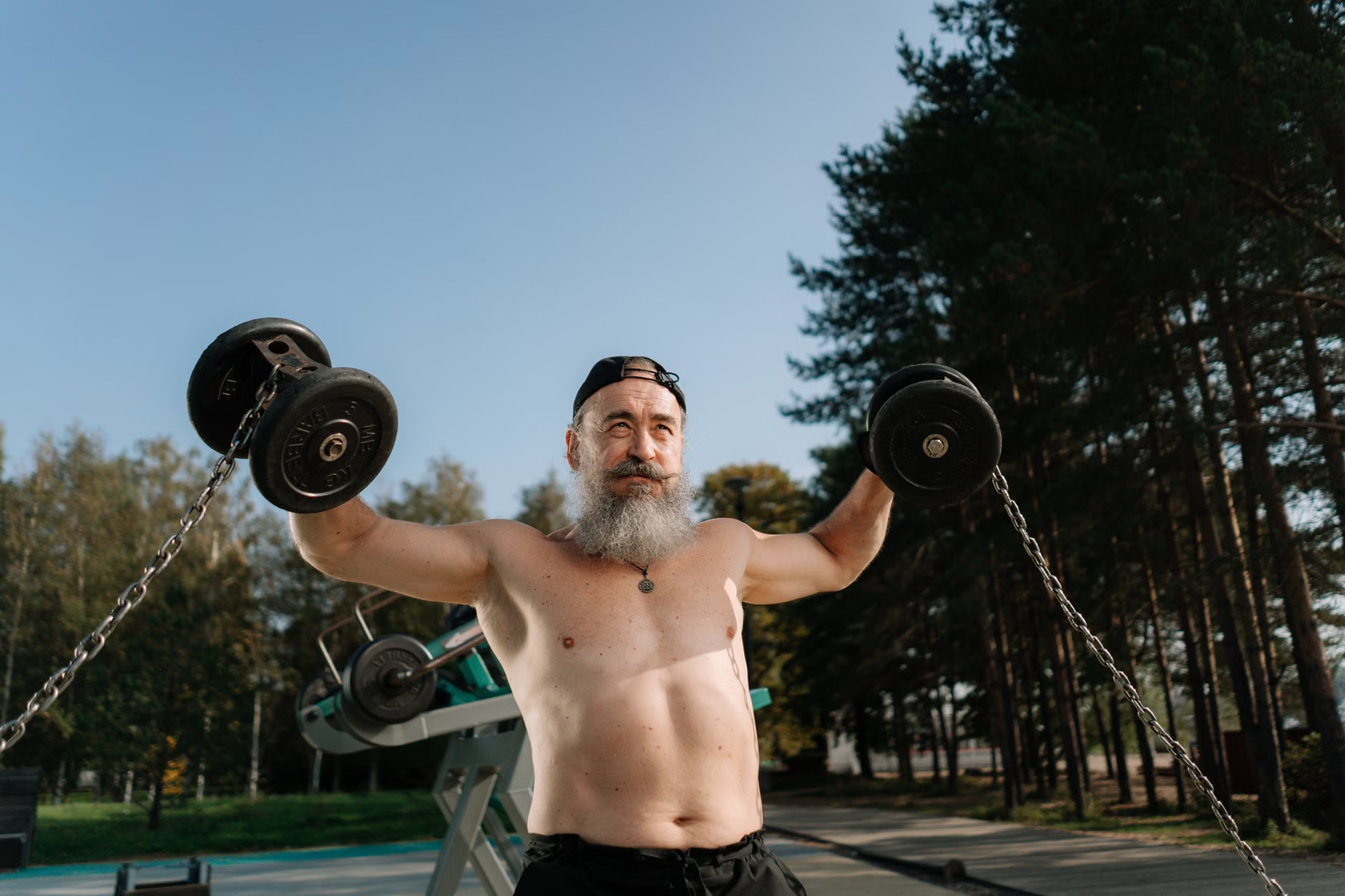
Aerobic exercises like walking, swimming, or cycling are excellent for heart health and endurance. However, they do very little to prevent sarcopenia. To maintain muscle, you must engage in Resistance Training (RT)—exercise that causes the muscles to contract against an external resistance.
The Science of Progressive Overload
To grow, a muscle must be challenged beyond its current capacity. This is known as progressive overload. If you lift the same 2kg dumbbell for five years, your muscles will eventually stop responding. To continue seeing benefits, you must gradually increase the weight, the number of repetitions, or the difficulty of the movement. For a 70-year-old, this doesn’t mean “bodybuilding,” but it does mean ensuring the last two repetitions of an exercise feel challenging.
A Simple 3-Day Resistance Routine for Home
This routine focuses on “functional movements” that mimic daily life. Perform 2 sets of 10–12 repetitions for each exercise, with 1–2 minutes of rest between sets.
- The Chair Squat (Lower Body): Sit on a sturdy chair, then stand up using your legs (try not to use your arms). This builds the quadriceps and glutes, essential for getting out of cars and chairs.
- Wall Push-Ups (Upper Body): Stand a few feet from a wall, place your hands on it, and perform a push-up. This strengthens the chest, shoulders, and triceps.
- The “Suitcase Carry” (Core/Grip): Hold a moderately heavy object (like a gallon of water) in one hand and walk 20 paces while keeping your torso perfectly upright. Switch hands and repeat.
- Resistance Band Rows (Back): Sit on the floor or a chair with a band looped around your feet. Pull the band toward your hips, squeezing your shoulder blades together.
The Importance of Power vs. Strength
While strength is the ability to lift a heavy object, power is the ability to move quickly. As we age, we lose power faster than strength. Power is what allows you to catch yourself if you trip on a curb. To train power safely, focus on the “concentric” (upward) part of an exercise being slightly faster, while the “eccentric” (downward) part remains slow and controlled.

Lifestyle Factors and Clinical Support
Muscle health is influenced by more than just food and weights. Hormonal balance and recovery time play significant roles in how the body processes protein and repairs tissue.
Vitamin D and Muscle Function
Vitamin D receptors are located directly on muscle cells. A deficiency in Vitamin D is strongly linked to muscle weakness and an increased risk of falls. In many regions, adults over 60 cannot synthesize enough Vitamin D from sunlight alone. Checking your Vitamin D levels via a blood test (aiming for levels above 30 ng/mL) and supplementing under medical guidance is a standard preventive step for sarcopenia.
Sleep and the Growth Hormone
Most muscle repair happens during deep sleep, when the body releases growth hormones. Chronic sleep deprivation increases cortisol, a stress hormone that can actually break down muscle tissue (catabolism). Aim for 7–8 hours of quality sleep. If you struggle with sleep apnea or insomnia, treating these conditions is as important for your muscles as your gym routine.
When to See a Professional
If you notice a sudden drop in strength, unexplained weight loss, or frequent “near-falls,” it is time to consult a doctor or a physical therapist. They can rule out underlying conditions like thyroid imbalances, chronic inflammation, or neurological issues that might be mimicking or accelerating sarcopenia. A physical therapist can also provide a “pre-habilitation” program—a custom exercise plan designed to strengthen specific weak points before they lead to an injury.
Practical Implementation: Your Weekly Muscle Action Plan
Transitioning from “knowing” to “doing” requires a realistic schedule. Below is a sample framework for an adult aged 60–80 who wants to prioritize muscle health.
- Monday: 20-minute Resistance Training (Home routine); 30g protein at breakfast, lunch, and dinner.
- Tuesday: 30-minute walk (Cardio); focus on hydration (8 glasses of water).
- Wednesday: 20-minute Resistance Training; focus on leucine-rich foods (e.g., Greek yogurt or chicken).
- Thursday: Active recovery (stretching or light gardening); ensure 7–8 hours of sleep.
- Friday: 20-minute Resistance Training; track protein intake to ensure the 1.2g per kg of body weight goal is met.
- Saturday: Social activity or longer walk; Vitamin D check/supplementation.
- Sunday: Rest and meal prep for the upcoming week.
A Note on Consistency: It is better to do 10 minutes of resistance training three times a week consistently than to do one 60-minute session once a month. Muscle tissue responds to frequency and regularity.
Conclusion: Muscle as Your Foundation for Freedom
The goal of preventing sarcopenia is not vanity; it is the preservation of your ability to travel, play with grandchildren, and live in your own home for as long as possible. By understanding that your body now requires more protein density and targeted resistance than it did in your 40s, you can bypass the “frailty trap” that many assume is inevitable. Start today by testing your sit-to-stand speed or adding one high-protein element to your breakfast. Every gram of muscle you preserve today is an investment in your mobility for the decade to come.
Frequently Asked Questions
1. Is it safe to start lifting weights if I have never done it before and I am over 70?
Yes, it is generally safe and highly recommended, but the approach must be gradual. Start with bodyweight exercises (like chair squats) or light resistance bands. The goal is to learn the correct form first. If you have existing joint issues or heart conditions, consult a physical therapist who can tailor a “low-impact” resistance program that protects your joints while still challenging your muscles.
2. Can I get enough protein from a plant-based diet to prevent muscle loss?
It is possible, but it requires more planning. Plant proteins (like beans, lentils, and grains) often have lower concentrations of leucine and are less easily absorbed than animal proteins. To hit the 30g “anabolic threshold” using plants, you may need to eat a larger volume of food. Using a high-quality vegan protein powder (pea/rice blend) can help you reach your targets without excessive calories or digestive discomfort.
3. I walk 5 miles every day; isn’t that enough to keep my legs strong?
While walking is fantastic for your heart and mood, it does not provide the “mechanical load” necessary to prevent sarcopenia. Walking primarily uses Type I (slow-twitch) muscle fibers. Sarcopenia preferentially attacks Type II (fast-twitch) fibers—the ones used for power and balance. To keep those fibers, you must perform movements that involve pushing, pulling, or lifting weights that make your muscles feel tired after 10–12 repetitions.
Sources:
National Institute on Aging: Resistance Training for Older Adults
World Health Organization: Physical Activity Guidelines
Mayo Clinic: Understanding Age-Related Muscle Loss