- Puzzle-solving engages specific cognitive domains—such as spatial reasoning, vocabulary, and executive function—rather than providing a generic ‘brain boost.’
- To maintain cognitive benefits, choose puzzles that challenge your current skill level; repeating the same familiar task yields diminishing returns.
- Integrating puzzles into your daily routine should be viewed as a form of ‘cognitive maintenance’ similar to physical exercise, focusing on consistency rather than intensity.
Engaging in complex puzzles is more than a way to pass time; it is a deliberate exercise in cognitive architecture. For adults aged 60 to 80, the choice of puzzle and the method of engagement can significantly influence how effectively the brain maintains its plasticity and problem-solving efficiency. This guide explores the mechanics of how different puzzle types impact your cognitive health and provides a framework for choosing activities that align with your mental fitness goals.
Understanding the Cognitive Demands of Different Puzzle Types
Not all puzzles are created equal when it comes to neurological engagement. The brain utilizes different pathways to solve a crossword versus a Sudoku or a jigsaw puzzle. Understanding these differences allows you to create a balanced ‘mental diet.’
1. Linguistic Puzzles: Crosswords and Word Searches
Crosswords rely heavily on semantic memory—the storehouse of facts, meanings, and vocabulary. When you search for a synonym or a historical fact, you are activating the left hemisphere’s language centers. For older adults, these puzzles are excellent for maintaining ‘lexical access,’ or the speed at which you can retrieve words from your memory.
2. Visuospatial Puzzles: Jigsaw Puzzles
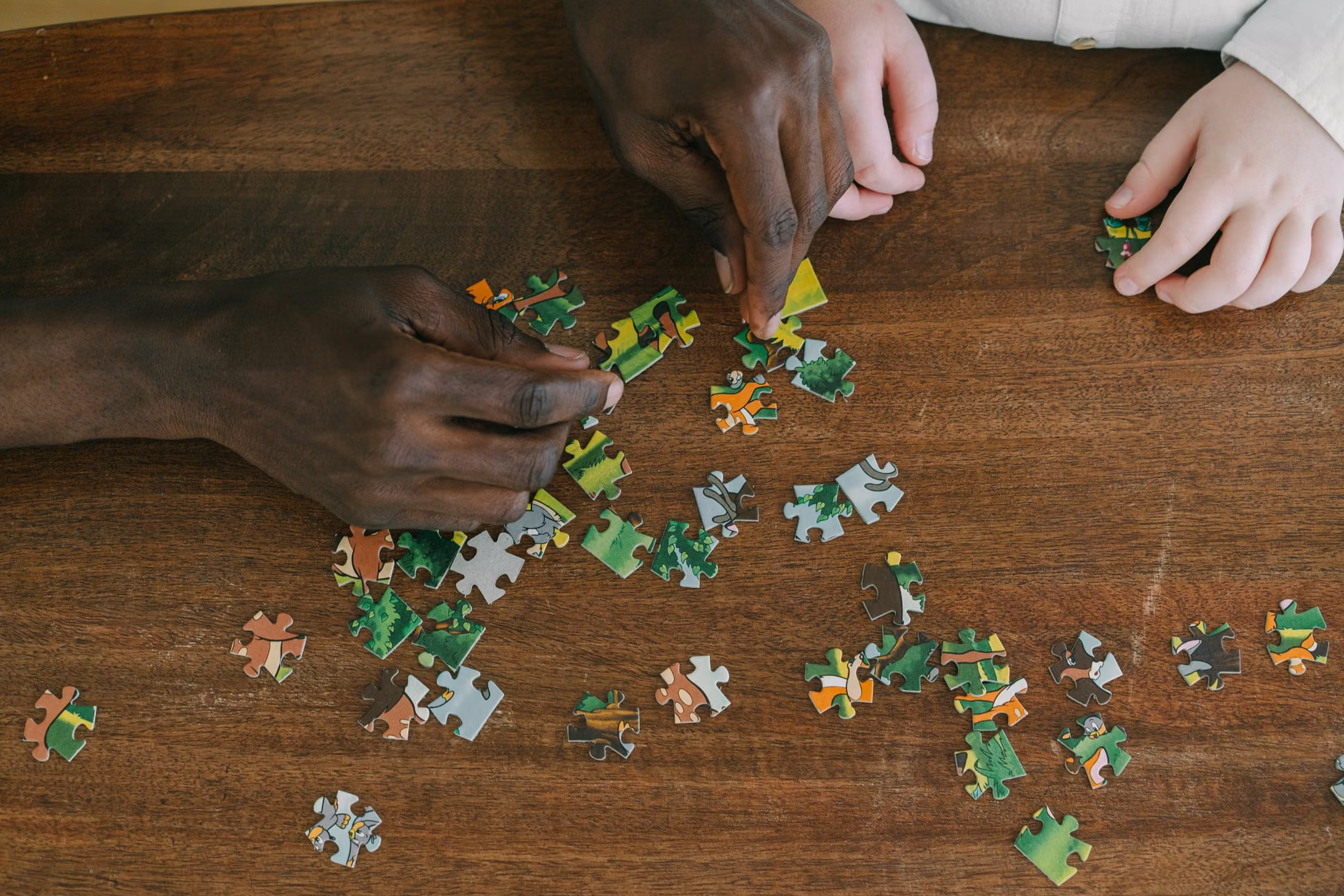
Jigsaw puzzles require the brain to process shapes, colors, and patterns simultaneously. This engages the right hemisphere and the parietal lobe, which handles spatial awareness. This type of activity is particularly useful for maintaining the ability to visualize objects in three-dimensional space, a skill that supports navigation and physical coordination in daily life.
3. Logic and Numerical Puzzles: Sudoku and Kakuro
Logic puzzles emphasize executive function—the brain’s ‘management’ system. This includes planning, working memory, and inhibition control. When you solve a Sudoku, you are not just counting; you are holding multiple constraints in your mind at once while testing hypotheses. This is often the most demanding type of puzzle, providing a robust workout for the prefrontal cortex.
The Principle of Cognitive Challenge: Avoiding the ‘Comfort Trap’
A common mistake is sticking to the same puzzle format at the same difficulty level for years. While this provides relaxation, it does not provide cognitive growth. The brain, like a muscle, adapts to repetitive tasks. Once a process becomes automatic, it uses less energy and engages fewer neural resources.
| Puzzle Type | Primary Cognitive Skill | Best For |
|---|---|---|
| Crosswords | Semantic Memory | Vocabulary maintenance |
| Sudoku | Executive Function | Working memory and planning |
| Jigsaw | Visuospatial Reasoning | Attention to detail and patience |
| Cryptograms | Pattern Recognition | Deductive reasoning |
To ensure you are truly exercising your brain, use the “20% Rule.” If you find that 80% of your puzzles are solved without any feeling of mental strain, it is time to move up a level in difficulty or switch to a different category of puzzle. Challenging your brain slightly beyond your comfort zone is where the most meaningful cognitive maintenance occurs.
Integrating Puzzles into Daily Wellness
The goal of puzzle construction is not to finish as many as possible, but to maintain a consistent state of “active inquiry.” Here is how to build a healthy puzzle routine:
Step-by-Step Routine Building
- Designate a Space: Having a dedicated table for a jigsaw or a specific chair for word games signals to your brain that it is time for focused work.
- Time-Boxing: Limit your puzzle time to 30–45 minutes. Prolonged sessions can lead to physical strain (eye fatigue, neck stiffness) without necessarily adding cognitive value.
- Variety Rotation: Rotate your puzzle types throughout the week. For example, use Mondays and Wednesdays for logic, Tuesdays and Thursdays for linguistics, and the weekend for visuospatial puzzles like jigsaws.
- Social Engagement: Whenever possible, solve puzzles with a partner. Explaining your logic out loud to another person adds a layer of social cognition and verbal communication that solitary play lacks.

Practical Considerations for Safety and Stamina
As we age, physical comfort plays a major role in how long we can engage in mental tasks. If you are uncomfortable, your ability to focus drops significantly.
- Lighting: Ensure your workspace has adjustable, non-glare lighting. Poor lighting contributes to eye strain, which can be mistaken for mental fatigue.
- Ergonomics: If you are working on a jigsaw puzzle, consider using a slanted board. This prevents the “neck-down” posture that leads to tension headaches and back pain.
- Digital vs. Physical: Digital puzzles offer accessibility features like font resizing and contrast adjustment. However, physical puzzles provide tactile feedback that helps with fine motor coordination. Use a mix of both to gain the benefits of each.
The Role of Puzzles in Long-Term Cognitive Health
It is important to clarify that puzzles are not a ‘cure’ for cognitive decline. They are a tool for cognitive reserve. Cognitive reserve is essentially the brain’s ability to improvise and find alternative pathways to complete tasks. By regularly engaging in challenging mental activities, you are effectively strengthening the communication networks between different regions of your brain.
Research suggests that the benefit comes from the process of learning. If you are starting a new type of puzzle, the first few weeks are the most beneficial because your brain is actively mapping out new rules and strategies. Once you become an expert at that specific game, the cognitive benefit stabilizes. Therefore, the key is to remain a ‘perpetual beginner’—always trying new types of puzzles or increasing the complexity of your current favorites.
Identifying When to Seek Professional Guidance
If you find that your ability to solve puzzles you previously enjoyed has declined significantly, or if you notice that you are struggling with the basic rules of a game you have played for years, it may be worth discussing this with your primary care provider. While occasional forgetfulness is common, a persistent inability to perform tasks that were once straightforward should be evaluated. When speaking with your doctor, be prepared to describe specific changes: “I used to finish this crossword in 20 minutes, and now I struggle to complete it in an hour,” or “I am finding it difficult to hold the rules of this game in my head.”
Conclusion: The Architecture of a Sharper Mind
The cognitive architecture of puzzle construction is built on the foundation of effort and variety. By choosing puzzles that require you to plan, analyze, and recall, you are providing your brain with the stimulus it needs to stay agile. Remember, the goal is not to be perfect at the puzzle, but to enjoy the process of solving it. Consistency, curiosity, and the willingness to step outside your comfort zone are the most effective tools in your cognitive toolkit.
Frequently Asked Questions
- 1. Do digital puzzles offer the same benefits as paper-based ones?
- Yes, the cognitive benefits are largely similar. Digital puzzles offer the added advantage of accessibility (zoom, high contrast) and instant feedback, while paper puzzles provide tactile engagement that can be better for fine motor skills.
- 2. How often should I change the type of puzzle I do?
- You should aim to introduce a new type of puzzle or increase the difficulty every few months. Once you feel that a puzzle has become ‘easy’ or routine, it is no longer providing the same level of cognitive challenge.
- 3. Can solving puzzles help prevent memory loss?
- While puzzles are excellent for building cognitive reserve and maintaining mental agility, they are not a guaranteed prevention for conditions like dementia. They should be part of a broader lifestyle approach that includes regular physical exercise, a healthy diet, and active social engagement.
For further reading on cognitive health and aging, visit the National Institute on Aging (USA) for evidence-based information on brain health.