- Consistency over Intensity: Seated shoulder retractions are most effective when performed as frequent, low-intensity “micro-breaks” throughout the day rather than one exhaustive session.
- The “Chest Out, Shoulders Back” Principle: The goal is not to squeeze your shoulder blades as hard as possible, but to gently glide them toward your spine to counteract the forward-slumping posture common in daily activities.
- Pain is a Stop Sign: If you experience sharp pain or radiating sensations during this movement, stop immediately and consult a physical therapist or healthcare provider to rule out underlying structural issues.
Understanding the Mechanics of Postural Alignment
As we navigate our daily routines—reading, using digital devices, or simply relaxing in a favorite chair—it is natural for the shoulders to drift forward. This “protracted” position can lead to stiffness in the upper back, discomfort in the neck, and a general reduction in the range of motion of the shoulder girdle. Seated shoulder retractions are a targeted, low-impact movement designed to reset this alignment.
When we talk about “postural alignment” in the context of aging, we are not suggesting that every person must sit like a soldier. Rather, we are looking at the ability to maintain a position that allows the chest to open, the lungs to expand fully, and the muscles of the upper back to remain engaged rather than chronically overstretched. The shoulder retraction is a fundamental movement where the scapulae (shoulder blades) move toward the midline of the body, effectively “pinching” an imaginary pencil between them.
Why does this matter? For many adults between 60 and 80, the cumulative effect of gravity and habitual posture can lead to a forward-head carriage and rounded shoulders. This can compress the space in the chest cavity, potentially affecting breathing depth and increasing the load on the neck muscles. By practicing retractions, you are training your body to recognize the “neutral” position, making it easier to maintain during tasks like driving, eating, or socializing.
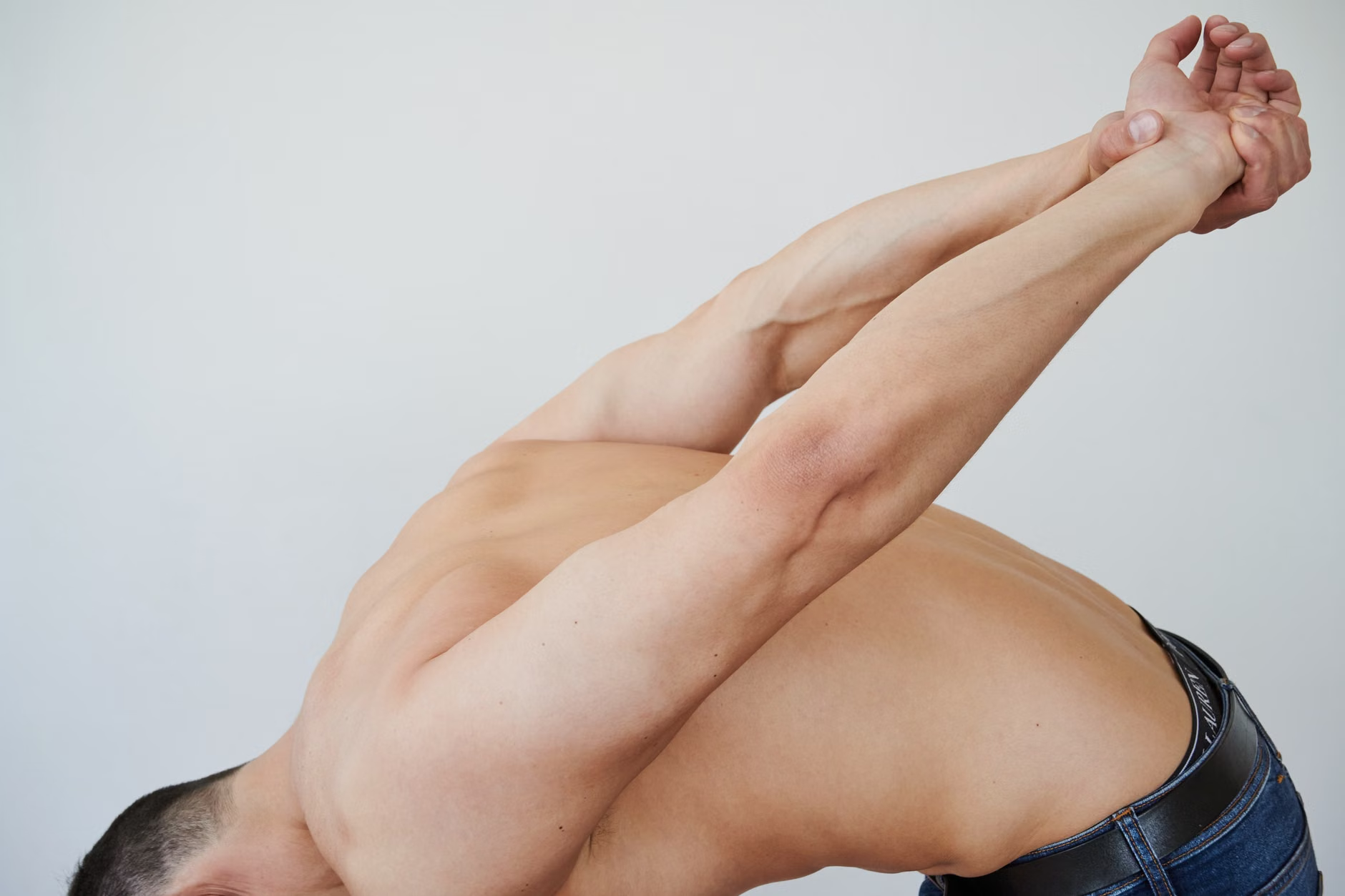
The Anatomy of a Proper Seated Retraction
To perform a shoulder retraction correctly, you do not need special equipment or a gym membership. The beauty of this movement is its accessibility. However, there are common mistakes that can diminish its effectiveness or, in some cases, cause unnecessary tension.
Step-by-Step Execution
- Find a Stable Seat: Choose a chair with a firm base. Avoid soft, deep sofas that encourage slouching. Your feet should be flat on the floor, hip-width apart.
- Lengthen the Spine: Imagine a string attached to the crown of your head, gently pulling you toward the ceiling. Your chin should remain parallel to the floor, not tucked down or tilted up.
- Position the Arms: Allow your arms to hang naturally by your sides. If your chair has armrests, you may need to scoot slightly forward so your arms can move freely.
- The Retraction: Gently draw your shoulder blades back and inward toward your spine. Imagine you are trying to squeeze a small object between them. Do not lift your shoulders toward your ears; keep them relaxed and down.
- Hold and Release: Hold the position for 3 to 5 seconds. Breathe naturally during the hold. Slowly release back to the starting position.
Common Pitfalls to Avoid
Many people mistake “retraction” for “shrugging.” If you find your shoulders creeping up toward your ears, you are engaging your upper trapezius muscles rather than the muscles responsible for posture (the rhomboids and middle trapezius). If you notice this happening, try performing the movement with your palms facing forward; this external rotation of the shoulder often makes it easier to keep the shoulders down.
| Common Mistake | Result | Corrective Action |
|---|---|---|
| Shrugging shoulders | Neck strain/tension | Focus on pulling shoulders down and back |
| Arching the lower back | Back pain/compensation | Keep the core gently engaged and pelvis neutral |
| Holding breath | Increased blood pressure | Exhale during the squeeze, inhale during release |
Understanding this table is vital. If you find yourself arching your lower back, it usually means you are trying to force the range of motion. Remember: the goal is alignment, not maximal effort. If you cannot pull your shoulders back without arching your spine, pull them back only as far as you can while keeping your spine straight.

Integrating Movements into Your Daily Rhythm
The most common barrier to better posture is the “all or nothing” approach. Many people wait until they are in pain to perform exercises. A more effective strategy is to integrate “posture breaks” into your existing schedule. Think of these as “maintenance windows.”
The “Trigger” Method
Attach your shoulder retractions to a daily trigger. For example, every time you reach for a beverage, perform three sets of five retractions. Or, perform two sets whenever you finish reading a chapter of a book or watching a television segment. By linking the movement to a habit you already possess, you remove the need for willpower or a complex schedule.
Managing Fatigue and Stamina
If you have been sedentary for a long period, your muscles may fatigue quickly. This is normal. If your muscles begin to shake or you feel significant fatigue, stop for that session. Building endurance in the postural muscles takes time. Start with 3 to 5 repetitions per session, 2 to 3 times a day. As you grow stronger, you can gradually increase the duration of the hold rather than the number of repetitions.
Advanced Variations and Equipment
Once you are comfortable with the basic seated retraction, you may wonder if adding resistance is beneficial. While body weight is often sufficient, resistance bands can provide a controlled way to increase the challenge for the muscles of the upper back.
Using a Resistance Band
A light-resistance band (often color-coded as “light” or “extra light”) can be held in front of you with both hands. As you pull your shoulder blades together, you simultaneously pull the band apart. The band provides feedback, helping you maintain a consistent line of motion. Warning: Ensure the band is not too tight. You should be able to complete the movement with control. If the band snaps back or forces your shoulders into a strained position, switch to a lighter resistance.

When to Seek Professional Guidance
While shoulder retractions are generally safe, they are not a substitute for professional medical care if you have underlying conditions such as severe osteoporosis, recent shoulder surgery, or chronic impingement syndrome. If you experience any of the following, consult a physical therapist or physician before continuing:
- Sharp, stabbing pain in the shoulder joint or the upper back.
- Numbness or tingling in the arms or fingers during the movement.
- A “clicking” or “popping” sensation that is accompanied by pain.
- Difficulty lifting your arm to shoulder height regardless of the exercise.
When visiting a professional, bring a list of what you have tried and how you felt during those attempts. For instance, “I feel a pinch in my right shoulder when I pull my blades back, but not in my left.” This specific feedback allows a therapist to diagnose whether the issue is muscular weakness, joint stiffness, or a structural limitation, allowing them to tailor a program that is safe for your specific needs.
Beyond the Movement: The Holistic View of Posture
Posture is not solely a result of muscle strength; it is also influenced by your environment. You can perform all the exercises in the world, but if your chair is poorly designed or your screen is at the wrong height, you will continue to fight an uphill battle.
Environmental Ergonomics
Consider your primary seating area. Does your chair support the natural curve of your lower back? If not, a small lumbar cushion or a rolled-up towel can make a significant difference. When your lower back is supported, it is much easier for your shoulders to remain in a neutral, open position without constant conscious effort.
The Importance of Hydration and Nutrition
While not a direct “fix,” keeping the body hydrated supports muscle function and joint health. The soft tissues surrounding the shoulder girdle rely on proper fluid balance to maintain elasticity. Similarly, ensuring adequate protein intake is essential for muscle maintenance, especially for those over the age of 60, as protein is the primary building block for the muscle tissue you are working to strengthen.
Evidence-Based Perspectives on Senior Mobility
Research consistently shows that functional mobility—the ability to perform daily tasks with ease—is a primary predictor of long-term independence for older adults. Exercises like shoulder retractions fall under the umbrella of “functional movement training.” Unlike high-intensity sports, these movements are designed to support the activities of daily living (ADLs), such as reaching for a high shelf, getting dressed, or carrying groceries.
One overlooked variable in senior health is the psychological aspect of posture. Research indicates a link between “open” posture and perceived confidence and mood. While more study is needed to establish a causal relationship, many individuals report feeling more alert and capable when they are not in a slumped position. The physical act of opening the chest and pulling the shoulders back can serve as a mental “reset” button during a long or tiring day.
Conclusion: Building a Sustainable Habit
Seated shoulder retractions are a simple, efficient tool in your wellness toolkit. By focusing on the quality of the movement—slow, controlled, and pain-free—you can improve your postural alignment and reduce the stiffness that often accompanies aging. Remember that the goal is not perfection, but consistent, gentle maintenance of your body’s natural alignment.
Start today by identifying one or two “trigger” moments in your day where you can perform a set of retractions. Be patient with your body, listen to its signals, and prioritize consistency over intensity. By making these small adjustments, you are investing in your mobility and comfort for the long term.
Frequently Asked Questions (FAQ)
1. How many times a day should I perform these retractions?
There is no “magic number,” but for most people, 3 to 5 sessions per day is ideal. Each session should consist of 5 to 10 slow, controlled repetitions. The goal is to avoid fatigue while keeping the muscles engaged.
2. Can I do these exercises if I have arthritis in my shoulders?
Arthritis affects everyone differently. If you have a diagnosis of shoulder arthritis, it is essential to get clearance from your doctor or physical therapist. They can help you determine the range of motion that is safe for you, as movement is often beneficial for arthritic joints, provided it does not aggravate inflammation.
3. Will these exercises fix my “hunchback” appearance?
If you are referring to a noticeable curve in the upper spine (often called kyphosis), it is important to understand that this can be caused by structural changes in the vertebrae, which exercises alone cannot reverse. However, shoulder retractions can help improve the muscular balance around the spine, which may improve your overall posture and reduce associated discomfort. If you are concerned about significant spinal curvature, please consult a specialist to determine if you have a structural condition that requires medical intervention.
Official guidance on physical activity for older adults can be found through resources such as the World Health Organization (WHO) guidelines on physical activity and sedentary behaviour.