Hello everyone! I’m Cooldy, your dedicated information guide at SoCoolDay. 😊
Have you ever heard the saying, “Muscle is better than a pension”? When I first heard it, I thought, “Well, money is still king.” But after doing some deep research, I realized how profound that statement is. No matter how comfortable your bank account is, if your legs lack the strength to take you where you want to go, or if your body lacks the vitality to enjoy your favorite meals, life loses its sparkle.
Recent global health statistics show an explosive interest in muscle health. It’s no longer just about aesthetics or “looking fit.” Muscle is the most fundamental and robust ‘insurance policy’ for our bodies. However, the cold hard truth is that our muscle mass begins to decline starting in our 30s, and after 60, that decline accelerates at an alarming rate. Today, I’ve put together a comprehensive ‘Protein Food Prescription’ based on the latest research to help you lock in your muscle mass and build a resilient body. Shall we dive in?
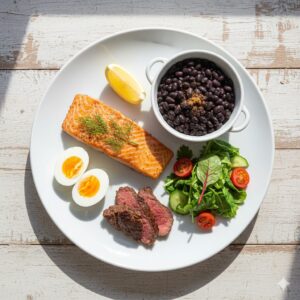
The Hidden Thief: Why Is Our Muscle Disappearing?
Do you feel like you’re losing your “get-up-and-go”? Do you find yourself walking slower or feeling unsteady? It’s easy to brush this off as just “getting older,” but medically, this condition is known as ‘Sarcopenia.’ This refers to the loss of not just muscle quantity, but also muscle quality and function.
In fact, the World Health Organization (WHO) officially recognized Sarcopenia as a disease with its own ICD-10-CM code in 2016. Muscle loss isn’t just a natural part of aging anymore; it’s a condition that requires active prevention and management.
The Value of Muscle by the Numbers
Research indicates that we lose about 1% of our muscle mass every year starting in our 30s, and this rate can double after the age of 60. A study focused on older adults found that nearly 1 in 5 men and 1 in 10 women suffer from significant muscle loss.
The danger extends far beyond just feeling weak. According to research from leading medical institutions, individuals with low muscle mass are more than twice as likely to suffer from falls and fractures. Furthermore, because muscles act as a massive ‘storage tank’ for blood sugar, those with sarcopenia face a 3 to 4 times higher risk of metabolic diseases like type 2 diabetes and hypertension. Muscle is truly the engine of your metabolism!
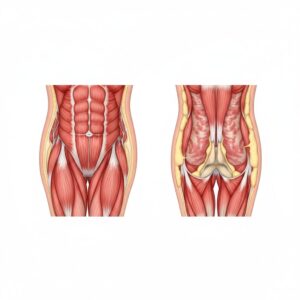
The ‘Golden Key’ to Building Muscle: The Science of Protein
While exercise is vital, it’s only half the battle. Think of muscle as a building; exercise is the construction work, but protein is the actual brick and mortar. Without the right materials, no amount of work will result in a sturdy structure.
The PROT-AGE Study Group, an international group of experts, recommends that healthy older adults consume 1.0 to 1.2 grams of protein per kilogram of body weight every day. For someone weighing 60kg (132 lbs), that means aiming for 60 to 72 grams of pure protein daily. That’s more than most people think!
Why ‘Leucine’ is the Game Changer
Here is a “pro-tip” from Cooldy: Not all proteins are created equal. There is a specific amino acid that acts as a ‘master switch’ to trigger muscle synthesis, and its name is Leucine. Recent nutritional journals highlight that when you consume protein rich in Leucine, the efficiency of muscle building increases dramatically.
Cooldy’s Dictionary: Amino acids are the building blocks that protein breaks down into. Leucine is an essential amino acid, meaning our bodies can’t make it—we must get it from our food.

Cooldy’s Top 5 ‘Muscle Hero’ Foods
I’ve scoured global nutritional databases to find the best, most accessible foods to help you reach your protein goals and get that essential Leucine.
1. The Gold Standard: Eggs
Eggs are often called “nature’s multivitamin” or the “perfect protein.” They have the highest biological value (the efficiency with which protein is used by the body).
- Cooldy’s Tip: Many people discard the yolk to avoid cholesterol, but the yolk contains Vitamin D and healthy fats that are crucial for muscle health. Unless advised otherwise by your doctor, eating 1–2 whole eggs is highly beneficial.
- Why it works: Eggs are incredibly high in Leucine, making them the perfect “starter motor” for muscle growth.
2. Plant-Based Power: Soybeans and Tofu
If you find meat difficult to digest, soy is your best friend. Soybeans (often called “meat from the field”) are rich in plant-based protein and isoflavones, which help prevent muscle loss due to aging.
- Cooldy’s Tip: Try a warm bowl of tofu with a drizzle of soy sauce for breakfast. It’s gentle on the stomach and provides a steady stream of nutrients to your muscles.
3. The Muscle Protector: Fatty Fish (Salmon & Mackerel)
Fish provides high-quality protein plus Omega-3 fatty acids. Omega-3s are famous for heart health, but they also reduce muscle inflammation and combat ‘anabolic resistance’—a condition where the body becomes less efficient at building muscle as we age.
- Cooldy’s Tip: Aim for fatty fish at least twice a week. It keeps your arteries clear and your muscles resilient.
4. Lean Powerhouse: Beef Round and Pork Tenderloin
To build significant muscle, animal protein is highly effective because it contains all the essential amino acids in the right proportions. However, you want to avoid heavy saturated fats.
- Cooldy’s Tip: Choose lean cuts like beef round or pork tenderloin. Instead of frying, try poaching or slow-cooking them (like a pot roast or “suyuk”). This removes excess fat while keeping the protein intact.
5. The Fast-Acting Recovery: Greek Yogurt and Whey
Whey protein, found in dairy, is absorbed faster than any other type of protein. This makes it ideal for the “post-workout window.”
- Cooldy’s Tip: If you are lactose intolerant, look for ‘Lactose-Free’ milk or Greek yogurt, which is naturally lower in lactose but packed with protein. Adding a few nuts can provide extra texture and healthy fats.
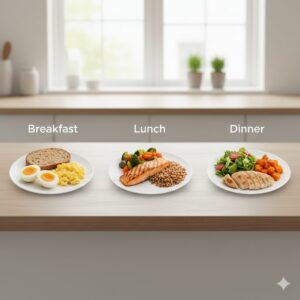
The ‘Golden Rule’ of Timing: Distributed Intake
This is perhaps the most important takeaway! Many people save all their protein for a big steak dinner. However, our bodies have a limit on how much protein they can process at once.
A famous study by the University of Texas found that eating 90g of protein in one sitting was far less effective than eating 30g of protein at each of the three meals.
- Divide and Conquer: Try to include about 20–30g of protein (roughly the size of your palm) in every meal.
- The 1-Hour Window: Consuming protein within an hour after light resistance exercise or a brisk walk significantly boosts the muscle-building effect.
- Stay Hydrated: High protein intake requires your kidneys to work a bit harder. Drinking plenty of water helps flush out metabolic byproducts and keeps your kidneys happy.
Lifestyle Habits for Maximum Synergy
Food alone isn’t a magic wand. You need to give your muscles a reason to stay.
- The “Second Heart” Exercise: Your calf muscles are often called the body’s second heart because they help pump blood back up. Try calf raises (standing on your tiptoes and slowly lowering) while washing dishes or watching TV. 20 reps, 3 times a day makes a huge difference.
- Sunlight is Fertilizer: Vitamin D is essential for protein to be synthesized into muscle. Try to get 15-20 minutes of sunlight daily.
- The Power of Sleep: Muscle tissue is repaired and built while you sleep. Aim for 7–8 hours of quality rest.

Conclusion: Muscle is a Faithful Asset
We’ve covered a lot today! To summarize:
- Muscle loss is a medical concern that we need to actively manage.
- Prioritize Leucine-rich proteins like eggs, lean meat, and dairy.
- Don’t “clump” your protein; spread it across your breakfast, lunch, and dinner.
Building muscle is the most honest investment you can make. Your body will reward every egg you eat and every walk you take with strength and independence. I hope this guide helps you feel more empowered to take charge of your health!
If you have your own high-protein recipes or questions about your routine, please share them in the comments. Let’s grow stronger together!
Stay healthy, and have a “So Cool” day! 😊
Credible References for Further Reading:
- World Health Organization (WHO) – Sarcopenia: Revised European consensus on definition and diagnosis
- The American Journal of Clinical Nutrition – Research on the distribution of protein intake and muscle synthesis
- National Institute on Aging (NIA) – https://www.nia.nih.gov – Maintaining Muscle Mass with Age
- Mayo Clinic – https://www.mayoclinic.org – Nutrition and healthy eating for seniors
👉Related Posts