Hello there! It’s your friendly neighborhood health enthusiast, Cooldy, here to talk about something that might be making your mornings a little less “good.” Have you ever woken up, feeling refreshed and ready to take on the day, only to have your very first step feel like you’ve stepped on a sharp tack?
That sudden, stabbing pain in your heel can be quite a shock, right? Sometimes it feels like a dull ache that just won’t go away, or a burning sensation that travels along the bottom of your foot. If you’ve been hobbling around for the first few minutes of every day, thinking, “Oh, I’m just getting older,” or “I must have walked too much yesterday,” you might actually be dealing with something called Plantar Fasciitis.
Don’t let the long name scare you! Today, I’ve done a deep dive into why our feet start acting up like this and, more importantly, how we can get back to walking on clouds without needing a medical degree. Let’s jump right in!

What on Earth is Plantar Fasciitis?
To understand the pain, we first need to look at the “hero” of our feet: the Plantar Fascia. Think of it as a thick, rubbery band of tissue that connects your heel bone to your toes. It’s shaped like a fan and acts as a built-in shock absorber for your body.
Every time you walk, run, or even just stand, this band stretches to support the arch of your foot. It’s incredibly strong, but even the strongest heroes have their limits! When there’s too much pressure or repetitive stress, tiny tears can develop in this tissue. Your body tries to heal these tears, which leads to inflammation. And where there’s inflammation, there’s pain.
The “Morning Mystery”: Why does it hurt most at first?
This is the question I get most often! While you sleep, your feet usually point downward, allowing the plantar fascia to relax and shorten (contract). When you take that first step in the morning, you’re suddenly stretching that contracted, inflamed tissue under your full body weight. It’s like pulling on a rubber band that’s been frozen—it resists and hurts! After a few minutes of walking, the tissue warms up and stretches out, which is why the pain often fades away, only to return after you’ve been sitting for a long time.
Who Gets It and Why? (It’s Not Just Athletes!)
You might think this is only a problem for marathon runners, but that’s a total myth. In fact, many of us develop this simply through our daily routines. See if any of these sound familiar:
- The “Weekend Warrior” Syndrome: Did you suddenly decide to go on a 3-hour hike after sitting at a desk all week? Sudden spikes in activity are a huge trigger.
- Fashion Over Function: I love a stylish pair of flats or sleek leather loafers as much as anyone, but shoes with zero arch support or paper-thin soles are the plantar fascia’s worst enemy.
- The “Hard Floor” Trap: Many of us have beautiful hardwood or tile floors at home. Walking on these surfaces in bare feet or thin socks for hours (especially while cooking or cleaning) puts immense pressure on your heels.
- Carrying a Little Extra “Love”: Even a small amount of extra weight increases the load on your arches significantly with every step.
- Tight Calf Muscles: This is a big one! If your calf muscles are tight, they pull on your heel bone, which in turn pulls on the plantar fascia. Everything in our body is connected!
The 30-Second Self-Test
Not sure if it’s really plantar fasciitis? Try these three simple checks at home:
- The “Press Test”: Use your thumb to press firmly on the bottom of your heel, specifically toward the inner side. If you find a “sweet spot” of intense pain, that’s a classic sign.
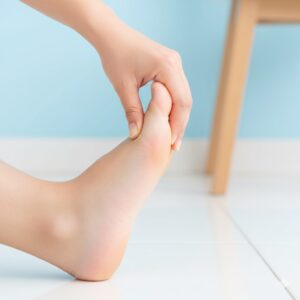
- The “Toe Pull”: Sit down, cross your aching foot over your knee, and pull your big toe back toward your shin. If the bottom of your foot feels tight and painful, the fascia is likely inflamed.
- The “Rest to Motion” Pain: Does it hurt when you stand up after a long movie or a car ride? That “start-up” pain is a major giveaway.
Cooldy’s 5-Minute “Miracle” Stretching Routine
The good news? Most cases of plantar fasciitis can be managed at home with a bit of patience and the right moves. Here is my favorite “Morning Survival” routine. Pro Tip: Do these before your feet touch the floor!
1. The Cold Water Bottle Roll
This is a two-in-one treat! Fill a plastic water bottle with water and freeze it. While sitting, roll your foot over the frozen bottle for 5–10 minutes. The rolling massages the tissue, while the ice reduces inflammation. It feels amazing after a long day!
2. The Bedside Towel Stretch
Keep a rolled-up towel or a belt next to your bed. Before you get up, loop the towel around the ball of your foot. Keeping your leg straight, gently pull the towel toward you. Hold for 30 seconds and repeat 3 times. This “pre-warms” the fascia so that first step isn’t such a shock.
3. The “Great Toe” Stretch
Simply use your hand to pull your toes back toward your shin until you feel a stretch in the arch. Hold it! This helps maintain flexibility in the tissue so it doesn’t tear further.
4. Wall Calf Stretches
Stand facing a wall with your hands pressed against it. Put one foot forward (knee bent) and the aching foot back (leg straight, heel on the floor). Lean in until you feel your back calf stretching. Remember: A loose calf equals a happy heel!
Smart Habits for Happy Feet
Changing how we live can prevent the pain from coming back. Here’s how to treat your feet like royalty:
👟 The Golden Rule of Shoes
Stop wearing worn-out sneakers! Most athletic shoes lose their support after 300–500 miles. If you can bend your shoe in half easily, it’s not supporting you. Look for shoes with a slightly raised heel and firm arch support. If your favorite shoes are flat, consider buying orthotic inserts (special insoles). They make a world of difference!
🏠 The “No Barefoot” Policy
If you have heel pain, stop walking barefoot at home immediately. Invest in a pair of high-quality indoor slippers with arch support (like those made of cork or firm foam). Your heels will thank you.
🥗 Anti-Inflammatory Eats
Since this is an “itis” (which means inflammation), what you eat matters!
- Ginger & Turmeric: These are nature’s ibuprofen. Add them to your tea or cooking.
- Omega-3s: Think salmon, walnuts, or flaxseeds. They help calm the body’s inflammatory response.
- Hydration: Dehydrated muscles and tendons are brittle and prone to injury. Keep that water bottle handy!

Common Mistakes: What NOT to Do
Sometimes our “common sense” can actually make things worse. Avoid these traps:
- “Pushing Through the Pain”: This isn’t the gym! If your heel hurts, your body is telling you to stop. Don’t go for that “recovery walk” if you’re limping.
- Heat vs. Ice: While a warm foot soak feels nice, if the area is acutely inflamed (swollen and sharp pain), ice is your best friend. Save the warm soak for when the pain is chronic and dull.
- Ignoring the Other Foot: Often, we start putting all our weight on the “good” foot to compensate, leading to problems in both feet! Treat both feet with stretches to keep things balanced.
Cooldy’s Final Encouragement
Dealing with foot pain can be frustrating and honestly, a bit depressing when it keeps you from the activities you love. But remember: your body is an amazing healing machine if you give it the right tools and a little bit of time.
Most people see significant improvement within a few weeks of consistent stretching and better footwear. Don’t get discouraged if it doesn’t disappear overnight—think of it as a marathon, not a sprint!
Quick Recap for You:
- Stretch before you step.
- Support your arches with good shoes/slippers.
- Ice it down when it hurts.
- Listen to your body and rest when needed.
You’ve got this! I’m cheering for you to have a pain-free, “spring in your step” kind of morning very soon.

Reliable Resources for Further Reading
- Mayo Clinic – Plantar Fasciitis Overview: https://www.mayoclinic.org
- American Academy of Orthopaedic Surgeons (AAOS): https://orthoinfo.aaos.org
- WebMD Health Center: https://www.webmd.com