Hello! This is Cooldy, your friendly guide to a healthier and more vibrant life. 😊
Have you noticed a little “click” in your knees when you get out of bed lately? Or perhaps that once-easy flight of stairs now feels like climbing a mountain? If you’ve found yourself reaching for the handrail more often or hesitating before a long walk in the park, you are definitely not alone.
Our joints are often compared to the shock absorbers of a car. They take a lot of wear and tear over the decades, but unlike a car, we can’t just order a brand-new body from a factory. However, the good news is that with the right knowledge and a bit of “TLC” (Tender Loving Care), we can keep those “shock absorbers” working smoothly well into our 80s and 90s. Today, I want to share everything I’ve researched about knee health—from spotting the early signs of arthritis to the latest in surgical tech and, most importantly, how to keep walking tall without pain.
Is That Just “Getting Older” or Something More?
We often brush off knee pain as just a part of aging. But what’s actually happening inside? Most of the time, it’s Osteoarthritis. Think of your knee as two bones meeting with a slippery, protective cushion called cartilage in between. Over time, that cushion thins out. Since cartilage doesn’t have nerves, you don’t feel it wearing away at first. The pain only starts when the cushion gets so thin that the bones begin to “talk” to each other—and trust me, they don’t have nice things to say!
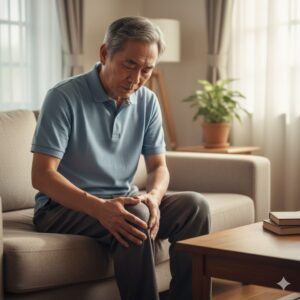
💡 The Knee SOS: A Simple Self-Check
Ask yourself these questions. If you find yourself nodding to three or more, your knees are sending you a distress signal:
- Do your knees feel stiff for about 30 minutes right after you wake up?
- Do you hear a grinding or popping sound (called crepitus) when you move?
- Does the pain get worse after a long day of activity but feel better when you rest?
- Do your knees look slightly “bowed” or different in shape than they did five years ago?
- Does the weather (especially humidity or cold) seem to make the ache deeper?
Don’t panic! Identifying these signs early is the first step toward reclaiming your mobility.
The “No-Surgery” Survival Kit: Food and Habits
Many people fear that a diagnosis of arthritis means an immediate trip to the operating room. That couldn’t be further from the truth! Surgery is a final destination, not the first stop. There is so much we can do right now in our kitchens and living rooms.
🥗 The Anti-Inflammatory Plate
What you eat can actually act as a natural “grease” for your joints. Chronic inflammation is the enemy of cartilage, so let’s fight back with food.
- Fatty Fish (Salmon, Mackerel, Sardines): These are packed with Omega-3 fatty acids. They don’t just help your heart; they actively reduce the chemicals that destroy cartilage.
- The “Power Veggies”: Broccoli, cauliflower, and Brussels sprouts contain a compound called Sulforaphane. Research suggests it may block the enzymes that cause joint destruction.
- Berry Bliss: Blueberries and strawberries are loaded with antioxidants that protect your cells from oxidative stress—think of it as “anti-rust” for your body.
- The Golden Spice: Turmeric (curcumin) is a world-famous anti-inflammatory. Try adding a pinch to your soup or having a “Golden Latte.”
Cooldy’s Quick Guide: What is Sulforaphane?
It’s a natural plant compound found in “cruciferous” vegetables. It’s like a tiny bodyguard for your joint cells, helping to prevent the breakdown of the cushion between your bones.
🚫 Habits That Your Knees Hate
Sometimes, what we stop doing is more important than what we start doing.
- The “Low Seat” Trap: Avoid very low sofas or chairs. The lower you sit, the more force your knees have to exert to get you back up.
- Floor Habits: In many cultures, sitting cross-legged or kneeling is common. However, these positions put extreme pressure on the patella (kneecap). Stick to chairs whenever possible!
- Weight Matters: This is the hard truth—for every 1 pound of weight you lose, you take 4 pounds of pressure off your knees. Even losing just 5 to 10 pounds can make a world of difference in your daily pain levels.
Movement is Medicine: The 5-Minute Home Routine
I know it sounds backwards. “My knees hurt when I move, so why should I exercise?” The reason is simple: Your muscles are the support system for your joints. If your thigh muscles (quadriceps) are strong, they take the weight so your knees don’t have to.
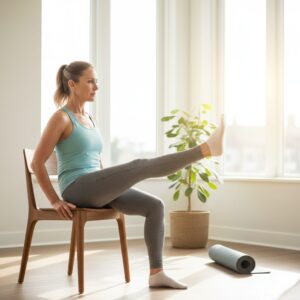
🦵 Cooldy’s “Strong Thigh” Mini-Workout
- Seated Leg Extensions: Sit tall in a chair. Slowly straighten one leg out in front of you. Hold for 5 seconds, feeling the muscle above your knee tighten. Switch legs. Do this 10 times while watching the news!
- The “Pillow Squeeze”: Sit or lie down with a pillow between your knees. Squeeze the pillow using your inner thighs and hold for 5 seconds. This stabilizes the inside of the joint.
- Wall Slides: Lean your back against a smooth wall. Slowly slide down just a few inches (don’t go too low!) and hold. It’s like a mini-squat but much safer for your joints.
Pro-tip: Never push through “sharp” pain. A dull ache or muscle tiredness is fine, but if it feels like a needle poke, stop immediately and rest.
When It’s Time for a Change: Total Knee Replacement (TKR)
If you’ve tried the injections, the physical therapy, and the diet, but you’re still losing sleep because of the pain, it might be time to talk about Total Knee Replacement. Modern medicine has turned this into one of the most successful surgeries in history.
🤖 Why It’s Not Scary Anymore
- Robotic Assistance: Surgeons now use robotic arms that are programmed with a 3D map of your specific knee. This allows for precision down to the millimeter.
- Better Materials: We now use advanced ceramics and highly durable plastics that can last 20 to 25 years.
- Rapid Recovery: Most patients are up and walking (with help) within 24 hours of the surgery!
The Secret to Success: The “Golden 90 Days” of Rehab
The surgeon does 50% of the work, but you do the other 50% during recovery. The first three months after surgery are the most critical time to ensure your new knee doesn’t get stiff.

- Keep Moving: Use your walker or cane as directed, but don’t stay in bed. Circulation is key to healing.
- The ROM Challenge: ROM (Range of Motion) is your new best friend. You’ll practice bending and straightening your leg every day to make sure the joint remains flexible.
- Ice, Ice, Baby: Swelling is the enemy of movement. Use ice packs frequently to keep the inflammation down so you can perform your exercises more comfortably.
- Manage Your Pain: Don’t try to be a hero! Taking your prescribed pain medication on schedule helps you stay active enough to do your physical therapy.
Walking into a Pain-Free Future
Dealing with knee pain can feel lonely and frustrating. It limits where you go and who you see. But remember, your journey doesn’t have to end with sitting on the sidelines. Whether it’s through a delicious new anti-inflammatory recipe, a daily 5-minute leg exercise, or the miracle of modern surgery, there is a path forward.
I want you to imagine yourself a year from now—walking through a park, playing with grandkids, or traveling to a place you’ve always wanted to see—without thinking about your knees at all. It is possible!
Keep moving, stay positive, and listen to what your body is telling you. Cooldy is always here to cheer you on!
Reliable Resources for Further Reading
- Mayo Clinic – Knee Replacement Overview
- Arthritis Foundation – Managing Osteoarthritis
- WebMD – Knee Pain Dos and Don’ts
👉 Related Posts
Don’t Just Warm Your Knees! 5 Counterintuitive Ways to Save Your Joints This Winter
Say Goodbye to Knee Pain: The Ultimate Guide to Joint-Friendly Foods and Supplements