Hello there! I’m Cooldy, your friendly neighborhood blogger who loves digging into the details of healthy living. 🌟
Walk into any grocery store today, and you’ll see the word “Zero” plastered everywhere. From sodas to yogurts and even chewing gum, we are living in the golden age of sugar-free treats. At the heart of this revolution is a tiny molecule called Aspartame. But lately, it feels like every time we open a can of diet soda, there’s a new headline making us second-guess our choices. Is it a lifesaver for our waistlines, or is it something we should approach with caution?
Last year, the world buzzed with news about the World Health Organization (WHO) labeling aspartame as a “possible carcinogen.” It sent shockwaves through kitchens and offices alike. Today, I want to sit down with you and peel back the layers of this sweet mystery. We’ll look at the science, the myths, and the practical ways you can enjoy a sweet life without the worry. Let’s dive in!
🥤 What Exactly is Aspartame? (A Sweet Accident)
Aspartame isn’t just some lab-grown chemical designed to scare us; it has a rather fascinating origin story. Back in 1965, a chemist named James Schlatter was working on a drug to treat stomach ulcers. During his research, he accidentally licked his finger to pick up a piece of paper and realized his skin tasted incredibly sweet. That “oops” moment led to the discovery of a substance that is roughly 200 times sweeter than regular table sugar.
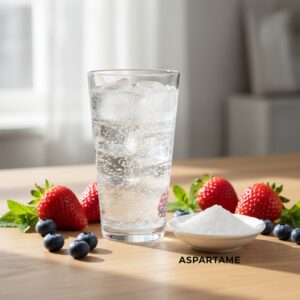
Because it is so intensely sweet, we only need a microscopic amount to flavor a whole bottle of soda. This is why it’s often called a “non-nutritive sweetener”—it provides the taste of sugar without the heavy caloric price tag. It’s made up of two amino acids: aspartic acid and phenylalanine. These are building blocks of protein found naturally in many foods like meat, fish, and dairy.
💡 Cooldy’s Note: What are ‘Artificial Sweeteners’?
These are synthetic sugar substitutes. They provide a sweet taste without the calories of sucrose (table sugar). Because they are high-intensity, they don’t contribute significantly to your daily calorie count, which is why they are so popular for weight management.
⚠️ The WHO Controversy: Should We Be Panicked?
Let’s talk about the elephant in the room: the WHO’s International Agency for Research on Cancer (IARC) classifying aspartame as a “Group 2B” carcinogen. When that news broke, it sounded terrifying. But as a well-informed blogger, I did some digging into what “Group 2B” actually means.
In the world of science, Group 2B is reserved for substances where there is “limited evidence” of cancer in humans and “less than sufficient evidence” in experimental animals. To put this in perspective, pickled vegetables (like kimchi or pickles) and Aloe Vera leaf extract are also in Group 2B. Even more surprising? Red meat (beef, pork, lamb) is classified in Group 2A, which means it’s considered more likely to be carcinogenic than aspartame!
The takeaway? The classification is about the strength of the evidence, not the level of risk. The WHO didn’t say “aspartame causes cancer”; they said “we need to keep an eye on this because the current evidence isn’t 100% clear yet.” So, there’s no need to throw away your sugar-free stash just yet!
⚖️ Sugar vs. Aspartame: The Great Debate
If you’re trying to choose between a regular soda and a diet version, you’re essentially choosing between two different profiles. Let’s break down how they compare in our bodies.
1. The Blood Sugar Rollercoaster
This is where aspartame truly shines for many people. When you eat regular sugar, your blood glucose spikes. Your pancreas then pumps out insulin to bring that sugar into your cells. Over time, constant sugar spikes can lead to insulin resistance, a condition where your body doesn’t handle sugar well anymore, often leading to type 2 diabetes.
Aspartame, however, doesn’t cause that immediate spike. It allows people who need to watch their blood sugar levels—like those managing diabetes—to enjoy something sweet without the metabolic chaos.
2. The Weight Loss Paradox
Logic says: fewer calories = more weight loss. Right? Well, it’s a bit more complicated. Some researchers suggest that when our tongue tastes “sweet” but our stomach doesn’t receive “calories,” our brain gets confused. This can sometimes lead to “compensatory eating,” where you find yourself craving a big slice of cake later because your brain feels cheated of the energy it expected from that sweet taste.
💡 Cooldy’s Note: ‘Insulin Resistance’ Explained
Think of insulin as a key that opens your cells to let sugar in for energy. Insulin resistance is like the lock getting rusty. The key (insulin) is there, but it won’t open the door, so sugar stays high in your blood.

🦠 The Secret World of Your Gut Microbiome
In recent years, scientists have become obsessed with the gut microbiome—the trillions of bacteria living in our digestive tract. We now know these little bugs influence everything from our immune system to our mental health.
Emerging research suggests that artificial sweeteners like aspartame might alter the balance of these gut bacteria. While more human studies are needed, some animal trials have shown that these changes could potentially lead to glucose intolerance. This is why I always tell my readers: even if it has zero calories, it’s not “water.” It’s a substance that interacts with your biology, so moderation is your best friend.
📏 How Much is Too Much? (The ADI Factor)
Health authorities use a metric called Acceptable Daily Intake (ADI). This is the amount of a substance that a person can consume every single day over their entire lifetime without any appreciable health risk.
The ADI for aspartame is 40 milligrams per kilogram of body weight. Let’s make that real: For an average adult weighing 70kg (about 154 lbs), you would need to drink about 9 to 14 cans of diet soda every single day to hit that limit. Most of us aren’t coming anywhere near that amount. If you enjoy one or two cans a day, you are well within the safety margins established by global health experts.
🌿 Natural Alternatives: Is the Grass Greener?
If the “artificial” part of aspartame still makes you uneasy, you aren’t stuck with just sugar! There are some wonderful “natural” high-intensity sweeteners that have become very popular lately:
- Stevia: Derived from the leaves of the Stevia rebaudiana plant. It’s hundreds of times sweeter than sugar and has been used for centuries in South America.
- Erythritol: A sugar alcohol found naturally in some fruits and fermented foods. It has a very clean taste and almost zero calories.
- Monk Fruit (Luo Han Guo): A small melon from Southeast Asia. Its extract is incredibly sweet and doesn’t have the bitter aftertaste some people find in Stevia.
Switching to these can feel “cleaner” for many people, though it’s always good to check the label, as many “Stevia” products are actually blended with other fillers.

🏃♂️ Simple Habits for a Sweeter, Healthier Life
Instead of worrying about every milligram of aspartame, let’s focus on building a lifestyle that makes us feel great. Here are some of my favorite “Cooldy-approved” tips:
- The ‘Water First’ Rule: Before reaching for a soda (diet or regular), drink a full glass of cold water. Sometimes our brain confuses thirst for a sugar craving.
- Infuse Your Own Flavor: Try adding cucumber slices, berries, or a squeeze of lime to sparkling water. It gives you that fizzy, flavorful experience without any added chemicals.
- Read the ‘Fine Print’: Get into the habit of looking at the ingredients list on the back of packages. Knowledge is power! When you know what’s inside, you can make a conscious choice rather than an impulsive one.
- Post-Sweetener Movement: If you do have a sweet treat, go for a 10-minute walk. It’s a wonderful way to help your body process energy and clear your mind.
✨ Final Thoughts: The Power of ‘Just Enough’
We’ve covered a lot of ground today! From the accidental discovery of aspartame to the complex world of gut health and WHO classifications. So, what’s the final verdict?
Aspartame isn’t the villain it’s often made out to be in scary social media posts, but it’s also not a “health food.” It’s a tool—a way to reduce calories and manage blood sugar while still enjoying the flavors we love. The secret to a long, happy life isn’t usually found in “never” or “always,” but in “just enough.”
If a diet soda helps you stay away from 10 teaspoons of sugar, that’s a win! But if you can swap that soda for a refreshing glass of lemon water, that’s an even bigger win. Listen to your body, stay curious, and remember that you are in the driver’s seat of your health journey.
Stay healthy, stay happy, and keep shining! Your friend, Cooldy, is always here to help you navigate the world of wellness. 😊💪
Reliable Resources for Further Reading
- U.S. Food and Drug Administration (FDA) – Aspartame and Other Sweeteners
- World Health Organization (WHO) – Aspartame Hazard and Risk Assessment
- Mayo Clinic – Artificial Sweeteners and Other Sugar Substitutes
👉 Related Posts
How to Lower Uric Acid Naturally: Prevent Gout and Protect Your Kidney Health
Stop Just Walking! Boost Muscle and Lower Blood Sugar with the ‘3-Minute Interval Walking’ Method
The 10-Minute Post-Meal Secret: Stop Blood Sugar Spikes and Control Diabetes Risk