Hello there! I’m your friendly information explorer, Cooldy. We’ve already settled into the rhythm of 2026, haven’t we? As we look at our goals for the year, ‘Health’ is always at the top of the list.
But tell me, have you heard of the term ‘Health Quotient (HQ)’? While we are all familiar with IQ (Intelligence Quotient) or EQ (Emotional Quotient), the idea that health requires a specific kind of intelligence is becoming the biggest wellness trend of 2026. In Europe and the U.S., HQ has moved beyond a simple buzzword to become the ultimate key to quality of life.
Today, I’ve done some deep diving to bring you a comprehensive guide on how to boost your HQ. By the time you finish reading this, you’ll be well on your way to becoming the CEO of your own body. Let’s dive into the world of smart health together!

1. What exactly is ‘Health Quotient (HQ)’?
Let’s start with a clear definition! Health Quotient (HQ), also referred to as ‘Health Literacy’, is essentially the ability to decode the subtle signals your body sends and to pick out the health information that actually applies to you.
In the past, the mindset was often, “I’ll just do whatever the doctor tells me.” But in 2026, the game has changed. With information everywhere, you need to be the smart manager of your own wellbeing. Someone with a high HQ doesn’t just have a ‘fit’ body; they are someone who knows exactly which foods cause them inflammation or what kind of movement leads to the best night’s sleep. It’s about owning your personal data.
Cooldy’s Tip! – What is Health Literacy?
It is the capacity to obtain, process, and understand basic health information needed to make appropriate health decisions. High health literacy helps you avoid unnecessary medications and maintain vitality for longer.
2. Check Your Body’s ‘Black Box’: Reading Signals and Data
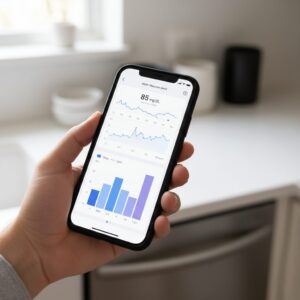
Just as cars have black boxes to record everything, our bodies send out hundreds of signals daily. The first step to a higher HQ is getting friendly with this data. You might think it’s a chore, but 2026 technology makes it effortless!
- Utilize Smart Wearables: Nowadays, smartwatches and ‘Smart Rings’ do the heavy lifting. Take just one minute a day to check how many steps you took or how many hours of deep sleep you clocked.
- Monitor Heart Rate Variability (HRV): This sounds technical, but it’s quite simple! It measures the variation in time between each heartbeat. Interestingly, the more ‘variable’ or irregular it is, the better—it means your nervous system is resilient and handling stress well.
- The Morning Check: When you look in the mirror, don’t just check your hair. Look at your tongue (color and coating) and note your hydration levels. It’s a ‘health mirror’ reflecting your digestive and systemic state.
3. ‘When and What’ to Eat: The Wisdom of Chrono-nutrition
A high HQ individual doesn’t just look for ‘superfoods’ or restrictive diets. Instead, they focus on ‘Nutritional Density’ and ‘Timing’. This is the core of Chrono-nutrition—the science of eating according to your biological clock.
- Eat with the Sun: Our digestive enzymes are most active when the sun is up. Late-night snacking isn’t just about weight; it’s like forcing your organs to work overtime when they should be resting.
- The 2026 ‘Phytochemical’ Rainbow Diet:
- Purple (Eggplant, Blueberries): Rich in anthocyanins that protect brain cells from aging.
- Red (Tomatoes, Watermelon): Lycopene keeps your cardiovascular system strong.
- Green (Broccoli, Kale): Sulforaphane helps detoxify your body naturally.
- Mind the Glucose Spikes: Even with the same food, the order matters! Try eating Vegetables → Protein → Carbohydrates. This prevents sudden sugar spikes and that dreaded post-lunch brain fog.
4. Muscle is Better Than a Pension: The 3-3-3 Routine
For someone with high HQ, exercise isn’t a chore—it’s an ‘energy investment.’ You don’t need to lift heavy weights to see results. Feeling how your muscles move is what counts. I recommend the ‘3-3-3 Rule’:
- 3 Stretches a Day: Simply reaching for the sky helps improve your circulation instantly.
- 30 Minutes after Meals: Go for a light walk. Try incorporating ‘Zone 2 Training’—walking at a pace where you can still hold a conversation but feel slightly breathless. This intensity is the ‘sweet spot’ for your mitochondria (the power plants of your cells).
- 3 Times a Week, Muscle Stimulation: Focus on squats or wall push-ups to trigger large muscle groups. ‘Slow training’—taking 5 seconds to go down and 5 seconds to go up—strengthens muscles without straining joints.

5. The Skill of Resting Your Brain: Digital Detox and Sleep
A healthy body is incomplete without a rested brain. In 2026, ‘Information Overload’ is a major health hazard. Sometimes, too much YouTube health advice can actually stress your brain out!
- The Glymphatic System: While we sleep deeply, a ‘drainage system’ in our brain clears out waste products. This is why 7+ hours of quality sleep is the strongest weapon against cognitive decline.
- Phone-Free Hour Before Bed: Blue light from screens chases away melatonin, the sleep hormone. Try a warm foot bath or reading a physical book instead.
- ‘Sensory Focus’ Meditation: If traditional meditation is hard, just close your eyes and focus on three sounds you hear or the texture of your clothes against your skin. It’s a great way to flip the ‘off switch’ on brain overload.

6. Turning Your Living Space into a ‘Wellness Suite’
Minor changes to your home environment can instantly boost your HQ.
- Lighting Temperature: Use bright white light during the day to stay alert, but switch to warm, amber tones after 8 PM. This signals your body to transition into rest mode.
- Air Quality Matters: High-tech air purifiers are great, but nothing beats fresh oxygen from an open window. Good ventilation is a ‘brain tonic’ that aids concentration.
- Foot Stimulation: Keep a reflexology mat at home or spend time walking barefoot. Stimulating the nerves in your feet is a fantastic way to boost overall circulation.

7. Smart Crisis Management: Handling Illness Wisely
HQ truly shines when you aren’t feeling well. Instead of rushing to a major hospital for every minor ache, a smart approach is key.
- Partnering with a Family Doctor: Find a local physician who knows your history. Having a ‘health partner’ who understands your lifestyle is the best strategy for long-term wellness.
- Medication Awareness: Always ask, “Why am I taking this?” and “Are there side effects?” Taking a photo of your prescriptions and storing them in an app can prevent dangerous drug interactions later.
Closing Thoughts: Your HQ is Already Higher!
We’ve covered a lot of ground today exploring the essence of 2026 health—Health Quotient (HQ). It was a long journey, but the fact that you’ve read this far proves your HQ is already in the top 1%!
The most important thing is to love your body a little more than you did yesterday. Choosing a plate of fresh greens tonight or putting your phone away 30 minutes earlier are the small steps that turn your life into a ‘Golden Age.’
You deserve to be healthy, and you already possess the wisdom to take care of yourself. Cooldy is always here cheering for your vibrant and confident daily life! If you have questions or your own health tips, feel free to leave a comment. Let’s stay healthy together!
A Note of Caution:
Health information can affect everyone differently based on individual constitution or pre-existing conditions. Always listen to your body and consult with a medical professional before starting a new intensive exercise or diet. This content is for informational purposes and is not a substitute for professional medical advice.
Reliable Resources for Further Reading
- World Health Organization (WHO) – Health Literacy (https://www.who.int)
- National Institutes of Health (NIH) – Wellness Toolkits (https://www.nih.gov/health-information/your-health-built-environment)
- Mayo Clinic – Healthy Lifestyle Guidelines (https://www.mayoclinic.org)
👉 Related Posts