Hello there! It’s your health buddy Cooldy here. 😊
Have you ever felt that sudden chill in the morning air and wondered if your body is as ready for the day as your mind is? We often talk about “listening to our bodies,” but when it comes to the heart—our body’s most hardworking engine—the signals can be surprisingly subtle. Heart attacks, or what doctors call Myocardial Infarction, are often feared as “silent killers” that strike without warning. But did you know that your body actually starts whispering (and sometimes shouting) for help long before a crisis occurs?
Today, I’ve gathered some fascinating, research-backed information that goes way beyond the usual “chest pain” advice. From mysterious wrinkles on your ears to the specific way you should take an aspirin in an emergency, we’re going to dive deep into how you can protect your heart. This might be the most important 10 minutes of your day!

The ‘Golden Hour’ Starts Sooner Than You Think
We’ve all heard about the “Golden Time”—the 2-hour window to get to a hospital after a heart attack begins. But there’s an even more critical period I like to call the ‘Golden Warning Window.’
Recent studies have shown that many people experience extraordinary fatigue weeks or even a month before a heart attack. If you suddenly find that vacuuming the living room or walking to the mailbox feels like climbing Mount Everest, don’t just brush it off as “getting older.” It could be your heart struggling to pump blood through narrowed vessels, begging for a check-up.
Note: What is Myocardial Infarction?
This happens when the blood flow that brings oxygen to the heart muscle is severely reduced or cut off completely. This happens because the arteries that supply the heart (coronary arteries) can slowly become narrow from a buildup of fat, cholesterol, and other substances (plaque).
The Morning Danger Zone: 6 AM to Noon
Did you know there is a specific time of day when heart attacks are most likely to happen? Statistics show a significant spike between 6 AM and 12 PM. There’s a fascinating biological reason for this.
When we wake up, our bodies release hormones like cortisol to prepare us for activity. This increases our blood pressure and heart rate. Simultaneously, because we haven’t had water all night, our blood is at its thickest and “stickiest.” This combination makes it much easier for a blood clot to form and block a vessel.
Cooldy’s Tip: Don’t jump out of bed the moment you wake up. Spend 5 minutes gently stretching under the covers and, most importantly, drink a glass of lukewarm water immediately. It thins your blood and wakes up your system safely!

Beyond Chest Pain: The Strange Signs You Must Know
Movies always show someone clutching their chest and collapsing. While chest pressure (often described as an “elephant sitting on my chest”) is common, many people—especially women and those with diabetes—experience “atypical” symptoms.
1. The Diagonal Earlobe Crease (Frank’s Sign)
This sounds like a myth, but it’s real medical science! A deep diagonal crease in the earlobe has been linked to an increased risk of heart disease. The theory is that poor blood circulation causes the elastic fibers in the earlobe to collapse. Take a look in the mirror—is your earlobe smooth, or is there a noticeable line?
2. The “Toothache” That Isn’t a Toothache
I’ve read so many stories of people going to the dentist for jaw or tooth pain, only to be sent to the ER. This is called referred pain. Because the nerves from your heart and your jaw travel close together, your brain can get confused about where the pain is actually coming from.
3. Pain Between the Shoulder Blades
If you feel a heavy, gnawing pain in your upper back or between your shoulder blades that doesn’t go away with a massage or a heat pack, pay attention. This is often how the heart signals distress from its “back wall.”
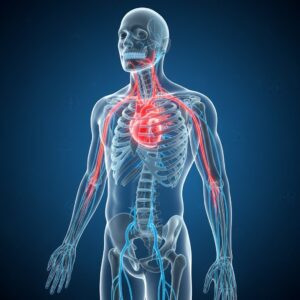
Beware the ‘Widow Maker’
It’s a chilling name for a reason. The “Widow Maker” refers to a total blockage in the Left Anterior Descending (LAD) artery, which supplies over 50% of the blood to the heart muscle.
The interesting thing about the LAD is that it often gives a very specific warning: shortness of breath only during exertion. If you feel fine sitting down but suddenly feel “air hungry” the moment you climb a flight of stairs, your LAD might be narrowing. This is your body’s emergency siren. Don’t ignore it!
Emergency Life Hack: Chew Your Aspirin!
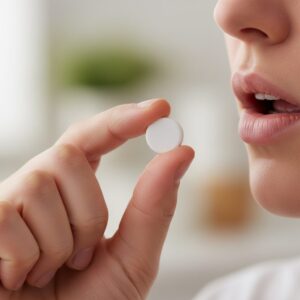
In a suspected heart attack, every second counts. Most people know that taking an aspirin can help, but here is the secret: Do not swallow it whole with water. Chew it.
Chewing the tablet breaks it down so it can be absorbed through the blood vessels in your mouth and stomach much faster. This allows the medicine to start thinning the blood and breaking down the clot minutes earlier than swallowing would. Those minutes could save your life. (Always consult your doctor beforehand if you have allergies or stomach ulcers!)
The Gut-Heart Connection: The TMAO Secret
We are learning that our “gut” actually talks to our heart. When we eat a lot of red meat or eggs, certain gut bacteria produce a compound called TMAO. High levels of TMAO in the blood are directly linked to a higher risk of heart attack.
To keep your heart happy, you need to keep your gut happy! This means eating fermented foods and plenty of fiber. Think of kimchi, yogurt, and leafy greens as a “shield” for your arteries.
Cooldy’s Heart-Strong Superfoods
Forget boring diets! Let’s look at some delicious science-backed heart boosters:
- Dark Chocolate (70%+ Cacao): Yes! Dark chocolate is rich in flavonoids that help relax your blood vessels and lower blood pressure. One or two squares a day is a perfect “prescription.”
- Beets: Beets are like a “natural vasodilator.” They contain nitrates that your body converts into nitric oxide, which opens up your blood vessels and improves flow.
- The “Handful of Nuts” Rule: Walnuts and almonds contain L-arginine, which helps keep the lining of your arteries smooth and flexible.

Is Your Grip Strength a Crystal Ball?
Here is a fun test you can do at home. How strong is your grip? Multiple international studies have found that handgrip strength is a better predictor of heart health than blood pressure!
Weak grip strength often reflects a loss of overall muscle mass (sarcopenia), which is linked to poor cardiovascular health. So, grab a stress ball or a spring gripper while you watch TV. Building that hand strength is actually a workout for your heart!
Final Thoughts: Your Heart is Your Most Honest Friend
We’ve covered a lot today, from earlobes to gut bacteria. But if there is one thing I want you to take away, it’s this: Your heart is always talking to you.
It doesn’t want to fail. It wants to keep beating for you, your children, and your grandchildren. When you feel that “weird” fatigue or that “strange” jaw pain, don’t be “tough” and ignore it. Being proactive isn’t being paranoid—it’s being smart.
Tomorrow morning, remember: wake up slowly, drink your water, and give your heart a little “thank you” for all its hard work. You’ve got this! Stay healthy and stay “Cool,” everyone!

Reliable Sources for Further Reading
- American Heart Association – Warning Signs of a Heart Attack
- Mayo Clinic – Heart Attack Symptoms and Causes
- Harvard Health – The Gut-Heart Connection
👉 Related Posts
🚨Warning Sign: Angina Symptoms, Self-Diagnosis, and 5 Essential Habits for a Healthier Heart