Hello everyone, this is Cooldy! 😊
Have you recently found yourself holding your smartphone further away, or do small texts look blurry and frustrating? If reading a newspaper without reading glasses has become a struggle, you might be realizing the ‘age’ of your eyes, just like me. I’m talking about Presbyopia (age-related farsightedness). Many people simply accept presbyopia as an inevitable part of aging, but the truth is, with proper management, you can protect your eye health for much longer.
Today, I’m going to share everything I’ve researched: from why presbyopia occurs and how to self-diagnose the early symptoms, to special management know-how that you can easily practice in your daily life. Shall we embark on a journey now to get back the clear and comfortable vision of 10 years ago?
🔎 1. Why Exactly Does Presbyopia Occur? (The Role of the Lens and Ciliary Muscles)
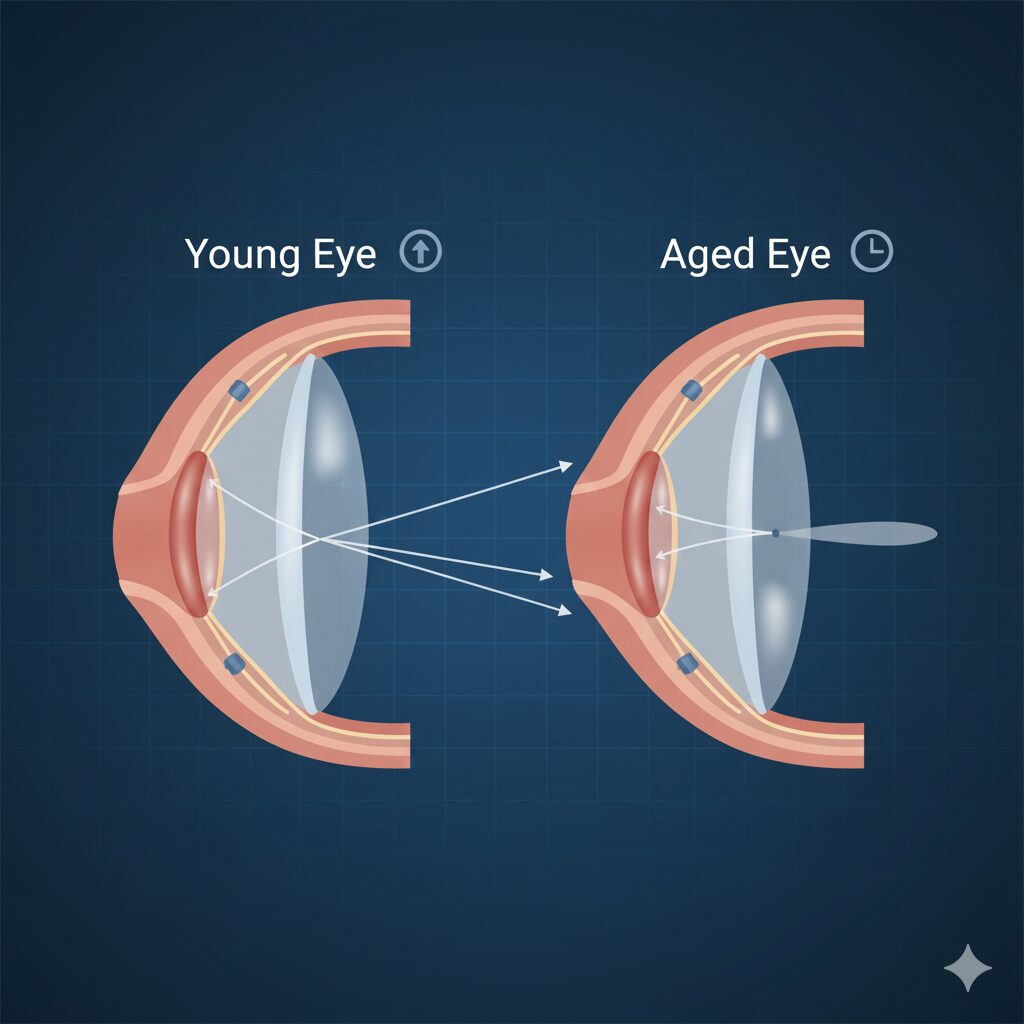
When we talk about presbyopia, we often think of poor eyesight, but it is actually a loss of the eye’s accommodative ability (the ability to focus). Inside our eyes, there is an organ called the crystalline lens that acts like a camera lens. This lens adjusts its thickness to precisely focus on objects, whether they are near or far.
The lens thickness is controlled by a muscle called the ciliary body (or ciliary muscle). When we are young, the lens is soft and elastic, and the ciliary muscles are strong. This allows the lens to thicken quickly when looking at close objects and thin out when looking far away, ensuring rapid focus adjustment.
However, as we age…
- The Lens Hardens: Much like an old lens becoming stiff, the elasticity of the crystalline lens decreases.
- The Ciliary Muscles Weaken: After long periods of use, the strength of the ciliary muscles also gradually declines.
Consequently, due to the loss of lens elasticity and muscle weakness, the eye can’t sufficiently thicken the lens when viewing close objects. This reduction in focusing power results in close-up text appearing blurry—the telltale sign of presbyopia. This usually begins in the early to mid-40s and becomes more pronounced in the 50s and 60s.
💡 2. Is It Me? Early Presbyopia Symptoms for Self-Diagnosis!
The onset of presbyopia varies from person to person. However, if you are experiencing the following symptoms, it’s time to start paying serious attention to your eye health.
| Symptom Category | Detailed Description |
| Difficulty Adjusting Distance | When looking at close-up text (newspaper, smartphone, book), you tend to hold it further and further away. |
| Decreased Concentration | Your eyes get easily fatigued and you feel headaches when reading or working for extended periods. |
| Light Adaptation Issues | It takes a long time to adjust when moving from a bright environment to a dark one. |
| Focus Switching Speed | Switching focus between near and far objects, or vice versa, is slow and blurry. |
| Vision Fluctuation | Your vision feels more blurry when you are tired or later in the afternoon. |
These symptoms are often easy to dismiss as “just getting older.” But recognizing these changes marks the golden time to start actively managing your eye health!
🛡️ 3. Special Daily Routines to Slow Down Presbyopia
While you can’t completely stop presbyopia, certain habits can certainly slow its progression and alleviate eye strain. Here are the key habits Cooldy has uncovered!
3-1. Simple ‘Eye Exercises’ to Strengthen Eye Muscles 🤸
The ciliary muscles, like any other muscle in the body, will weaken if not used. Consistent eye exercises are highly beneficial for keeping these muscles flexible.
- Near-Far Focus Exercise:
- Hold your index finger up about 30 cm (12 inches) in front of your eyes.
- Focus intently on your fingertip for 5 seconds.
- Shift your gaze to the farthest point you can see (a wall or outside the window) and focus for 5 seconds.
- Repeat this process 10 times, completing 3-5 sets daily.
- Up, Down, Left, Right, and Diagonal Gazing:
- Look straight ahead, and move only your eyeballs to gaze slowly in the order of up, down, left, right, and then diagonally.
- It’s crucial to move only your eyeballs as much as possible, without moving your head.
3-2. ‘Warm Compress & Rest’ to Relieve Eye Strain 🛀
Eye strain is a major factor that worsens presbyopia symptoms. Make sure to give your eyes enough time to rest.
- Follow the 20-20-20 Rule: For every 20 minutes of screen time (smartphone or computer), look at something 20 feet (about 6 meters) away for at least 20 seconds to switch your eye focus.
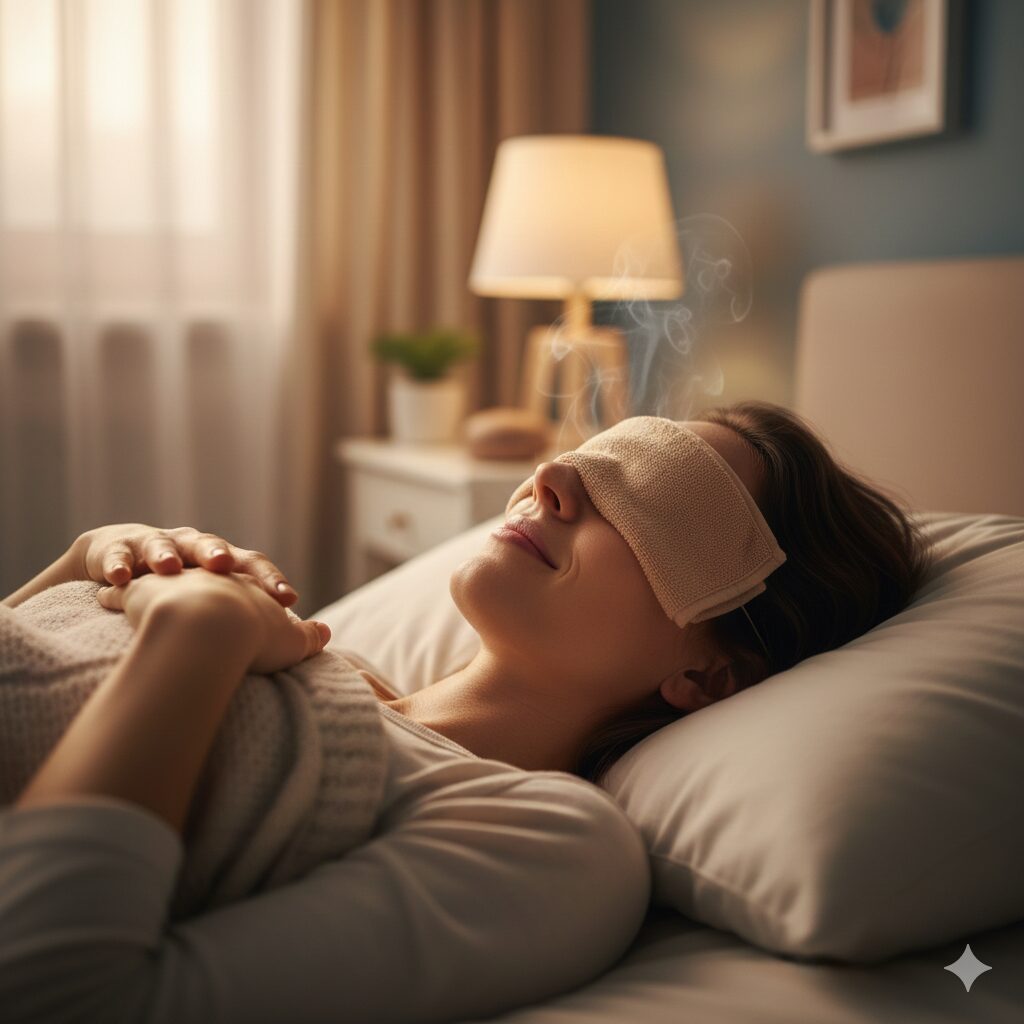
- Warm Towel Compress: Before bed, place a warm, damp towel over your eyes for about 5–10 minutes. This improves blood circulation around the eyes and helps the function of the oil glands (Meibomian glands) in your tear ducts, reducing dryness.
3-3. Improving Smart Device Usage Habits 📱
In this era where smart devices are essential, it’s easy to overwork your eyes.
- Adjust Brightness: Match your screen brightness to your surrounding environment. Screens that are too bright or too dark place significant stress on your eyes.
- Increase Text Size: To avoid struggling with close-up text, increase the font size on your smartphone or tablet. This can significantly reduce the focusing strain on your eyes.
🥕 4. ‘Delicious Nutrition’ for Maintaining Eye Health
Supplementing your eye health through food is also very important. Regular consumption of nutrients beneficial for the retina and macula is particularly helpful.
4-1. The Importance of Lutein and Zeaxanthin (Macular Health Guardians)
The center of our eye’s retina contains a critical area called the macula. This area is packed with photoreceptor cells and is responsible for over 90% of our central vision. With aging, the macula can become damaged.
- Lutein and Zeaxanthin are key components of the macula, acting as antioxidants that absorb harmful blue light and neutralize free radicals. Since our bodies cannot synthesize them, they must be supplemented through food or vitamins.
- Recommended Foods: They are abundant in dark green vegetables like spinach and kale, as well as broccoli, corn, and egg yolks.

4-2. Vitamin A (Night Vision and Ocular Protection)
Vitamin A is essential for maintaining visual function. A deficiency can lead to night blindness.
- Recommended Foods: Found in foods like carrots and pumpkins (consumed as Beta-Carotene), eel, and beef liver.
4-3. Omega-3 Fatty Acids (Dry Eye Relief)
Omega-3 helps reduce inflammation in the eyes and improves the quality of tears, alleviating dry eye syndrome. When eyes are dry, they tire easily, and vision may feel worse.
- Recommended Foods: Rich in fatty fish such as mackerel, salmon, and tuna.
🏥 5. Do Not Forget the Importance of Regular Checkups
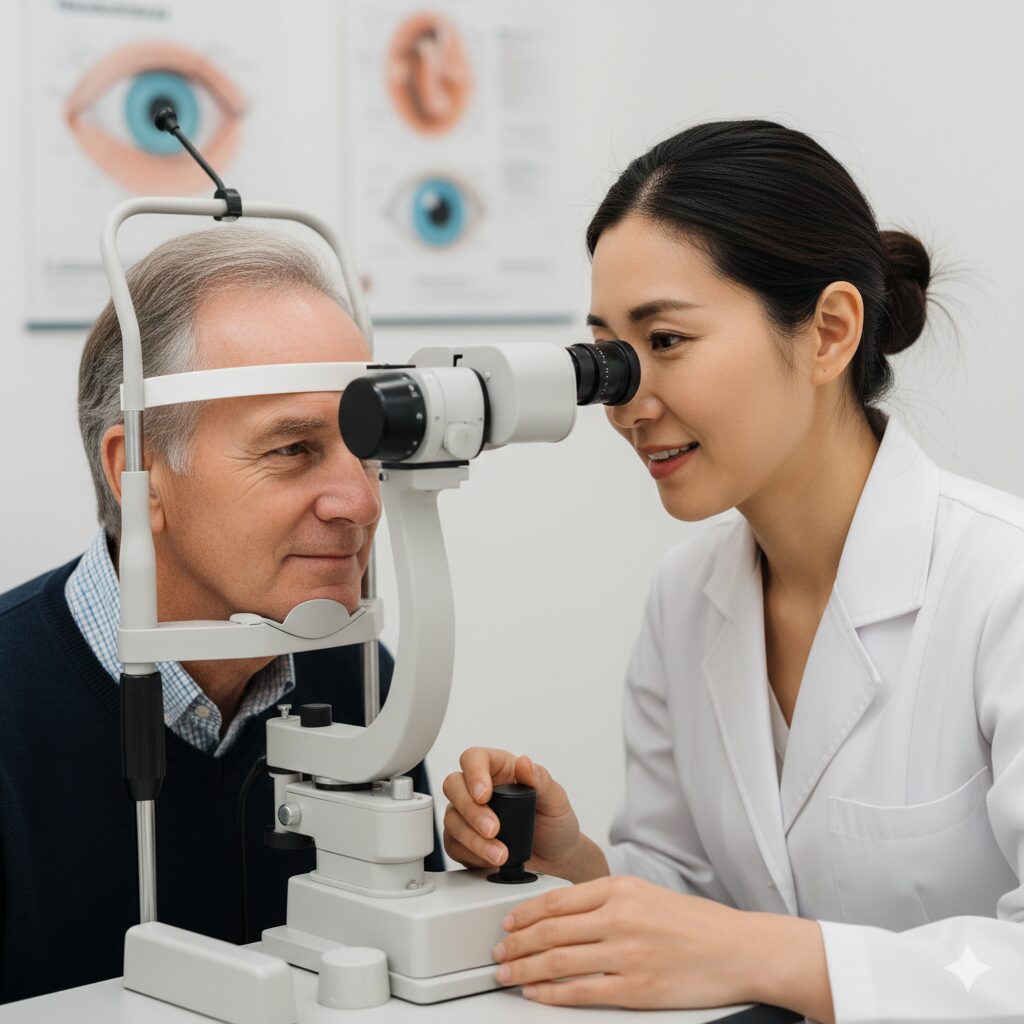
No matter how good your daily habits are, professional help is necessary. I strongly recommend visiting an ophthalmologist for a regular checkup at least once a year if you have started experiencing presbyopia symptoms.
Beyond presbyopia, the risk of serious eye diseases like cataracts, glaucoma, and macular degeneration increases in middle age and beyond. These conditions can have subtle early symptoms that are often confused with presbyopia, making it easy to miss the critical treatment window. Accurate diagnosis through professional examination and, if necessary, early treatment is extremely important.
✨ Conclusion: You Can Protect Your Eyes, Starting Now!
Today, Cooldy and I thoroughly examined the causes of presbyopia, prevention habits, and nutritional supplements. The eye is a precious sensory organ that is very difficult to restore once damaged.
Don’t think, “It’s too late!” Small habits—like practicing the 20-20-20 rule, applying a warm compress before sleep, and adding lutein-rich vegetables to your dinner table—will collectively determine the health of your eyes for the next decade.
When your eyes are comfortable, the world looks brighter and more enjoyable. I hope you utilize the information shared today to maintain clear, comfortable vision and a healthy daily life. Cooldy will be back with more useful information soon! Bye for now! 👋
References
- American Academy of Ophthalmology: https://www.aao.org/
- Centers for Disease Control and Prevention (CDC) Healthy Eyes: https://www.cdc.gov/visionhealth/