Hello, this is Cooldy! Do your knees feel stiff or painful when climbing stairs, or do your fingers feel rigid when you wake up in the morning? This kind of persistent pain can seriously diminish your quality of life. Joint discomfort, especially osteoarthritis, which often worsens with cold or damp weather, is a common concern.
Osteoarthritis is less about just ‘getting old’ and more about the chronic wear and tear of cartilage, leading to inflammation and pain. Maintaining healthy joints is crucial for sustaining a good quality of life. Fortunately, significant improvements can be made simply by adjusting your diet and lifestyle habits to reduce pain and preserve joint health for years to come.
Today, Cooldy will provide a comprehensive guide covering the best foods to strengthen your joint health, the essential supplement ingredients you should look for, and practical joint management tips you can implement immediately.
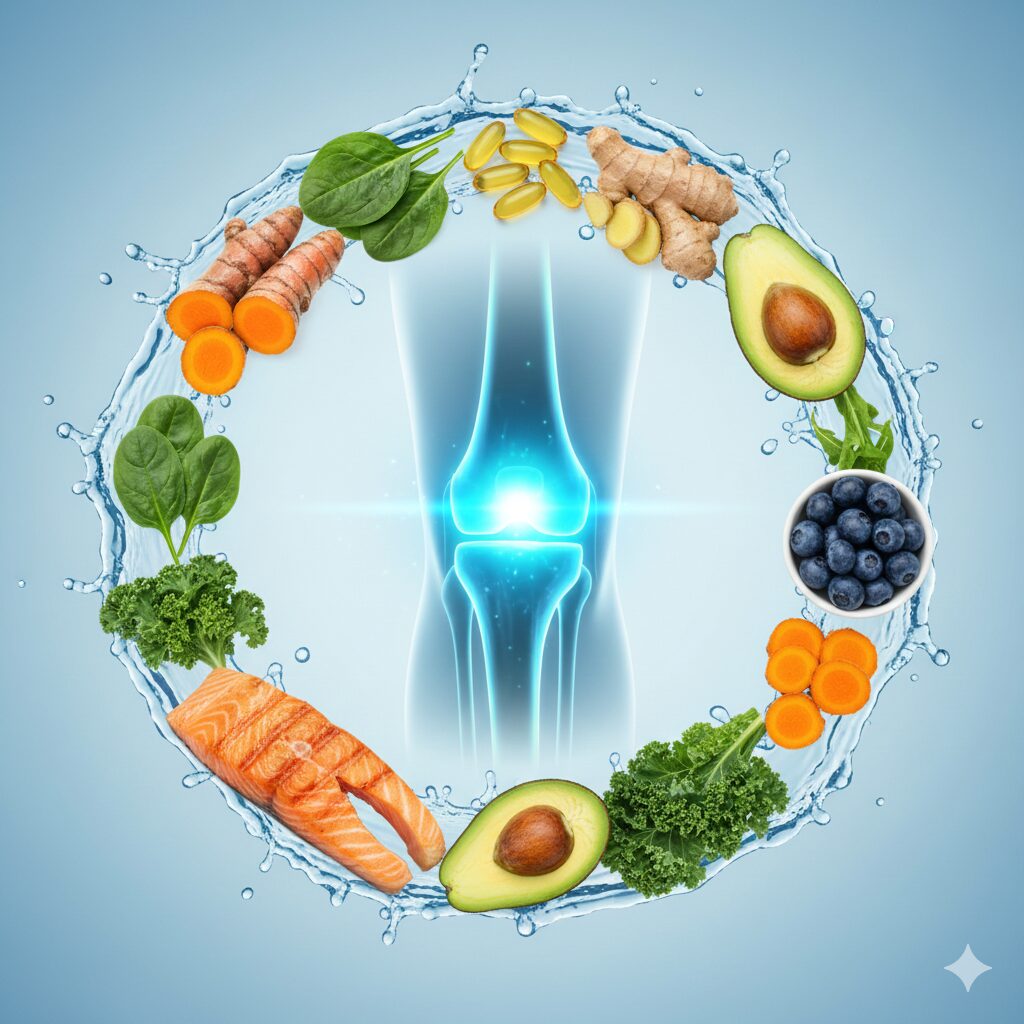
🥗 Part 1. Natural Medicine: Foods That Fight Joint Inflammation
The food we eat daily can serve as powerful medicine. Ingredients rich in anti-inflammatory properties or those that provide the building blocks for cartilage can be hugely beneficial in alleviating pain.
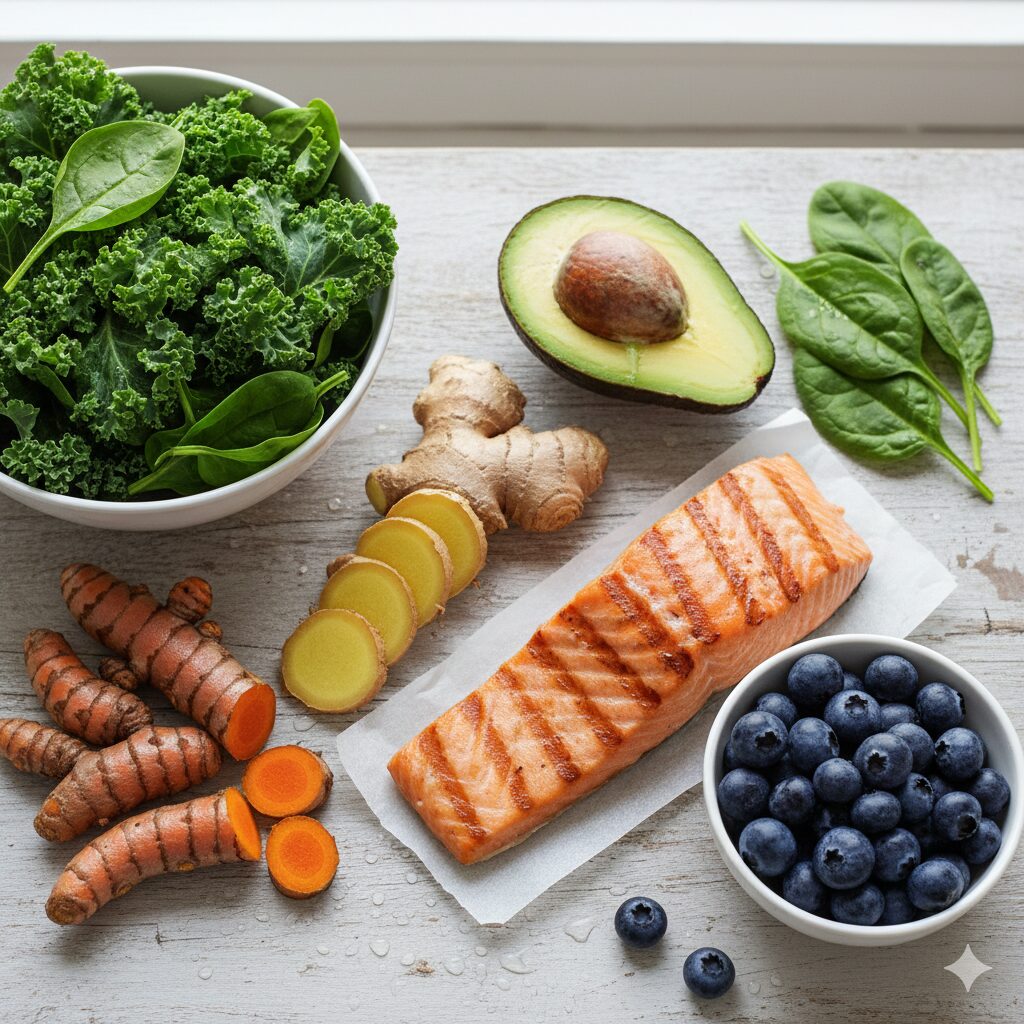
1. Superfoods with Powerful Anti-Inflammatory Effects
The core issue in joint pain is ‘inflammation.’ Consistently consuming ingredients that lower inflammation is key.
- Ginger and Turmeric (Curcumin)
- Benefits: The gingerols in ginger and the curcumin in turmeric exhibit strong anti-inflammatory and antioxidant effects. Curcumin, in particular, has been shown in studies to provide pain relief comparable to some non-steroidal anti-inflammatory drugs ($\text{NSAIDs}$)* used for arthritis treatment.
- Tip: Add them to curries or stews, or regularly drink ginger tea.
- Oily Fish (Omega-3 Fatty Acids)
- Benefits: Oily fish like salmon, mackerel, and tuna are rich in Omega-3 fatty acids (EPA, DHA). These compounds suppress the production of inflammation-causing substances in the body.
- Tip: Aim to consume grilled or steamed fish 2–3 times a week.
2. Ingredients That Supply Cartilage Building Blocks
Cartilage is primarily composed of water, collagen, and proteoglycans*. It is vital to supply nutrients that act as precursors for these components.
- Seaweed (Kelp, Sea Mustard, etc.)
- Benefits: The slimy component (alginic acid) and rich minerals in seaweed aid joint lubrication and indirectly help promote the synthesis of ‘chondroitin,’ a key cartilage component.
- Tip: Include seaweed frequently in soups, salads, or as a side dish.
- Small, Edible-Bone Fish (Anchovies, Dried Abalone)
- Benefits: Calcium is essential for building strong bones. A strong subchondral bone (the bone beneath the cartilage) provides stability for the entire joint structure.
- Tip: Use dried anchovies or small fish as regular side dishes.
*Proteoglycans: A main component of cartilage that is vital for absorbing shock and giving cartilage elasticity by attracting and holding water.
💊 Part 2. Essential Supplements for Joint Health
For certain nutrients that are difficult to obtain in sufficient quantities through diet alone, supplements can be an effective alternative. Let’s explore the scientifically supported ingredients for joint relief.
1. Glucosamine and Chondroitin
These two ingredients are the ‘classics’ in joint supplements.
- Glucosamine: An ‘amino sugar’ and a building block of cartilage. It helps in the production of cartilage cells and joint fluid, serving as a lubricant for the joints.
- Chondroitin: A core component of proteoglycans. It helps the cartilage retain water, increasing its shock-absorbing capacity.
2. $\text{MSM}$ (Methylsulfonylmethane)
$\text{MSM}$ is a compound that makes up the tissue of cartilage and ligaments.
- Benefits: It offers excellent pain relief and anti-inflammatory action, helping to improve joint discomfort. It is often recommended for individuals with high physical activity or frequent joint pain.
3. $\text{NAG}$ (N-Acetyl Glucosamine)
This substance is known for its higher absorption rate compared to standard glucosamine.
- Benefits: $\text{NAG}$ acts as a precursor for hyaluronic acid (the substance used to form it), which supports joint fluid and cartilage structure. It may be a good option for those who haven’t seen results with standard glucosamine.

Cooldy’s Pick! Tips for Choosing Supplements
Always check the manufacturer and the dosage of the ingredients in health functional foods. It is essential to confirm that the product has been certified for joint health benefits by a trusted regulatory body (like the $\text{FDA}$ or local health authorities). If you have underlying health conditions or are taking other medications, it is safest to consult a professional (doctor or pharmacist) before starting any new supplement.
🏃 Part 3. Smart Habits to Protect Your Joints
While food and supplements take care of internal health, lifestyle habits are the foundation for reducing external impact and strengthening your joints.
1. Weight Management: Reducing Load on Joints
The greatest stress on your joints comes from your body weight. Studies show that for every one pound of weight gain, your knee joints bear an additional 3–5 pounds of pressure.
- Action: Maintaining a healthy weight through diet and exercise is the most fundamental step in preventing arthritis and relieving pain.
2. Strength Training: Building Muscle Around the Joints
Even if the cartilage is worn, strong surrounding muscles can distribute the impact and reduce pain.
- Recommended Exercises:
- Swimming or Aqua Aerobics: The water reduces weight bearing, allowing you to build strength without straining the joints.
- Cycling (Indoor Cycling Recommended): This gently moves the knee joint while strengthening the thigh muscles ($\text{quadriceps}$).
- Gentle Stretching and Yoga: Improves joint flexibility and releases tension in stiff muscles.

3. Proper Posture and Rest
Prolonged standing or sitting, as well as squatting, places significant strain on the knee joints.
- Action:
- Avoid squatting postures whenever possible. When sitting, keep your back straight and ensure your feet touch the ground.
- If you’ve been in the same position for a long time, take a break every hour to stand up and stretch lightly.
- During flare-ups or severe pain, it is crucial to rest and avoid overexertion.
🙌 Final Thoughts: Small Habits for a Vibrant Tomorrow
Joint health is not something that improves overnight. As Cooldy has shared today, a few small changes to your diet, consistent supplement intake, and a joint-friendly lifestyle will build a foundation for a more vibrant tomorrow.
Instead of feeling discouraged by every ache, encourage yourself: ‘I ate this healthy food for my joints today!’ or ‘I exercised, so I’m doing well!’ And remember, if the pain becomes severe, always consult a specialist. Cooldy wishes you strong and healthy joints! 💪
References (Credible Sources)
- National Institutes of Health (NIH): Information on Arthritis and Joint Health
- URL: https://www.nih.gov
- Harvard Health Publishing: Articles on Nutrition and Pain Management